A single revelation can turn a man into a pilgrim in search of his sacred truths!
That is true for James M. Levering. James is a retired financial executive who upon building his ancestral family tree stumbled upon his family’s hidden connection to one of the most tumultuous chapters in American history: the Civil War.
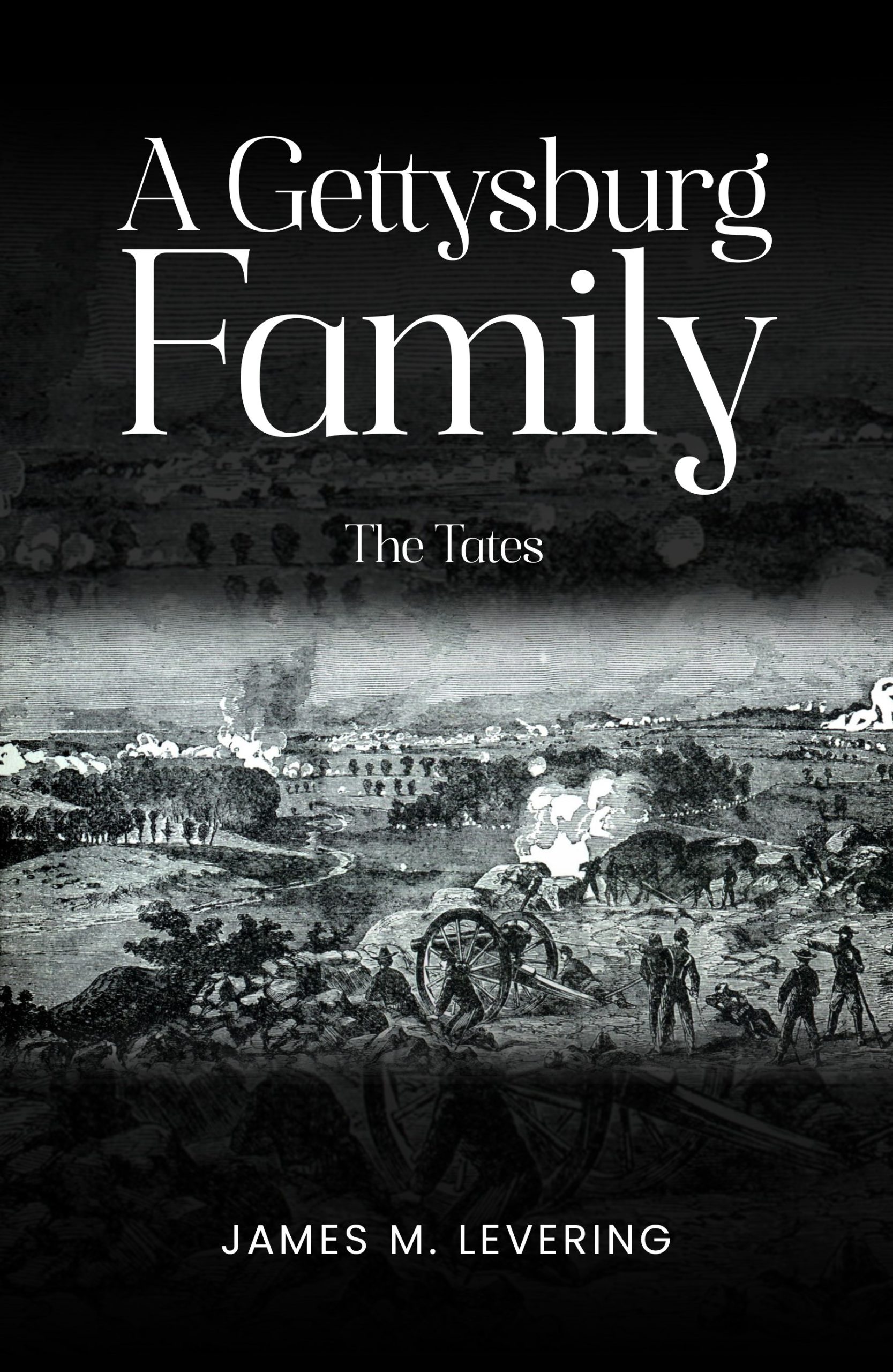
After this revelation, a simple desire to determine his family tree quickly turned into a life-consuming quest. His book, A Gettysburg Family: Pre and Post Civil War – The Tates, embodies that pilgrimage. This historical saga provides a touching and tenacious account of his ancestors and their connections to the historic town of Gettysburg.
Levering’s voyage began in earnest when he discovered that his fourth great-grandfather was John Lawrence Tate. He had owned the Eagle Hotel in Gettysburg during the war. As the author traced the path both backward and forward from this revelation, family lines became clearer and explanations of people, time and place more powerful. Stories that had been fragmented over time slowly came together like pieces in a puzzle forming a cohesive narrative. From court records to burial reinterments, legal disputes, widow pension files and wartime military service, it all helps to map his lineage and illuminate the personalities of his ancestors.
In retracing Solomon Tate’s life, Levering discovers an ornery man as complex as the era he lived in—one embroiled in legal battles and family disputes while also representing the moral tensions of pre-Civil War America still trying to understand what it meant to be nation. Meanwhile, figures such as Isaac Tate, an anti-Mason and political agitator, demonstrate how ideas and ideologies were inherited alongside land and community. The family’s Quaker origins, their loyalty to family and country, and the ways they survived in an ever-changing America underscore a sobering truth: every American family carries within it both grace and grit, patriotism and pain.
As Levering’s story unfolds, we are not simply spectators to dusty documents or faded gravestones. We are asked to reflect: What does it mean to “find oneself”? For Levering, this meant going where his forefathers went: York, Abbottstown, and finally Gettysburg. It meant realizing that what he once thought was a Baltimore-based family had deeper ties to Pennsylvania soil and the war that reshaped a nation.
But A Gettysburg Family is more than a personal homage. It’s a reminder that the Civil War is still actively circulating in American bloodlines. It shows us that history is not confined to books or battlefields. It lives in attics, in the quiet echoes of family tales, and in the DNA of every curious descendant willing to dig deep enough.
James Levering’s journey also quietly reveals the emotional weight of remembering. It is a search not only for names and dates but for context and truth. And in his meticulous storytelling, we see not only Tates but we also see ourselves, who are still wrestling with memory, division, and legacy.
In the end, Levering’s voyage becomes a bridge between the past and the present. His story is a tribute to all who came before. It is an invitation for us to look back, not out of nostalgia, but to understand who we are and where we belong.
Grab your copy on Amazon:
A Gettysburg Family: Pre and Post Civil War – The Tates is a deeply personal and richly documented genealogical narrative of the Tate family, rooted in the storied town of Gettysburg, Pennsylvania. Through rigorous research and historical context, author James M. Levering retraces the lives of his ancestors—immigrants, Quakers, patriots, innkeepers, and soldiers—whose experiences offer a window into pre- and post-Civil War America. From Jacob Tate’s voyage from Germany to the Civil War era proprietorship of the Eagle Hotel during the Battle of Gettysburg, the book offers a compelling portrait of ordinary people living through extraordinary times. It is not just a family history but a reflection on the ties of identity, legacy, and the search for belonging.