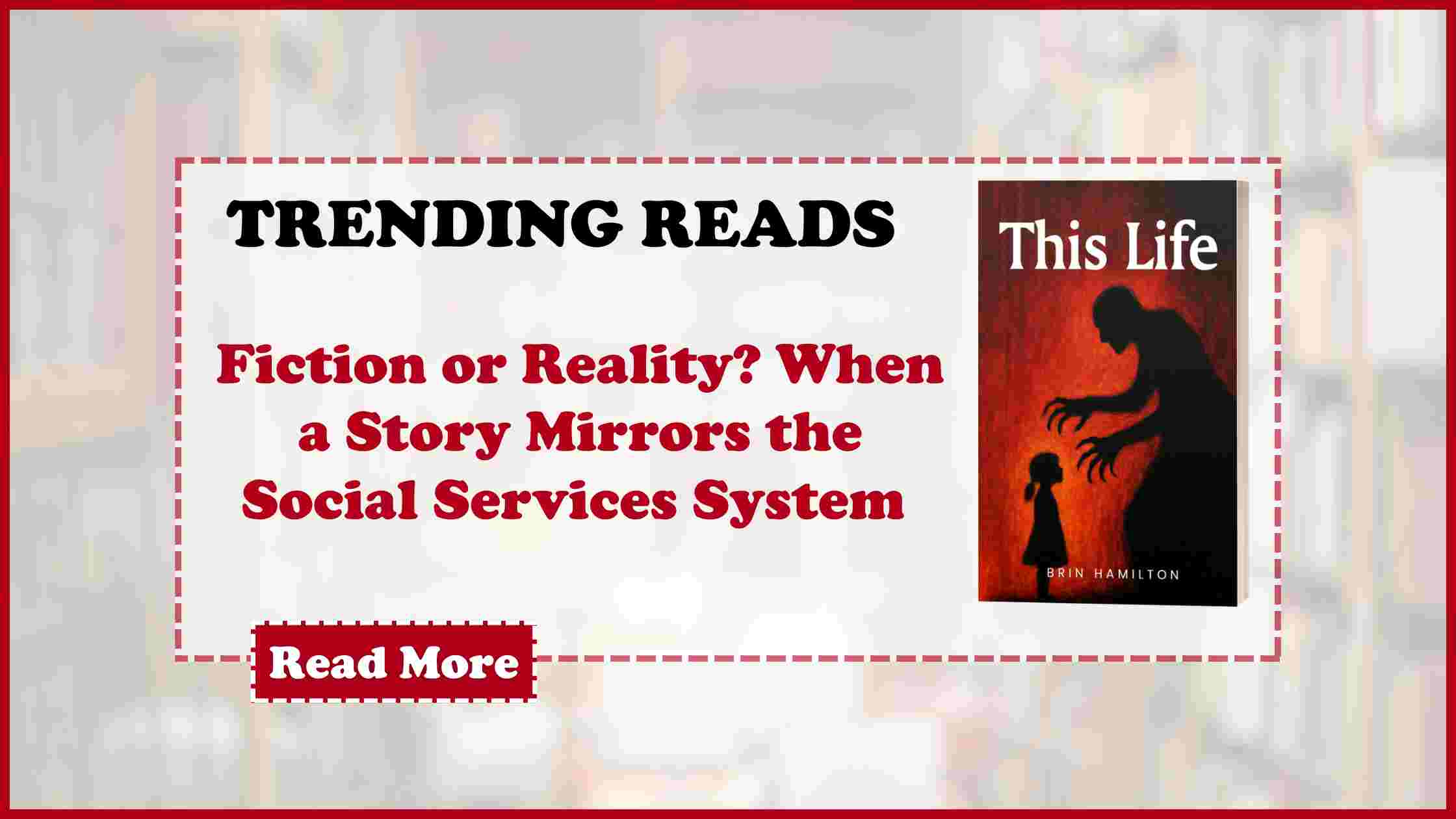
When fiction cuts close to the bone, it forces us to reevaluate what we think we know — especially when the story could just as easily be a case file on a social worker’s desk. This Life by Brin Hamilton reads like a powerful novel, but its emotional core is heartbreakingly real. Through the life of a young girl named Callie, the book lays bare the cracks in a system meant to protect.
Callie’s world is one of neglect, trauma, and abandonment. Her mother is volatile and emotionally absent; her father is inconsistent and slowly eroding under the weight of his own failures. As Callie stumbles through an unstable childhood, the people who are meant to intervene — schools, healthcare workers, family services — often overlook her pain or fail to act decisively. And while this is a work of fiction, the truth it reflects is deeply unsettling.
Social services are meant to be the safety net for children like Callie. Yet in reality, many cases slip through that net. Teachers notice behavioral changes, but are too bogged down in bureaucracy or unsure how to proceed. Medical professionals may spot signs of abuse but lack enough evidence to push further. And underfunded, overworked social workers are forced to make impossible decisions with incomplete information.
In This Life, Hamilton doesn’t place blame on individuals — he paints a fuller, more tragic picture. It’s not always that people don’t care. It’s that they’re often powerless, unsupported, or paralyzed by red tape. The story reminds us that the system, as it stands, is not infallible — and that children who fall through its cracks pay the highest price.
The novel’s strength lies in its realism. There are no miraculous rescues or neatly tied endings. Callie’s life is messy, painful, and uncertain — just like the lives of too many real children. And that’s the point. Hamilton uses fiction as a mirror, reflecting the uncomfortable truth that neglect doesn’t always look like bruises and broken bones. Sometimes, it looks like silence. Like apathy. Like a missed call. A discarded letter. A delayed visit.
What makes This Life linger in your mind is the question it leaves you with: How many children are we still missing? The ones who don’t scream, who don’t act out, who just quietly disappear into themselves. The ones who get labeled as difficult instead of damaged.
This book challenges us to rethink our assumptions about the system — and to advocate for the reforms and resources it desperately needs. Because fiction or not, Callie’s story isn’t rare. It’s painfully common. And if a novel can make us care in a way a statistic never could, then maybe it’s time we started listening more to stories — and to the children living them.