Violence doesn’t always announce itself. Sometimes it arrives suddenly—swift, ugly, and unforgettable—leaving marks that go far beyond the bruises and scars. One moment you’re living your life, and the next, everything you are and everything you might become is refracted through a single, terrible event.
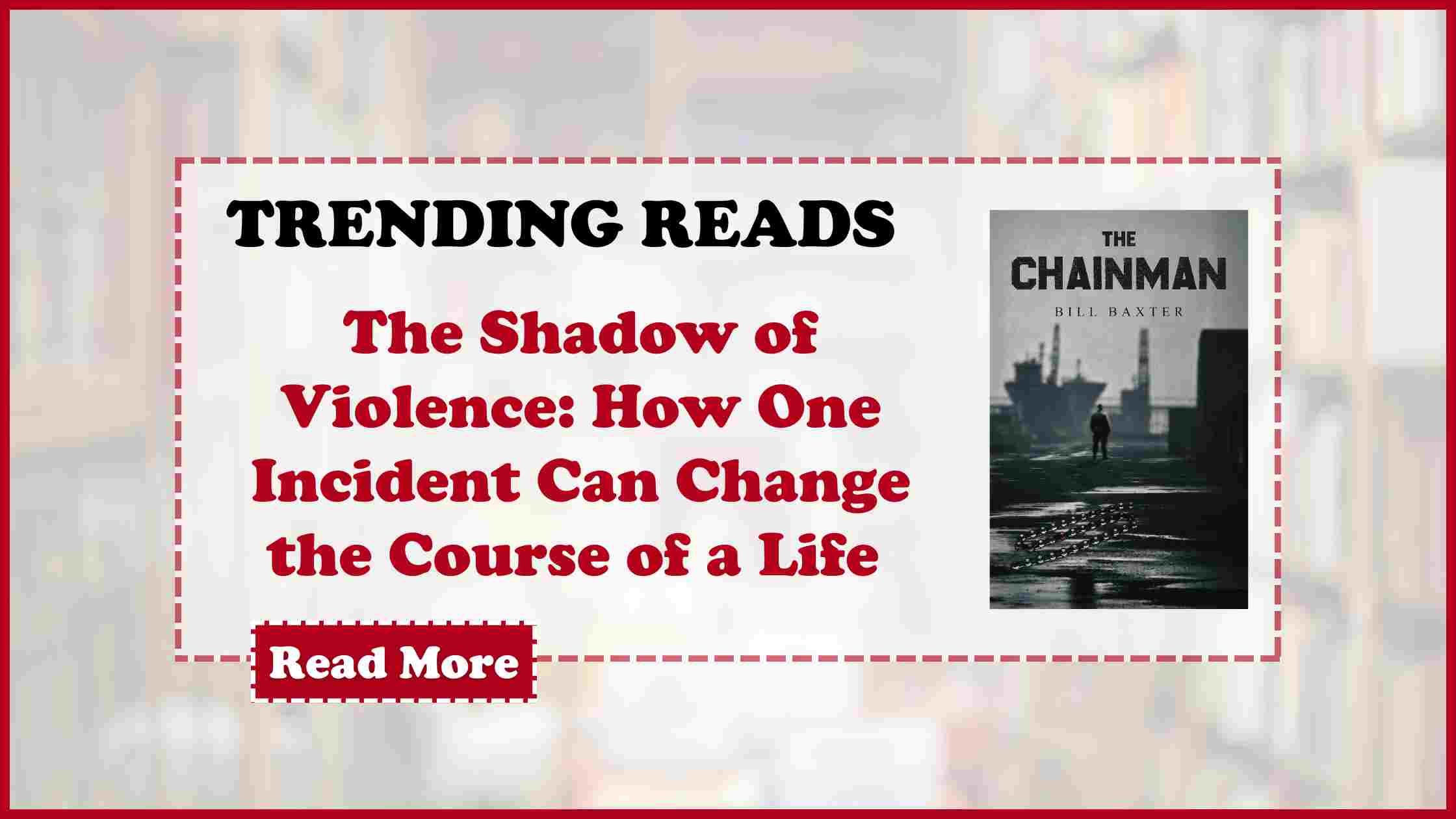
In The Chainman by Bill Baxter, that moment comes for Billy in a frozen Belfast car park. What starts as a night out at a Valentine’s dance ends with his friend Spam lashing out with a bicycle chain, leaving a young man bleeding on the ground. Billy isn’t the one holding the weapon, but he’s there—close enough to see the gash, the blood, and the stillness of a body that might not get back up.
It’s a moment that forces an uncomfortable truth: proximity to violence can entangle you in its consequences, whether or not you deliver the blow. Billy walks away physically unscathed, but the image burns into his mind. And with it comes a heavy burden—the knowledge that he didn’t stop it, didn’t stay to help, didn’t act as the person he’d like to believe himself to be.
That’s the power of a single violent act. It can strip away illusions in seconds. Billy’s loyalty to Spam, his sense of himself as different from the more brutal boys in his circle—suddenly all of it feels questionable. Even his growing connection with Sarah is shadowed by the knowledge that, if she learns the truth, she may see him as no better than the rest.
The human cost of such moments isn’t just about guilt or fear of the law. It’s about the way violence can warp relationships and self-image. Friends begin to look at you differently—or you imagine they do. You start to measure your choices against that one night, wondering if you’ve already been defined by it. The life you thought you were building shifts subtly but permanently, as if the ground itself has tilted.
For some, that shadow never fully lifts. For others, it becomes a turning point—a moment to choose a different path. In Billy’s case, the incident forces him to confront who he’s aligning himself with, and what he’s willing to accept in the name of loyalty. It’s the kind of reckoning many people face in quieter ways: realizing that standing by can be as damaging as acting, and that leaving the wrong crowd can feel like saving your own life.
One violent act can’t always be undone, but it can be understood—and it can be the catalyst for change. The question is whether you let it define you or decide that your next move will tell a different story.