When trauma comes to mind for someone in the general population, they are likely to envision painful memories contained in their memories. This is true, but trauma also exists in the body. It stays in the body’s nervous system responses and the tension in the muscles, and also in family cycles. We will not heal just by intellectualizing what we’ve been through. To heal, we must learn to consider the body as well as the mind.
The Body Remembers
Trauma is not only a story from the past. It is a physical imprint. When someone has lived through fear or loss, the body often holds onto that experience long after the event has ended. The nervous system remains on high alert. A loud sound may cause panic, or a simple disagreement may feel overwhelming.
Science supports this reality. The study of epigenetics shows that trauma can alter the way genes are expressed, passing stress responses to future generations. Families and communities carry invisible burdens that affect health, relationships, and identity. Trauma does not simply fade with time. The body remembers until it is given a chance to release.
Signs of Trauma Stored in the Body
Unaddressed trauma or unresolved trauma can often present somatically as ongoing physical pain, extreme fatigue, or illness. It can also appear as patterns of behavior such as overworking, perfectionism, and people pleasing, that can sometimes be considered survival mechanisms to cope with a perceived unsafe world.
After experiencing emotional neglect, one person may overextend to obtain approval. Another, having experienced instability, may hold tight to rigid routines, believing they can create stability within themselves. To an observer, these patterns may look like personality and character traits, but messages from the body suggest a deeper, unresolved wound remains.
Why Talking Alone Is Not Enough
Traditional talk therapy is valuable for understanding memories and patterns. Yet intellectual insight alone does not always bring relief. Trauma is not only cognitive. It is sensory and cellular. Healing requires engaging with the body.
Practices such as breathwork, yoga, and somatic therapy help regulate the nervous system and release stored tension. Energy work and body-based mindfulness allow emotions to surface safely. These approaches do not replace therapy but complement it, creating a more holistic path to recovery.
Steps Toward Healing
Healing trauma begins with awareness. Notice how your body responds in daily life. Do your shoulders tighten during conflict? Does your stomach ache when you feel pressured? These signals are invitations to pay attention.
Gentle practices can help. Breathing deeply, journaling about sensations, or walking barefoot on the earth reconnects the mind and body. Over time, these actions teach the nervous system that it is safe to release old patterns.
Professional support is also a game-changer. Somatic therapists, trauma-informed yoga instructors, or other energy healers offer guidance on the physical layers of trauma. Healing isn’t about driving past traumatic experiences from your memory; it’s about showing your body it doesn’t have to stay there.
The Gift of Healing
When we address trauma in both mind and body, we discover more than relief from symptoms. We uncover freedom. Relationships grow healthier, creativity returns, and the body becomes a place of safety rather than fear.
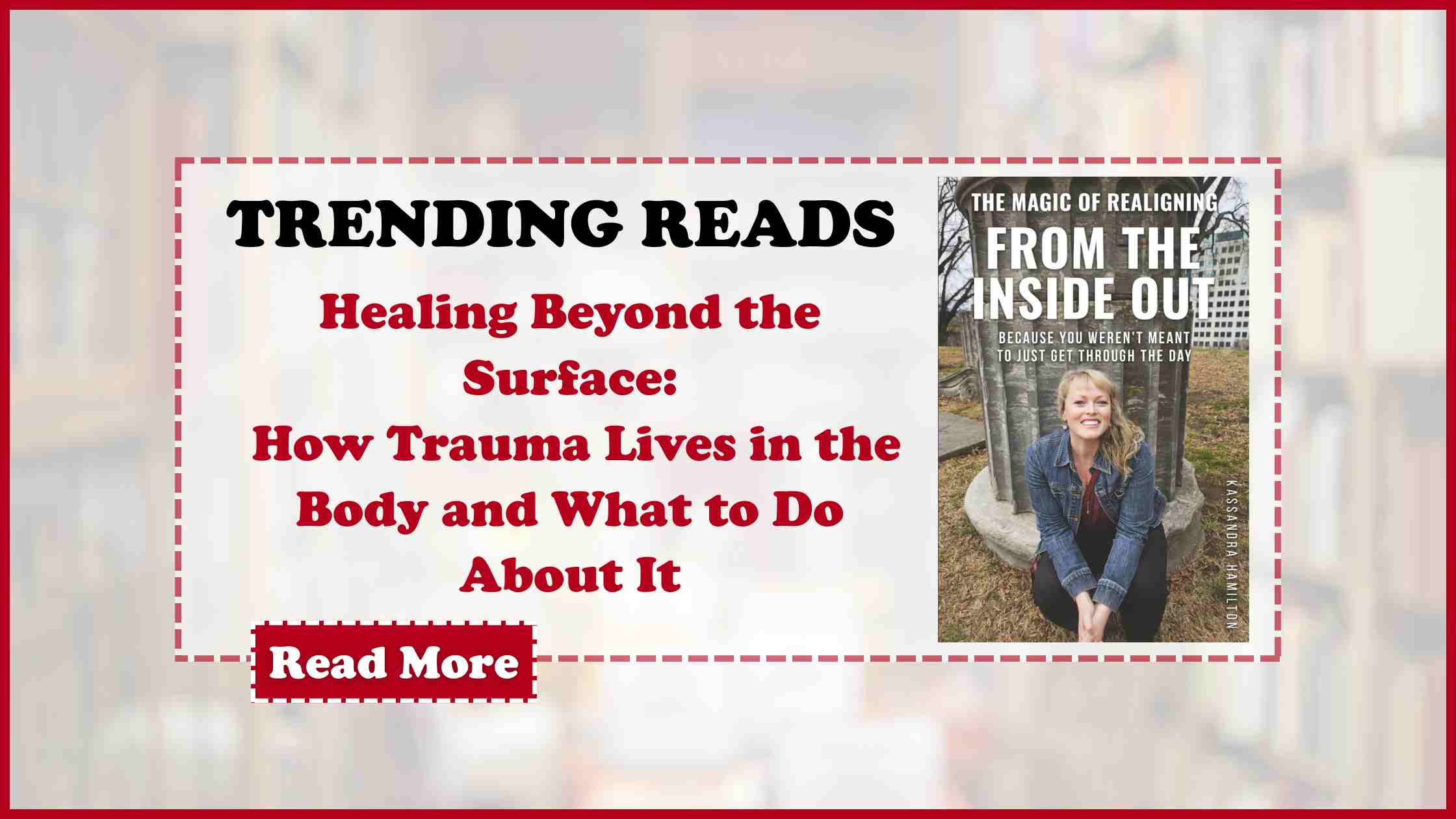
Kassandra Hamilton’s book The Magic of Realigning From the Inside Out explores this connection with honesty and hope. Her story reminds us that healing is possible when we move beyond the surface and listen to what the body has been carrying.