Most people think of national security in terms of military strength, alliances, or intelligence. Yet one of the greatest risks facing Western societies today is something far more subtle. It is economic dependence. When a country relies heavily on another for goods, manufacturing, or essential materials, it loses control over its own future. And nowhere is this dependence more visible today than in the relationship between the United States and China.
Over the past two decades, China has become the dominant supplier of countless products. Electronics, batteries, steel components, medical supplies, and everyday household items are manufactured there. This shift began as a way to cut costs but eventually grew into a structural reliance.
The danger lies not in buying products from China but in needing China in order for the economy to function smoothly.
Consider what happened during global supply shortages. When factories in China slowed down or shut off exports, the effects were immediate. Shelves emptied. Prices rose. Manufacturers struggled to assemble products. Hospitals faced shortages in basic medical items. These disruptions revealed how deeply the West depends on China.
Another hidden risk is how reliance affects decision-making. When a country depends on another for manufacturing or critical supplies, it becomes hesitant to take strong political positions. This is not fear but practicality. Leaders know that challenging China too strongly could lead to economic retaliation, production delays, or shipping restrictions. This creates a silent pressure that shapes foreign policy.
China understands this advantage. It is not an accidental outcome but the result of long-term strategy. China built industries that other nations cannot quickly replace, and it did so with the knowledge that economic strength often translates into political influence.
The West has begun to recognize the dangers. Efforts to diversify supply chains, rebuild domestic industries, and strengthen alliances are underway. However, progress is slow. Rebuilding capacity requires investment, coordination, and a clear plan. Most importantly, it requires understanding the root cause of the dependency.
The problem began with free trade that lacked balance. The West allowed its industries to shift abroad without considering long-term consequences. China gained production, expertise, and financial reserves, while the West lost jobs, independence, and leverage.
Fixing this requires a new kind of trade system. Equal Trade ensures that imports and exports remain balanced and that one side does not become economically dominant. This approach protects national interests while still maintaining global cooperation.
National security is not only about defending borders. It is also about ensuring that the economy cannot be held hostage by another nation. Reducing dependence on China is essential for the future stability of Western democracies.
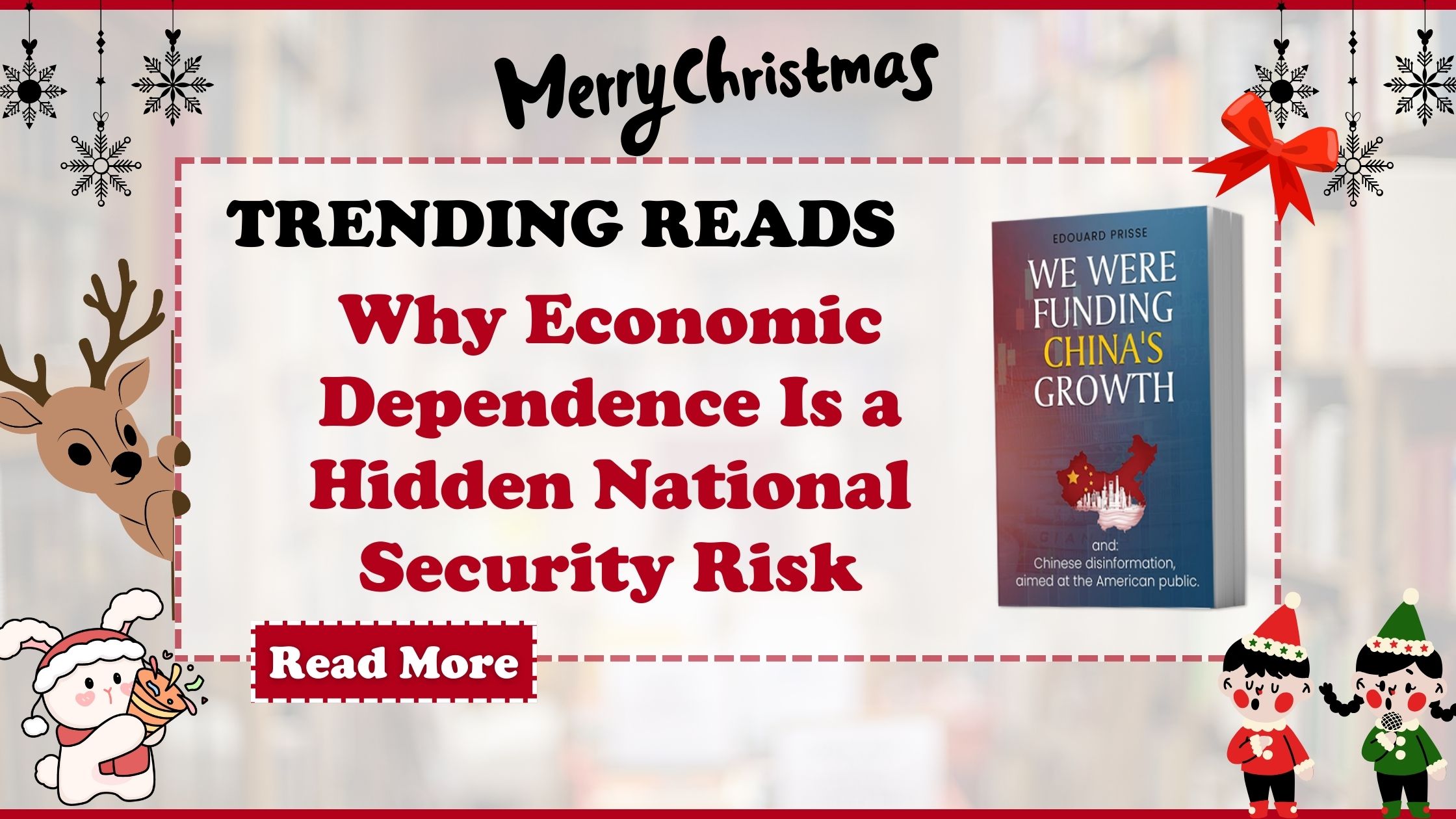
For a clear explanation of how we reached this point and what must be done now, readers should read We Were Funding China’s Growth That Must Stop! by Edouard Prisse.
Edouard Prisse’s We Are Funding China’s Growth That Must Stop! is not another broad political warning. It is a precise economic diagnosis that cuts straight to the foundation of modern global imbalance. Through calm analysis and detailed examples, Prisse reveals how decades of trade policy turned Western wealth into the fuel of China’s global expansion, and how this flow of money continues to reshape power around the world.