“So, on that particular mundane Monday, I had anticipated a regular sort of uneventful routine evening. It was a cold November day that would merge in the memory with other such days like it. I drove home in that bright blue car and ran quickly upstairs through the chill of the beige empty house to peel off the camouflage of my ordinary, uneventful, routine, cold November life because this is what a person did after spending the day studiously working within the banks of sterile office desks and monitors. Lest a speck of dust foul the carefully selected neutral-coloured two-piece uniform of the office worker. The dark manmade fabrics and crisp cotton blouse identified me as an administrator, taxpayer, and wage earner. Dependable, trustworthy, solid. How peculiar is it that a simple nylon weave might define authority, right, and quality? It is the clothes that maketh the man, and they most certainly maketh the woman. Perhaps this might have been a different kind of story if I had still been wearing those clothes. Should I? Would I? Could I have charged down there concealed in the draping of decency, indignant at the intrusion? Interrupted this encroachment with some affronted outburst. Probably. I knew enough, know enough, about fear to pass fear on. Leave them afraid, not breathing. But as it happens, that high street haute lay discarded on the bedroom floor, and I knelt there huddled in a prudently purchased thin mint bathrobe. Vulnerable and alone. Alone but for the fear. Just like before, and nothing like before.”
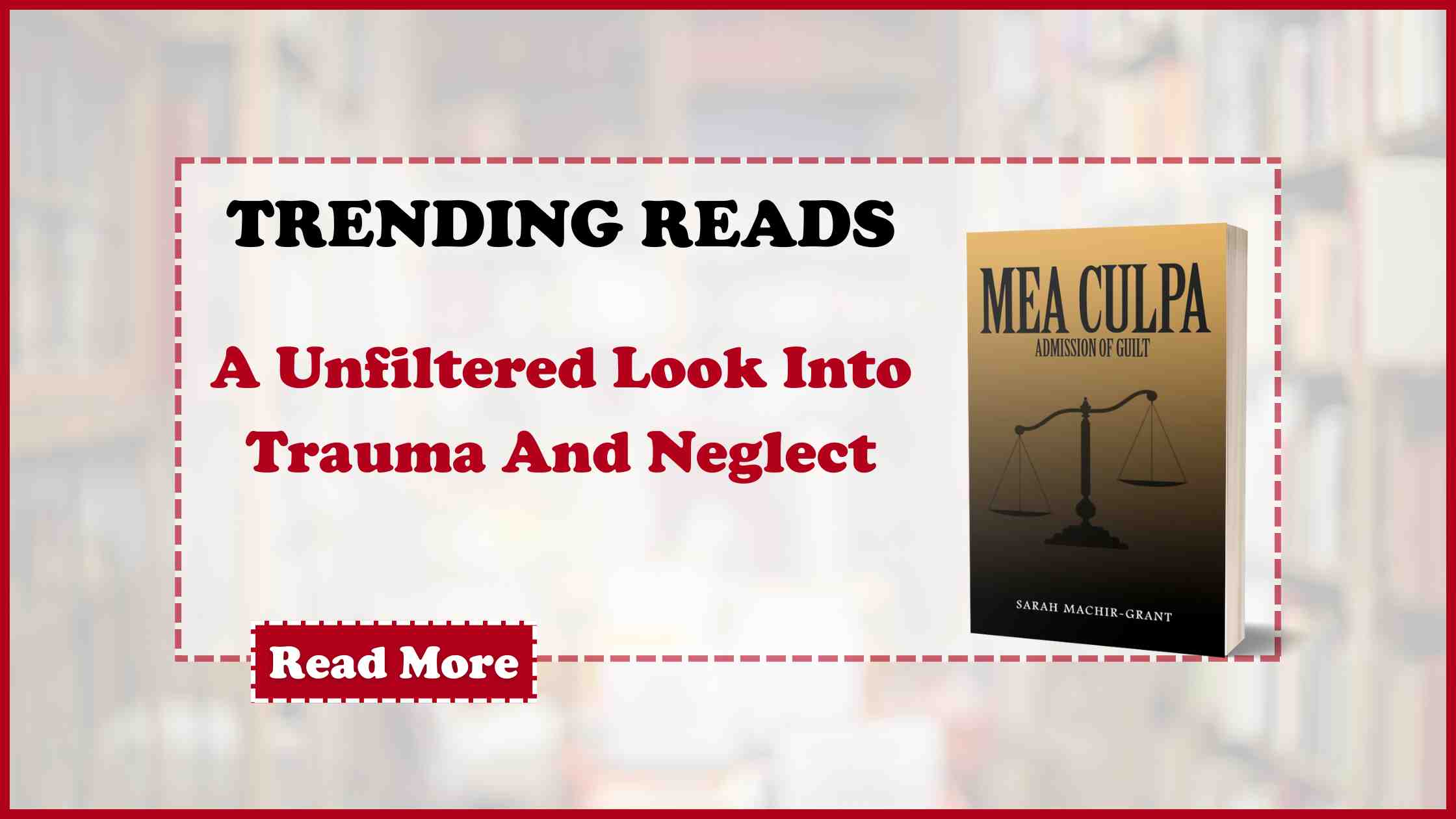
The above passage is a short excerpt from the book MEA CULPA (Admission of Guilt) by Sarah Machir-Grant. The book highlights fear as a lived environment that shapes memory, identity, and perception long into adulthood, alongside a complex mother-daughter relationship defined by emotional instability, control, and enforced silence. Through a nonlinear narrative that mirrors the way trauma is remembered, the memoir reveals how secrecy, loyalty, and reputation protection operate within dysfunctional family systems and how survival strategies learned in childhood later restrict adult freedom. Rather than offering a simple story of recovery, the book presents an honest portrayal of breakdown, awareness, and endurance, showing that healing does not mean erasing fear but learning to live without letting it dictate every choice.
One of the book’s most striking strengths is how it portrays fear as something that never truly ends. The author describes existing within a single frozen moment that continues to resurface, regardless of how much distance she places between herself and her past. She builds an adult life that appears stable and controlled, yet when that structure fractures, the fear returns intact. This moment becomes central to the memoir, not because it resolves anything, but because it strips away the illusion that fear can be outrun.
The family dynamics at the heart of the book are deeply unsettling precisely because they are so familiar. Grant explores a mother-daughter relationship shaped by emotional instability, control, and enforced loyalty. Silence is not accidental in this family. It is required. Reputation is protected. Truth is inconvenient. The child learns early that survival depends on compliance and careful observation. These lessons follow her into adulthood, shaping her relationships with others and her understanding of herself.
What makes MEA CULPA stand out is its restraint. Grant does not exaggerate or sensationalise her experiences. The writing remains grounded, reflective, and controlled even when describing moments of fear, breakdown, or emotional captivity. This steadiness allows the reader to feel the weight of the story without being pushed toward a particular reaction. The memoir trusts the reader to sit with discomfort.
The structure of the book reinforces its themes. Time is not linear. Memories surface unexpectedly. Past and present overlap. This approach reflects the reality of trauma rather than explaining it away. Fear interrupts thought. Memory arrives without warning. The narrative honours that experience.
Importantly, MEA CULPA does not frame recovery as erasure. Fear does not disappear. The book does not promise closure. Instead, it explores what it means to live with fear while refusing to let it dictate every decision. Awareness replaces denial. Endurance replaces escape.
MEA CULPA (Admission of Guilt) is a demanding but deeply thoughtful memoir. It will resonate with readers interested in psychological nonfiction, trauma narratives, and the long reach of childhood experiences. Sarah Machir-Grant offers a story that does not ask for sympathy or forgiveness. For readers willing to engage honestly with its themes, this book leaves a lasting impression.
Head to Amazon to purchase your copy: https://www.amazon.com/dp/B0G4KSKTZZ/.