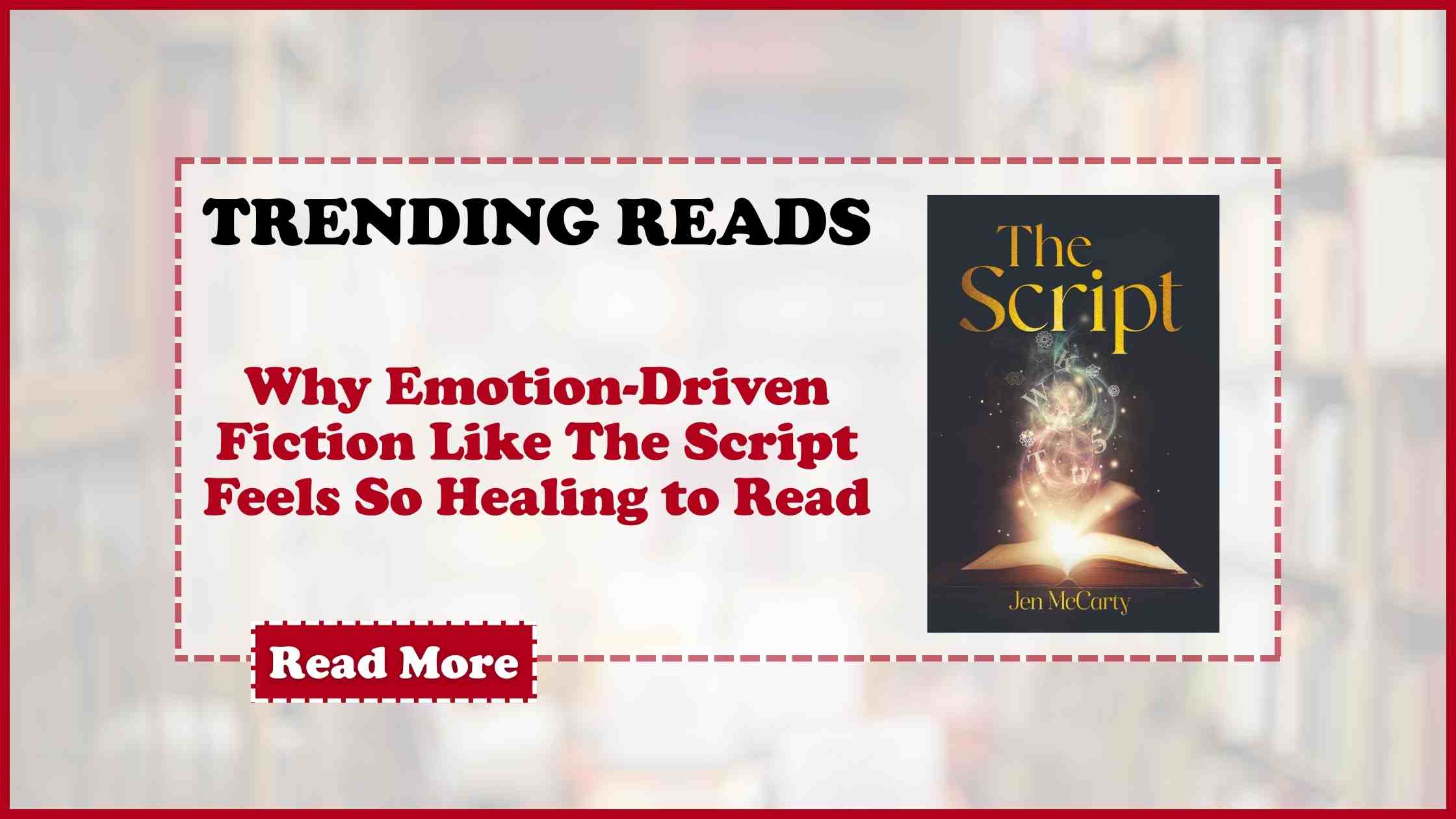
Some books do more than tell a story. They create space for readers to feel understood. Emotion-driven fiction has a quiet strength because it reflects real experiences without trying to solve them too quickly. The Script by Jen McCarty is a clear example of how this type of storytelling can feel deeply comforting, especially during difficult seasons of life.
Stories That Mirror Real Emotional Struggles
Emotion-driven fiction works because it mirrors what many people experience but rarely say out loud. In The Script, family tension, grief, and mental health challenges are shown through everyday moments rather than dramatic scenes. Characters struggle with responsibility, loss, and misunderstanding in ways that feel familiar. This realism allows readers to recognise parts of their own lives in the story.
When readers see characters facing similar emotions, it can reduce feelings of isolation. The story does not rush to offer answers. Instead, it sits with uncertainty, which can be reassuring for those still working through their own situations.
Comfort Through Shared Experience
One of the emotional benefits of reading books like The Script is the comfort it provides. Comfort does not come from happy endings alone but from knowing that pain is acknowledged. The novel illustrates how grief and emotional strain can impact relationships over time. These experiences are not brushed aside or simplified.
For readers dealing with loss or family conflict, this kind of representation can feel validating. It subtly suggests that these emotions are an inherent part of being human. This book explores the emotional benefits of reading transformational fiction, highlighting how stories provide comfort, validation, and hope during challenging times in life, allowing readers to feel seen without judgment.
Validation Without Judgment
Emotion-driven fiction also offers validation without telling readers how they should feel. In The Script, characters respond differently to the same events. Some withdraw while others search for meaning or connection. This variety reflects genuine emotional responses and avoids presenting a single correct way to cope.
Readers may find relief in this approach. Seeing different emotional paths helps normalise their own reactions. It reminds them that healing does not follow a fixed timeline and that progress can look different for everyone.
Hope That Feels Earned
Hope in emotion-driven fiction feels meaningful when it grows slowly. The Script does not promise quick transformation. Instead, hope appears through small changes in perspective and understanding. The story shows that emotional growth often begins with awareness rather than action.
This kind of hope feels realistic. It suggests that even during difficult periods, moments of clarity and connection are possible. For readers, this can be encouraging without feeling unrealistic or forced.
Why Readers Return to Transformational Stories
Readers often return to emotion-driven fiction because it offers reflection rather than escape. Books like The Script encourage readers to pause and think about their own emotions and relationships. This reflective quality can be calming, especially when life feels overwhelming.
The story does not demand agreement or belief. It simply invites readers to observe and consider. That gentle invitation is part of what makes the experience feel healing.
This book explains why emotion-driven fiction remains a compelling choice for readers. By focusing on genuine emotions, shared struggles, and the gradual emergence of hope, the novel creates a space that feels safe and thoughtful.
For readers seeking a book that offers comfort and reflection, Jen McCarty’s The Script may be worthwhile. It is available on Amazon: https://www.amazon.co.uk/dp/1970749881/.