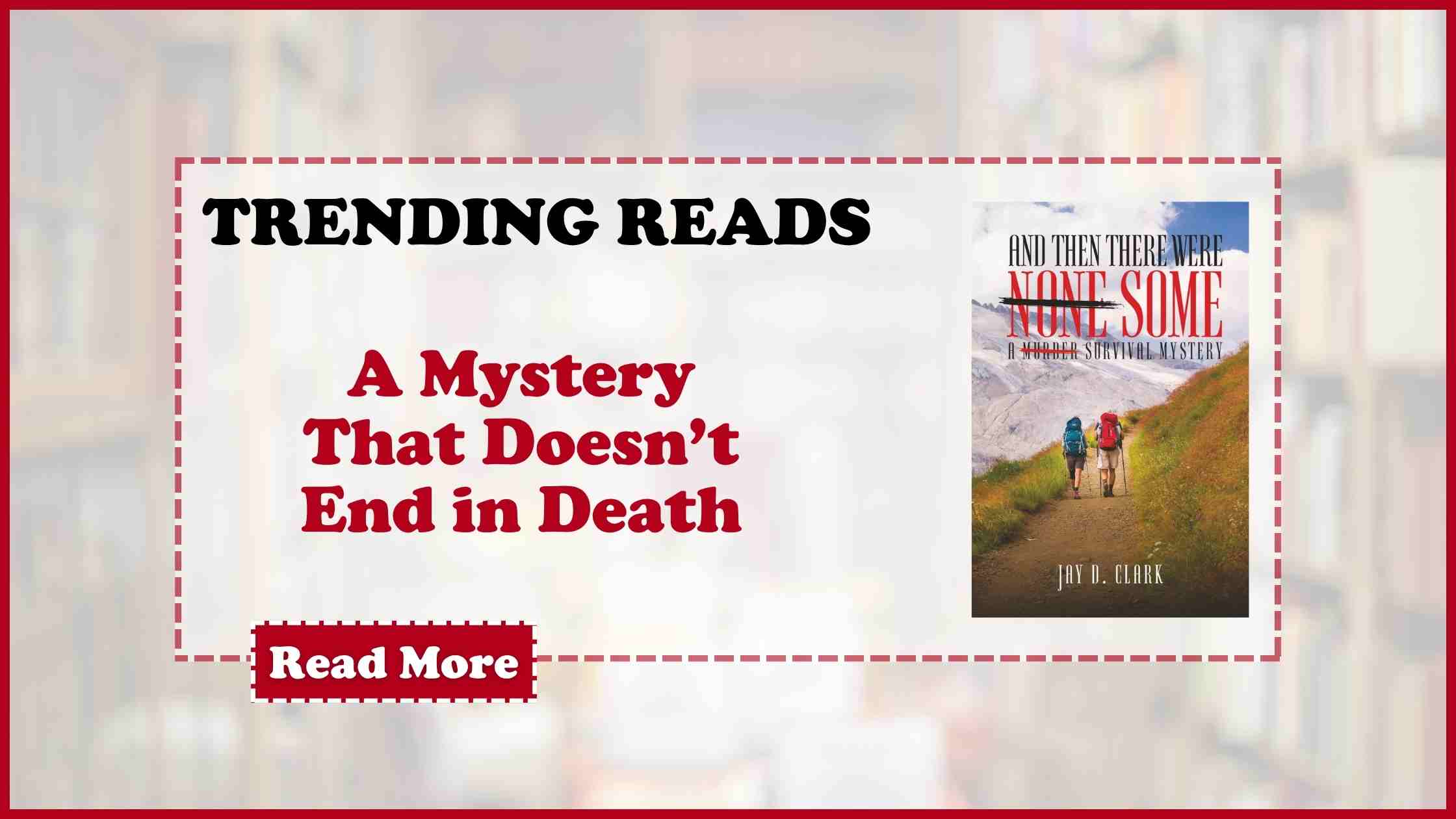
Mysteries often end with loss. In detective stories, lives are taken, and the puzzle is about uncovering who committed the crime. But Jay D. Clark’s And Then There Were Some offers something different. Inspired by Agatha Christie’s classic And Then There Were None, Clark reshapes the murder mystery format into a search for life’s ultimate truths. Unlike Christie’s story, this mystery does not end in death. Instead, it offers a path toward life, purpose, and faith.
The story begins with a comparison. In Christie’s novel, ten guests are stranded on an island, hunted down one by one by an unseen host. Their survival depends on discovering who the host is and whether anyone can be trusted. Clark takes this same structure and applies it to life. We, too, are guests in a world we did not create, surrounded by clues about our host. Our survival, both physically and spiritually, depends on whether we are willing to investigate and discover who is behind it all.
Clark’s genius lies in the way he blends fiction with philosophy. He invites readers to step into the role of detective, piecing together evidence from science, scripture, and human experience. Unlike a traditional mystery, where the ending is fixed, the outcome here depends on the choices we make. Will we dismiss the clues and accept that life has no meaning, or will we follow the evidence to a host who offers life beyond death?
The book makes it clear that the stakes are high. Beliefs are not abstract. They shape how we live and where we are headed. Just as Christie’s characters couldn’t escape the island, none of us can escape the reality of life and death. Clark challenges us to consider that the mystery of our existence points not to despair, but to hope.
By weaving in scientific discoveries like the Big Bang and the fine-tuning of the universe, Clark adds depth to his analogy. These clues are not unlike fingerprints at a crime scene. They point us toward something bigger than ourselves. But as with any good mystery, the clues must be interpreted carefully. Misreading them leads to false conclusions. Clark shows that while naturalism often misreads or ignores the evidence, theism interprets it in a way that makes sense.
The difference between Christie’s novel and Clark’s work is striking. Christie’s story ends in silence, with every guest dead and the mystery revealed too late. Clark’s story, however, ends with an invitation. The host of life is not out to destroy us but to save us. The question is whether we will trust Him.
And Then There Were Some is more than just a clever play on a famous mystery. It is a powerful reminder that the greatest mystery is not who committed a crime, but who created us and what our future holds. Unlike most mysteries, this one offers life. The clues are there. The evidence is waiting. We just need to put up the courage to solve these clues to find the answer to the most intriguing life mystery.
For those searching for truth in a skeptical world, Clark’s book is the roadmap to survival, which explores the compatibility of science and faith, particularly Christianity, through an evidence-based approach.
Get your copy on Amazon: https://www.amazon.com/dp/1917505191/.