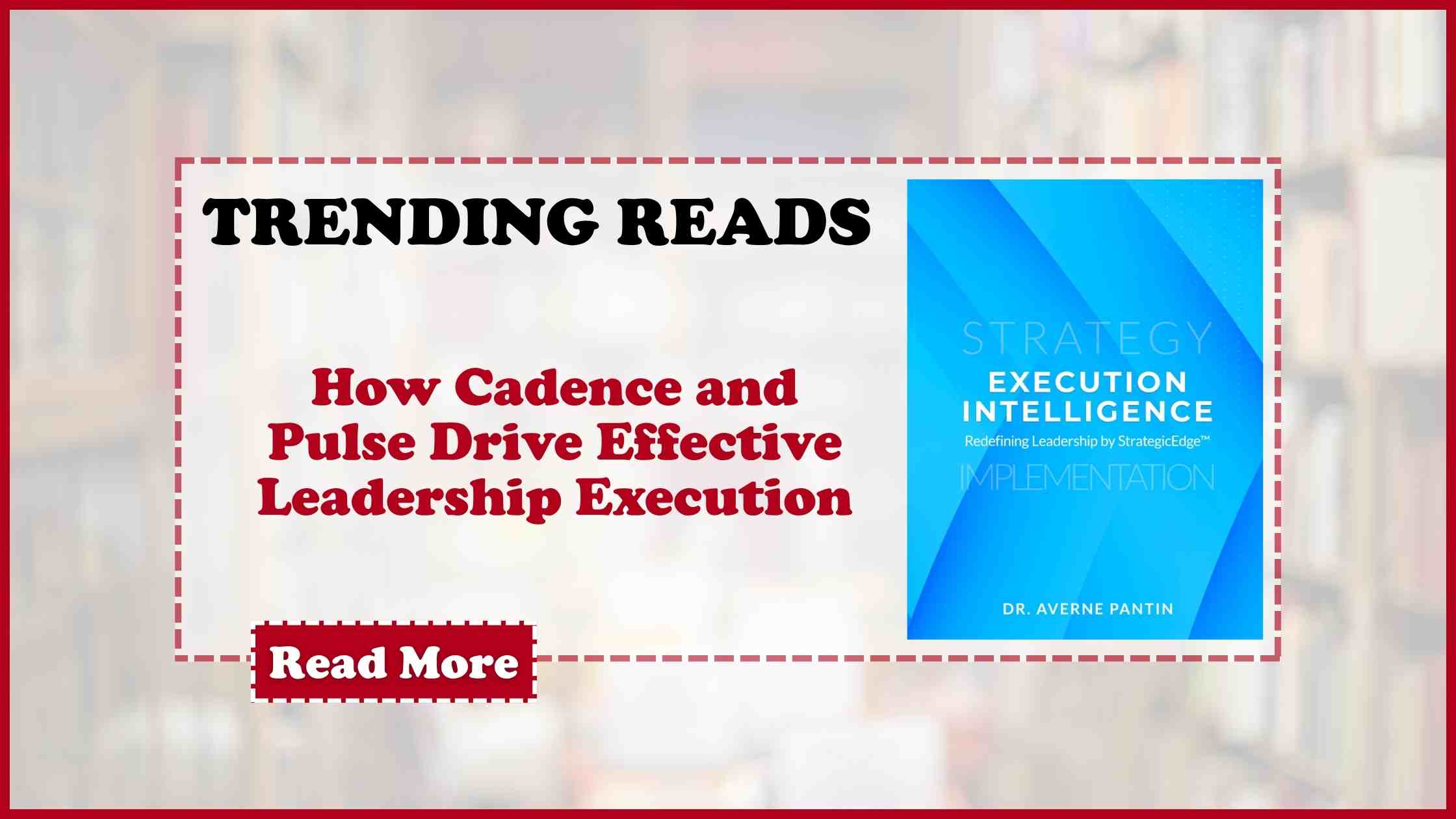
In today’s fast-paced business world, leadership effectiveness is often determined not just by vision, but by the ability to execute that vision consistently and strategically. In Execution Intelligence: Redefining Leadership by StrategicEdge™, Dr. Avern Pantin introduces two critical concepts that can greatly enhance leadership execution: cadence and pulse. These elements are the foundation of successful leadership execution, providing structure and rhythm to the often chaotic world of business leadership.
Cadence is the rhythm of leadership. It refers to the predictable flow of actions and activities that a leader establishes within an organization. A strong cadence ensures that everyone in the organization knows what to expect and when to expect it. Whether it’s regular check-ins, scheduled reviews, or ongoing communication, cadence provides a steady pace that helps drive the organization toward its goals. Just like a musical composition, where the timing and rhythm of each note contribute to the overall harmony, a leader’s cadence ensures that each step aligns with the broader strategy, creating a sense of consistency and direction.
In turbulent times or during periods of rapid change, cadence becomes even more important. Leaders who establish a clear rhythm can help their teams remain focused, even when the external environment is unpredictable. When the organization is operating with cadence, there’s less room for confusion, chaos, and inefficiency. Teams know what is expected of them and when it needs to be done, which keeps productivity high and morale steady. Dr. Pantin’s approach to cadence stresses the need for leaders to establish predictable cycles, where progress is measured regularly, and milestones are celebrated. This helps reinforce alignment and keeps teams motivated, regardless of the challenges they may face.
Pulse, on the other hand, refers to the heartbeat of the organization. It is the ability of a leader to sense the overall health and energy of the team, understanding the mood and dynamics of the group. Pulse is about staying in tune with the emotions, morale, and engagement levels of employees, which are crucial to maintaining momentum. Leaders who have a strong sense of pulse can detect shifts in attitude or performance early, allowing them to address issues before they escalate. This gives leaders the ability to course-correct in real time, ensuring that the organization stays on track.
While cadence offers structure and routine, pulse provides the flexibility to adapt and respond to changes within the organization. Pulse is about listening whether through direct conversations with employees or observing behavior and performance. Leaders who understand pulse can intervene when necessary, provide support during challenging times, and celebrate wins when motivation is high. It is the emotional intelligence behind leadership execution, enabling leaders to connect with their teams on a deeper level and keep the organization moving forward with energy and enthusiasm.
Together, cadence and pulse work hand-in-hand to create an effective leadership execution strategy. The structure of cadence keeps everyone aligned with the mission, while the pulse ensures that leaders remain responsive to the needs of the team and the evolving landscape. Successful leaders are those who can balance both: they must establish a steady rhythm while also staying attuned to the changing dynamics within the organization. This dual approach allows leaders to execute with precision, while also maintaining the flexibility required to respond to unexpected challenges.
Dr. Pantin’s concept of cadence and pulse provides a roadmap for leaders seeking to improve their execution. The key takeaway is that effective leadership isn’t just about setting goals or making decisions; it’s about how those decisions are executed with consistency, alignment, and an understanding of the human elements involved. Leaders who can establish a steady cadence and a strong pulse are better equipped to handle challenges, maintain high performance, and create a culture of accountability and success.
In a world where change is constant, the ability to manage cadence and pulse can mean the difference between thriving and merely surviving. Leaders who master these concepts can drive execution in a way that is both disciplined and adaptive, ensuring long-term success for their organizations. By focusing on cadence and pulse, leaders can lead with greater impact, guiding their teams through uncertainty while keeping them motivated and aligned with the organization’s vision.
Read this book, available on Amazon: https://www.amazon.com/dp/B0G4XT49LS/.