Every memorable story begins with a question. Not a complicated one, not a perfectly structured idea, but something small that lingers in the mind. The difference between an ordinary tale and one that stays with readers lies in how that question is explored.
Simple questions carry weight because they are rooted in curiosity. They often come from moments of confusion, observation, or quiet reflection. What if things are not as they seem? Why does the world accept certain ideas without challenge? These kinds of questions open doors. They invite exploration rather than demand answers.
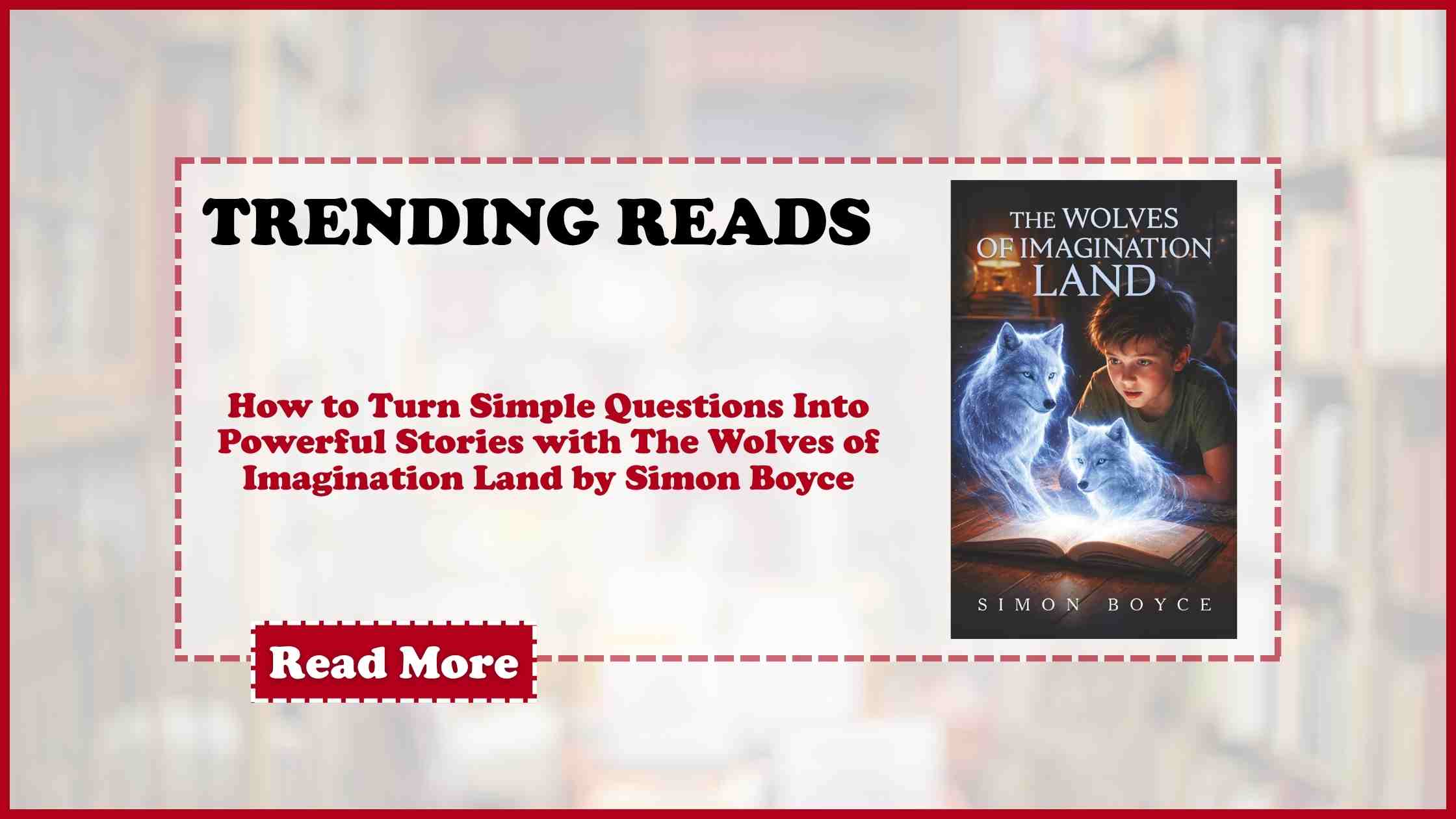
In The Wolves of Imagination Land by Simon Boyce, the entire narrative grows from a single, straightforward thought. Why are wolves always portrayed in the same way? That question is not forced or exaggerated. It is natural, almost childlike in its honesty. Yet from it emerges a fully realized world, layered characters, and a story that carries emotional depth.
Turning a simple question into a powerful story requires expansion. The question must move beyond itself and begin shaping characters, settings, and conflict. In this book, that initial curiosity becomes the foundation for two distinct worlds, Terraced Street and Moonhill. Each setting reflects a different way of thinking, allowing the question to take form through contrast rather than explanation.
Characters play a critical role in this transformation. A question becomes meaningful when it affects someone personally. Junior’s quiet concern and Luna’s bold curiosity bring the central idea to life. They do not simply exist within the story. They react to it, challenge it, and grow because of it. Their journey turns a simple thought into an emotional experience that readers can connect with.
Conflict is another essential element. A question gains strength when it meets resistance. In this story, long held beliefs and inherited assumptions stand in the way of change. The tension between families, shaped by old ideas, creates stakes that push the narrative forward. Without that resistance, the question would remain theoretical. With it, the story becomes active and engaging.
A powerful story also requires progression. The question should evolve as the narrative unfolds. It should lead to new discoveries, new challenges, and new perspectives. In The Wolves of Imagination Land, the story moves from curiosity to exploration, from misunderstanding to connection. Each step deepens the original question, making it more meaningful by the end.
Another important factor is restraint. A strong story does not rush to answer its central question. Instead, it allows readers to think, interpret, and draw their own conclusions. This approach creates a more lasting impact. Readers are not told what to believe. They are invited to consider what they have seen and felt throughout the journey.
What makes Simon Boyce’s work stand out is how naturally this process unfolds. The story does not feel constructed around an idea. It feels discovered. The question at its core remains present, guiding the narrative without overpowering it.
For anyone looking to understand how stories take shape, this book offers a clear example. It shows that you do not need a complex concept to create something meaningful. You need a question that matters, characters who carry it, and a world that allows it to grow.
The Wolves of Imagination Land by Simon Boyce demonstrates that even the simplest question can lead to a story that feels expansive, thoughtful, and unforgettable.
Get Your Copy On Amazon Today: https://www.amazon.com/dp/1972989685/