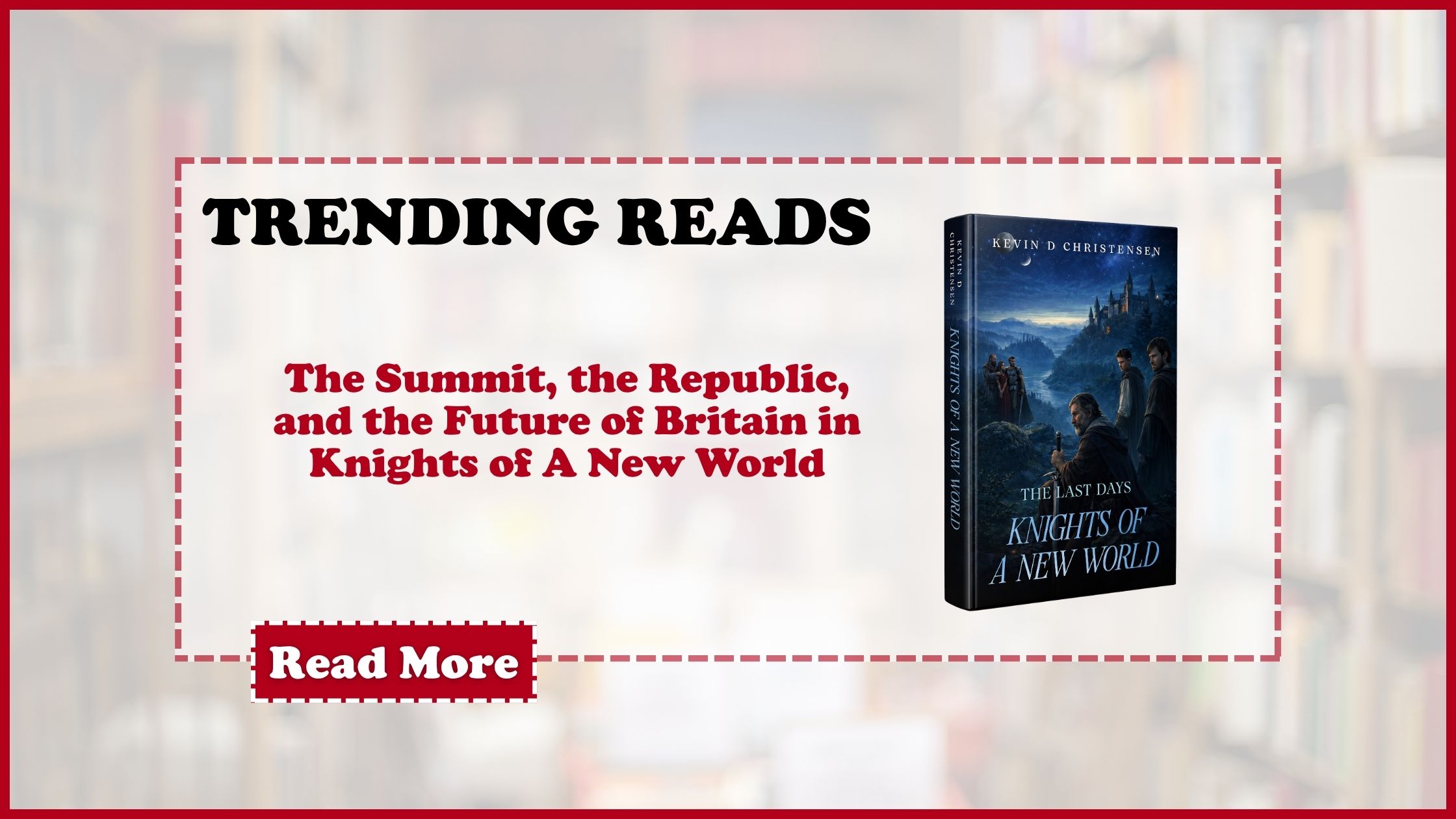
Kevin Christensen’s Knights of A New World places Britain at a decisive turning point, where old powers struggle to survive and new visions of government begin to take shape. Set against the charged world of Roman Britain, tribal territories, Atlantean ambition, and political unrest, the novel turns one looming summit into the centre of a far greater conflict.
The summit is more than a meeting of leaders. It is a test of power, loyalty, and vision. Britain stands between competing futures, with Rome guarding its authority, native communities seeking security, and Atlantean forces carrying ideas that could transform the land forever. Every discussion of peace carries the threat of war. Every promise of progress raises questions about control. Every political speech hides a deeper agenda.
At the heart of this struggle is the future republic. The idea of reform brings hope to some and fear to others. A new political order could mean education, rights, stability, and protection for those long ignored. Yet it could also become another system ruled by ambition, wealth, and manipulation. Christensen uses this tension to give the story a sharp political pulse. Readers are not simply watching kingdoms clash. They are watching the foundations of a new society being argued into existence.
Britain becomes the prize, but also the proving ground. Its villages, fortresses, courts, and borderlands reveal the human cost of policy and conquest. Leaders speak of progress, but ordinary people live with taxation, superstition, violence, slavery, and uncertainty. This gives Knights of A New World its force. The fate of nations is never distant from the lives of villagers, prisoners, soldiers, servants, and those brave enough to question authority.
Leia Sobek stands out as one of the novel’s boldest voices in this political landscape. Through her, the book confronts education, native rights, environmental concerns, slavery, and the cost of silence. Her courage brings moral pressure to a world where many powerful men prefer obedience over truth.
For readers who enjoy alternate history, political drama, faith shaped conflict, and high stakes worldbuilding, Knights of A New World offers a story with scope and purpose. Kevin Christensen imagines a Britain where the past is not fixed, the future is contested, and the dream of a republic may either free a people or bind them under a new kind of rule.