A postcard written in haste can say more about a city than a formal report written years later. In early 20th-century Chicago, postcards captured daily life as it unfolded, revealing how people worked, traveled, loved, struggled, and found moments of joy. These small pieces of paper now serve as remarkably honest records of a growing city shaped by industry, immigration, and human connection.
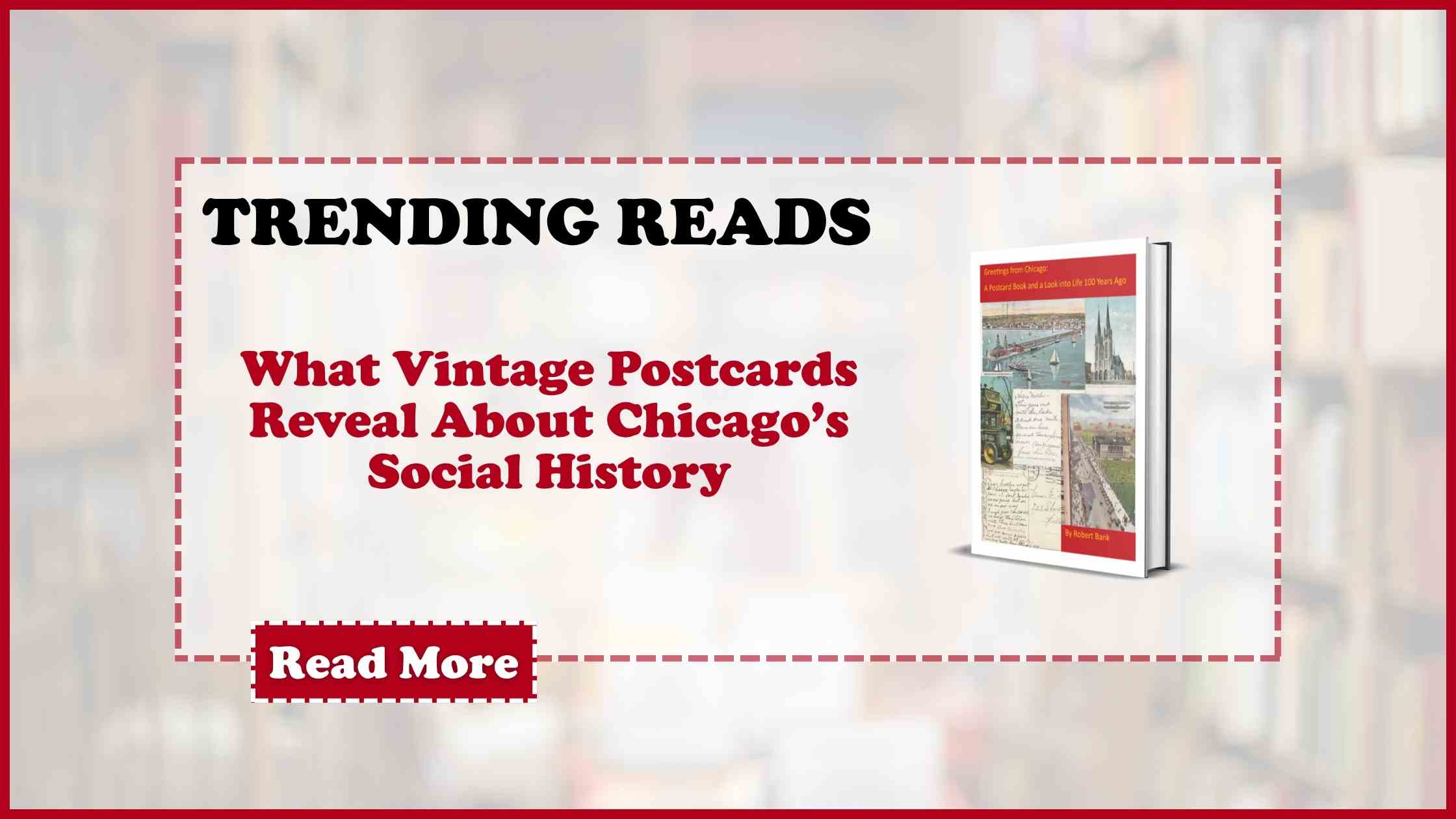
Vintage postcards offer something rare in historical study. They preserve personal voices alongside visual evidence. In Greetings from Chicago: A Postcard Book and a Look into Life 100 Years Ago by Robert Bank, postcards are presented not merely as images but as firsthand accounts of social life. Each message, postmark, and photograph reflects the realities of the people who lived in the city during a time of profound change.
Class and work life emerge clearly through these brief notes. Many postcards mention long workdays, factory shifts, or employment at stockyards, rail depots, and department stores. Writers often shared where they worked or how busy they had been, sometimes expressing pride and sometimes exhaustion. These casual remarks reveal how central labor was to daily identity in Chicago, a city known for industry and production. They also hint at economic differences, as some writers described leisure and travel while others focused on making ends meet.
Immigration is another powerful theme revealed through postcards. Chicago was home to people from across Europe and beyond, and postcards often traveled between the city and distant hometowns. Messages written in different languages or referencing relatives overseas show how immigrants maintained ties across borders. These notes reflect both opportunity and longing. Many writers shared excitement about life in Chicago while also expressing homesickness and concern for family members far away.
Relationships unfold in subtle but meaningful ways. Postcards were exchanged between spouses, siblings, parents, and friends. Some messages are affectionate and warm, while others are practical or even tense. A short note apologizing for not writing sooner or announcing a delayed visit reveals the rhythms of family life. Romantic postcards hint at courtship and emotional bonds, reminding readers that love and companionship were just as important then as they are now.
Leisure and community life also appear through postcard imagery and text. Scenes of parks, beaches, amusement grounds, and sporting events show how Chicagoans spent their free time. Writers described outings, performances, and gatherings, offering insight into how people relaxed and socialized. These moments of leisure balance the demands of work and reflect a city that values public spaces and shared experiences.
What makes Greetings from Chicago by Robert Bank especially valuable is its role as a primary source archive. The book does not reinterpret history from a distance. Instead, it allows the past to speak for itself through authentic voices and original artifacts. Readers are invited to observe rather than be told, creating a deeper understanding of Chicago’s social fabric.
To truly appreciate how vintage postcards reveal the social history of Chicago, reading Greetings from Chicago: A Postcard Book and a Look into Life 100 Years Ago by Robert Bank is strongly recommended.