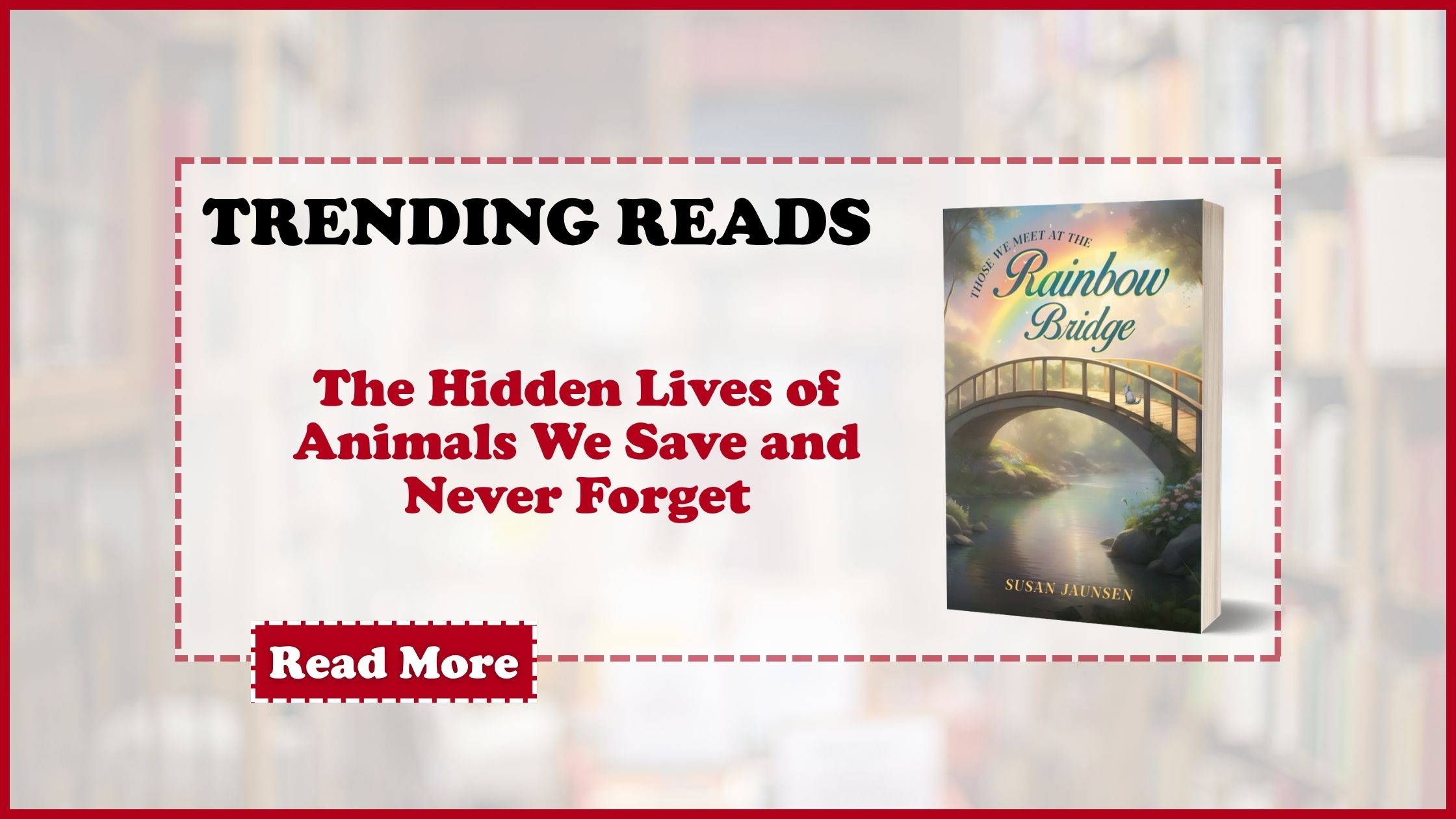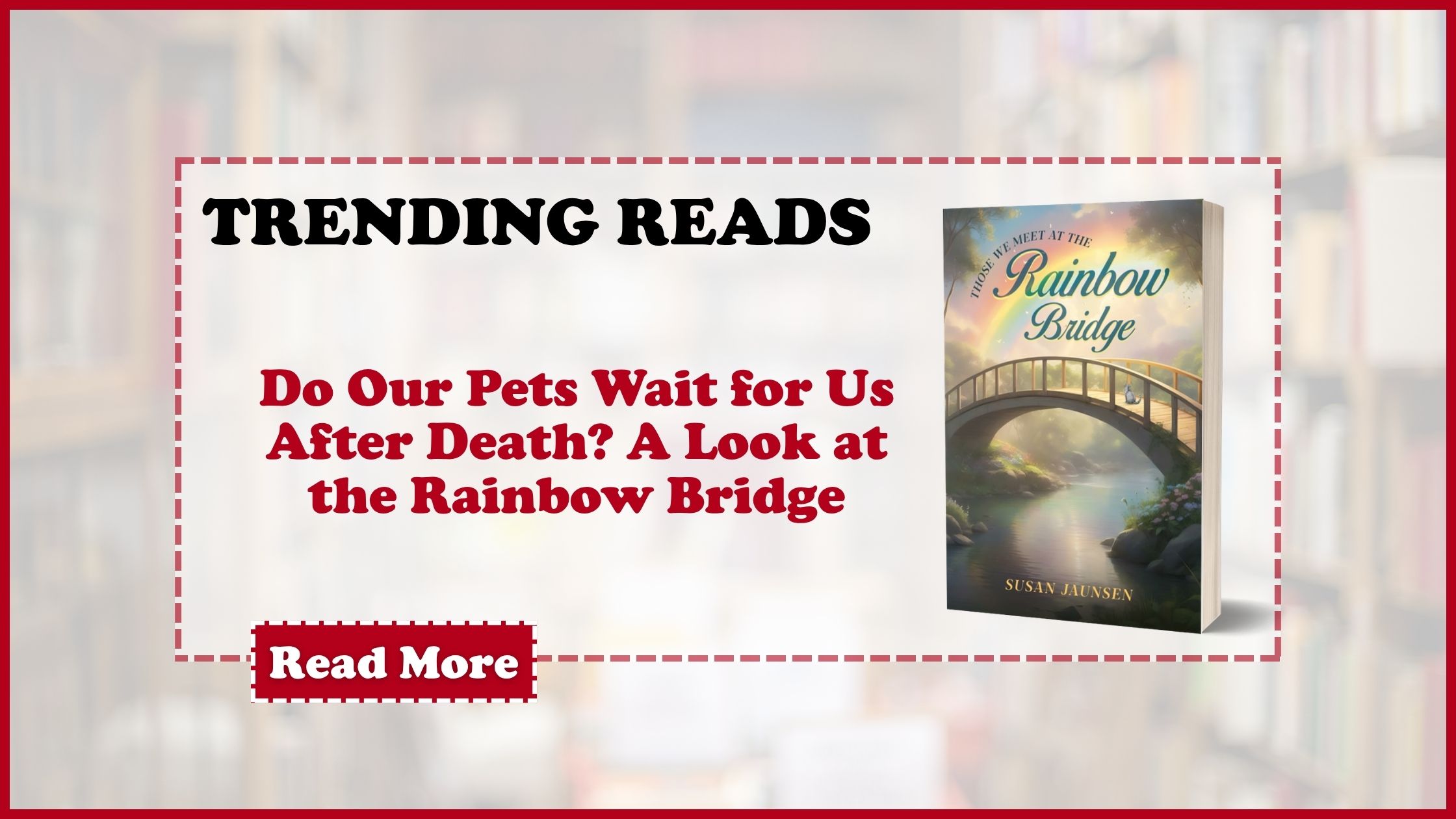
For anyone who has ever loved an animal, the question lingers long after goodbye: do they wait for us somewhere beyond this life? In THOSE WE MEET AT THE RAINBOW BRIDGE, author Susan Jaunsen explores this question through a tender blend of lived experience, memory and imaginative reunion, offering readers a comforting vision of what lies beyond loss.
At the heart of the book is the concept of the Rainbow Bridge, a symbolic place where animals go after death, waiting peacefully until they are reunited with the humans who loved them. But in Jaunsen’s telling, this is not just a distant fantasy. It is an emotional landscape built from real bonds formed through rescue, care and companionship. It is a place shaped by every act of kindness given to animals like Willow, Chloe, Shadow, Oliver, Siam, Smokey, Bama and countless others.
These stories are rooted in everyday moments: a cat curling beside its caretaker during a difficult night, a dog faithfully waiting through changing years, a feral cat slowly learning trust through consistent feeding and patience. Each animal becomes a living reminder that love is not abstract; it is expressed through presence, attention and care. And when that life ends, the bond does not simply disappear; it transforms.
The Rainbow Bridge, as portrayed in the book, is where that transformation completes its journey. It is a place where animals are no longer defined by suffering, abandonment or fear, but by safety, joy and recognition. Chloe’s spirited voice, Shadow’s quiet devotion, Bama’s loyal companionship and Willow’s deep emotional connection are all imagined as continuing there, whole and unburdened.
One of the most powerful emotional threads in the book is the idea of waiting. The animals are not lost; they are waiting. Waiting in a meadow of peace, where time is gentle and memory is alive. They wait not in sadness, but in certainty, as if love itself guarantees reunion. This vision reframes death not as separation, but as a pause in a longer story.
Readers are guided through this emotional landscape with honesty. The book does not avoid grief; it embraces it as part of love’s full expression. The loss of Willow, the fragile final moments of Oliver and the quiet passing of feral companions are all rendered with emotional clarity. Yet each loss is met with the belief that connection persists beyond physical absence.
In this way, THOSE WE MEET AT THE RAINBOW BRIDGE becomes more than a collection of animal stories. It becomes a reflection on memory itself. It asks readers to consider whether love is bound by time or whether it continues in forms we cannot always see or explain.
Through this lens, the Rainbow Bridge is not just a destination for pets; it is a continuation of the relationship. It is a space where recognition remains intact, where animals remember the humans who saved them and where humans are finally able to understand the full depth of the bond they shared.
For many readers, this idea offers profound comfort. It suggests that every rescue, every act of care, every moment spent with a beloved animal is not lost to time. Instead, it is preserved in a place beyond reach, waiting to be revisited when the journey of life comes full circle.
Ultimately, Susan Jaunsen invites readers to imagine a world where love is stronger than separation. A world where pets do not vanish into silence, but instead wait patiently, familiar and faithful at the edge of a bridge made entirely of memory and hope. And when the time comes, they will be there, as they always were, ready to run back into the arms of the ones they never forgot.