Healthcare reform in the United States has become a familiar cycle: ambitious proposals, substantial investment, partial implementation and ultimately, disappointing results. Despite decades of policy experimentation and trillions of dollars in spending, the system continues to struggle with rising costs, uneven access and outcomes that lag behind other high-income nations. The persistent question is not whether reform is attempted, but why it so often fails to deliver lasting transformation.
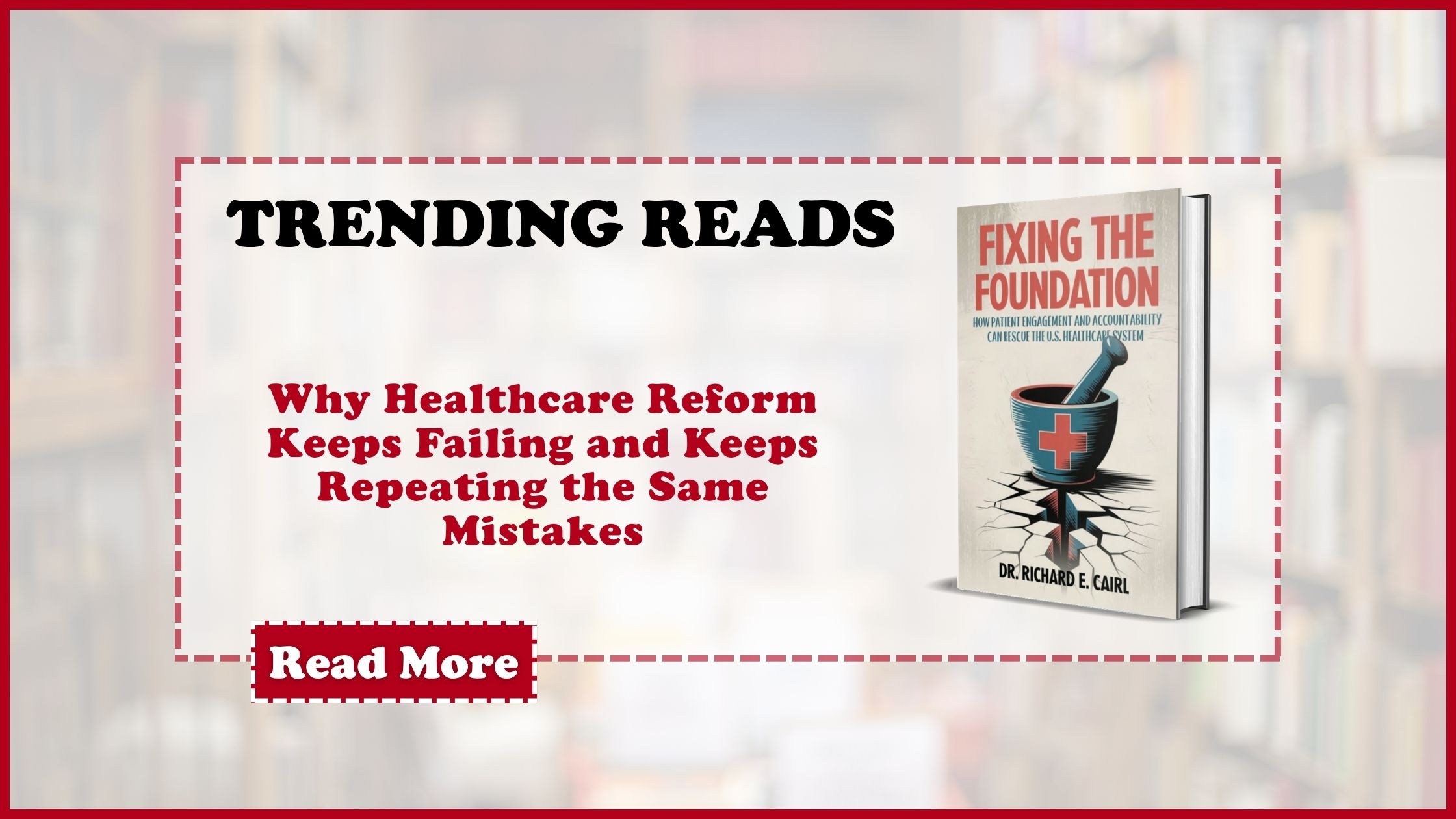
In Fixing the Foundation, Dr. Richard E. Cairl offers a compelling explanation: healthcare reform repeatedly fails because it focuses on repairing the visible structure of the system while neglecting its foundational layer, the consistent engagement and accountability of patients in producing their own health outcomes.
Most reform efforts target system-level variables such as insurance coverage, payment models, hospital efficiency, pharmaceutical pricing and technological modernization. These are important levers, but they overlook a critical reality: healthcare outcomes are not produced solely in clinical settings. They are shaped continuously in the everyday decisions patients make, whether they take medications correctly, follow dietary guidance, attend appointments, recognize warning signs and communicate openly with providers.
When these behaviors are inconsistent or unsupported, even the most sophisticated medical interventions lose effectiveness. This creates a structural paradox: the system invests heavily in treatment while underinvesting in the behavioral foundation that determines whether treatment works.
Dr. Cairl argues that this oversight explains why reform efforts often produce temporary gains but fail to sustain long-term improvement. A new payment model may improve efficiency for a time. A digital platform may enhance communication briefly. A policy shift may expand access. Yet without embedding patient engagement and accountability into the system’s core design, the underlying patterns of chronic disease, avoidable hospitalizations and preventable complications remain unchanged.
At the heart of this failure is a misunderstanding of healthcare itself. The dominant model still treats patients primarily as recipients of care rather than co-producers of health. Clinicians diagnose, prescribe and intervene, while patients are expected to comply. But in reality, the vast majority of health outcomes are determined outside the clinic in homes, workplaces and communities where daily choices accumulate over time.
This gap between clinical intervention and lived behavior is where reform repeatedly breaks down. It is also where costs escalate most sharply. Chronic conditions such as diabetes, cardiovascular disease and obesity require sustained behavioral engagement. When that engagement falters, the system defaults to expensive, reactive care: emergency visits, hospital readmissions and escalating pharmacological complexity.
Fixing the Foundation argues that reform fails not because the system lacks intelligence or resources, but because it lacks integration of the patient into its operational design. Engagement is often treated as optional and accountability is rarely structured into care pathways. The result is a system that repeatedly treats the consequences of disengagement rather than preventing it.
The book proposes a different framework, one in which patient engagement and accountability are institutionalized alongside access, quality and cost. This requires more than education campaigns. It demands redesigning workflows, incentives and communication systems so that patients are supported in asking questions, understanding instructions, disclosing barriers, adhering to care plans and recognizing early warning signs.
Crucially, Dr. Cairl does not frame this as blame. Instead, he describes a shared responsibility model. Providers must communicate clearly and build trust. Policymakers must align incentives with participation. Technology must reduce friction and support behavior change. And patients must be empowered and expected to engage actively in their care.
This reframing exposes why reform efforts so often repeat the same mistakes. They attempt to fix outcomes without addressing the behaviors that produce them. They redesign systems without fully activating the human element that determines whether those systems succeed.
Ultimately, Fixing the Foundation challenges readers to reconsider what true reform requires. It suggests that healthcare will continue to struggle until it stops treating patient engagement as an accessory and begins treating it as infrastructure. Only then can reform move beyond repetition and toward lasting transformation.