Elections are essential to democracy, but they are not enough to keep it healthy. Casting a vote gives citizens a voice in choosing leaders, yet democracy depends on what happens before, during, and after election day.
A strong democracy requires informed citizens. Voters must understand the issues, examine competing claims, and question information that may be misleading. When people vote without reliable knowledge, elections can become contests of emotion, fear, or party loyalty rather than thoughtful public judgment.
Democracy also requires accountability. Winning an election does not give leaders unlimited authority. Elected officials must remain answerable to the law, the Constitution, and the citizens they serve. Courts, legislatures, journalists, and public institutions all play a part in preventing the misuse of power. When these safeguards weaken, elections may continue while genuine public control begins to disappear.
Citizen participation must continue between elections. People strengthen democracy by attending local meetings, contacting representatives, supporting community organisations, discussing public concerns, and asking difficult questions. A government cannot reflect the needs of its people when most citizens remain silent except when choosing a name on a ballot.
Respect for disagreement is equally important. Democracy allows people with different beliefs to live under the same system of government. It does not require everyone to agree, but it does require citizens to accept lawful outcomes, protect the rights of others, and reject the idea that political opponents are enemies of the nation.
Free speech and a free press are also central to democratic life. Citizens must be able to criticise leaders without fear. Journalists must be permitted to investigate public decisions. Unpopular opinions must still receive legal protection. Without open debate, voters cannot make meaningful choices.
Democracy also depends on trust, but trust must be earned. Public institutions need to operate fairly, explain their decisions, and correct their failures. Citizens, in return, must take responsibility for learning how those institutions work rather than judging them only through rumours or partisan claims.
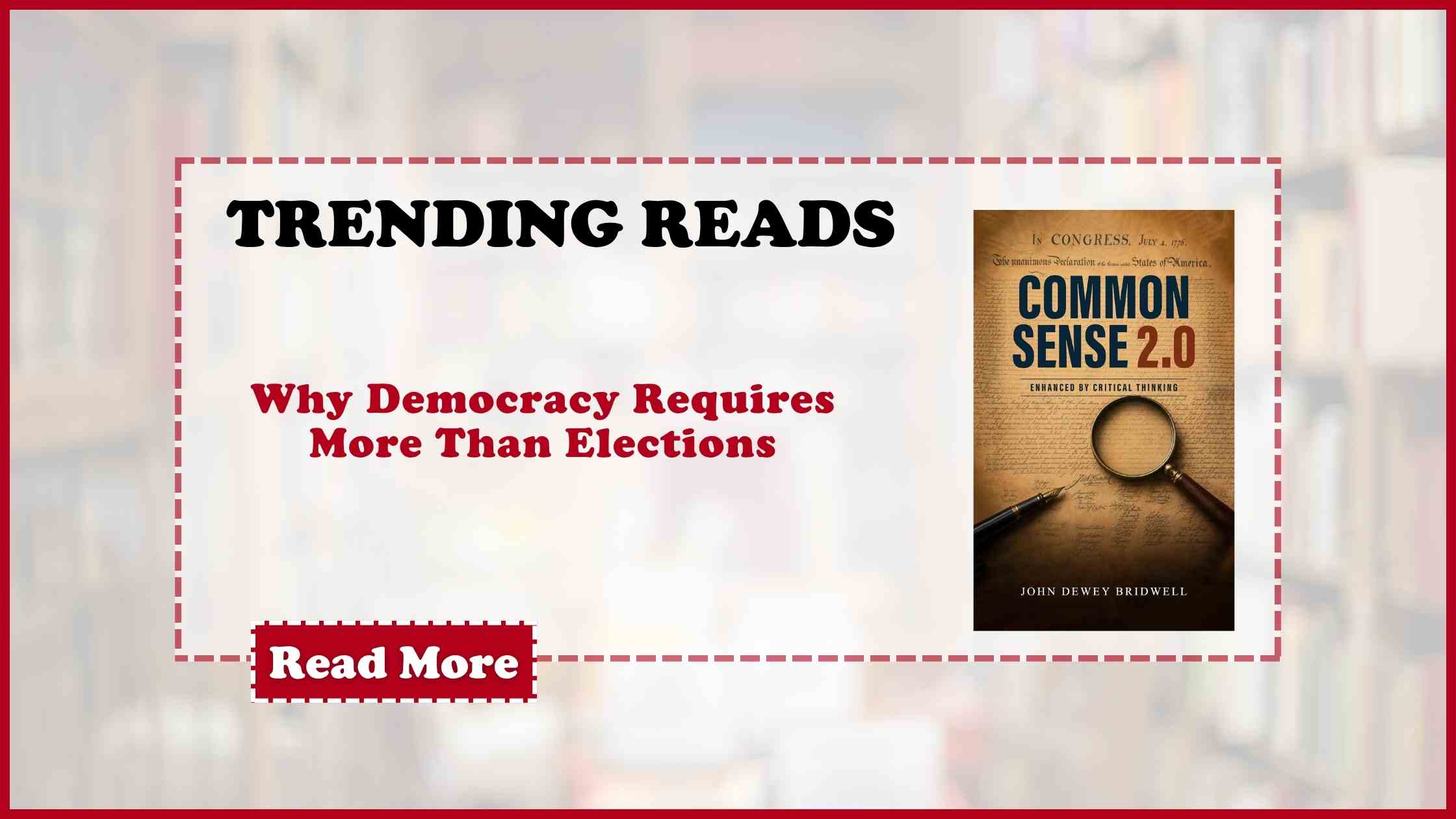
In Common Sense 2.0, John Dewey Bridwell examines the responsibilities that support American self government. The book looks beyond elections and asks whether citizens, leaders, and institutions are still prepared to protect the principles on which the nation was founded.
Democracy survives when people do more than vote. It survives when they remain informed, involved, responsible, and willing to defend the rights of others.
Common Sense 2.0 offers readers a direct examination of what American democracy requires and what citizens must do to preserve it.
Discover this book now, available on Amazon: https://www.amazon.com/dp/B0H85CPT6G/