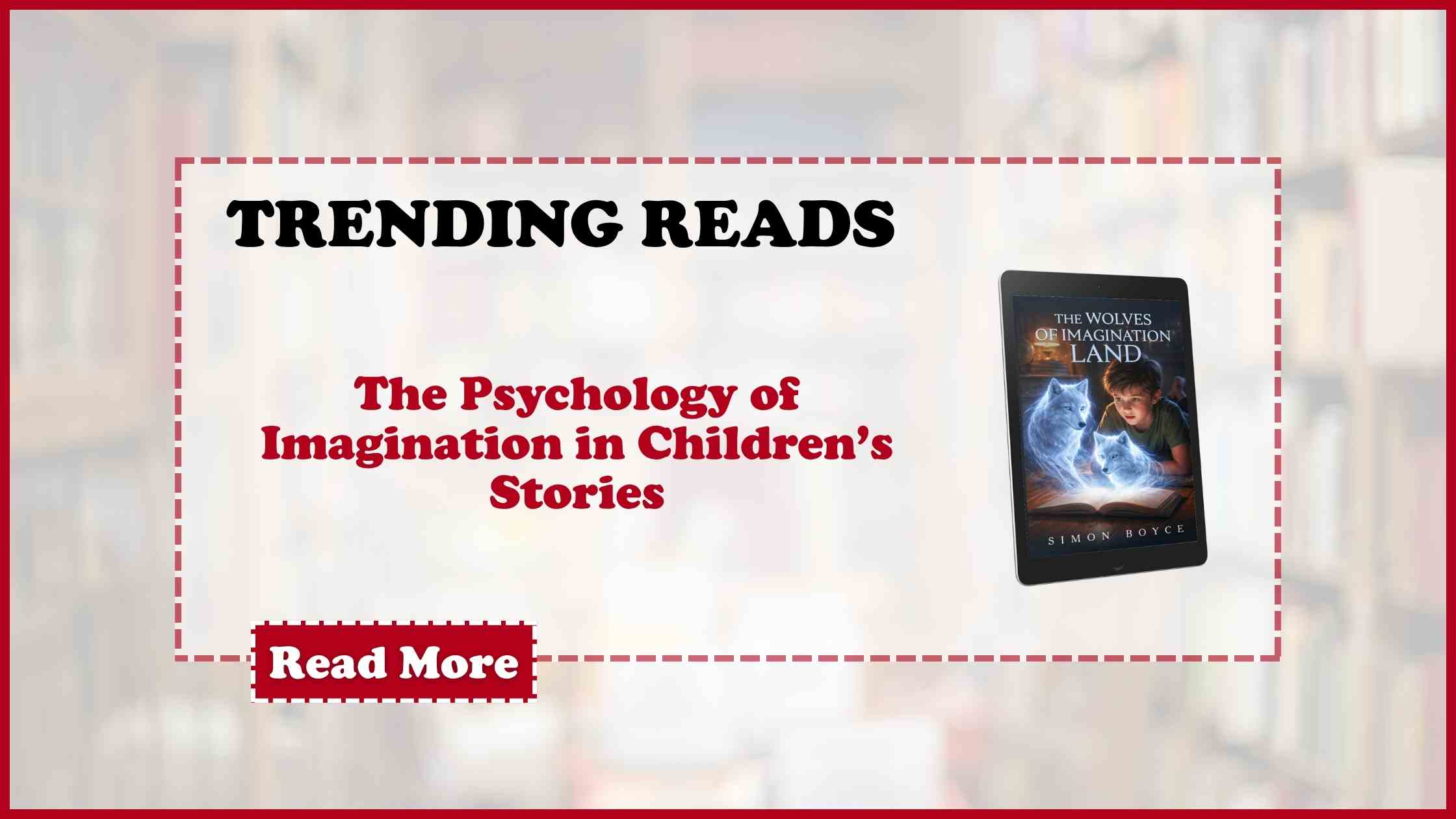
Imagination is one of the most powerful parts of childhood. It helps children explore feelings, test ideas, understand others, and make sense of the world around them. In The Wolves of Imagination Land by Simon Boyce, imagination becomes more than a creative gift. It becomes the heart of the story itself.
Children often use imagination to process ideas that feel too big or complicated in real life. Through fantasy, they can face fear, unfairness, courage, friendship, and change in a safe and meaningful way. This is why a story about two young wolves can speak so clearly to young readers. Junior and Luna are not simply characters on an adventure. They represent the questions many children carry inside themselves.
Junior wonders why wolves are always seen as villains in old stories. That question reflects something children understand deeply: the need to be treated fairly. Young readers may recognise his confusion, his frustration, and his quiet hope that things can be different. Luna brings another important part of childhood imagination. She is curious, bold, and eager to discover what lies beyond the world she has been given. Together, they show how imagination helps children question limits and picture better possibilities.
Fantasy stories also support emotional growth because they allow children to step into another point of view. When readers follow Junior and Luna, they see how old beliefs can separate people who might otherwise become friends. They learn that listening can change fear into understanding. They see that courage is not only about danger. It is also about kindness, loyalty, and choosing a new path when everyone else expects the old one.
The Wolves of Imagination Land uses its magical setting to show how stories shape identity. Imagination Land changes when humans dream, write, and tell stories. This idea gives children a clear and memorable message: the stories we repeat matter. If old tales can make wolves seem frightening or misunderstood, new stories can help them be seen with fairness and warmth.
For children, this kind of storytelling strengthens creative thinking. It encourages them to ask what else might be possible. What if enemies became friends? What if a hidden path appeared when someone dared to believe differently? What if a child’s imagination could change an entire world? These questions help young readers become more flexible, thoughtful, and open minded.
Simon Boyce’s book offers adventure, warmth, and meaning in a way that feels accessible for children and valuable for adults. Parents and teachers looking for a story with heart will find a rich reading experience here. The book invites children to dream while also helping them understand empathy, courage, and the power of changing unfair ideas.
The Wolves of Imagination Land is a celebration of childhood imagination. It reminds readers that stories do not only entertain. They help children grow, connect, question, and believe that a kinder version of the world can always be imagined.
Get Your Copy On Amazon: https://www.amazon.com/dp/1972989685/