Few subjects in American life are as emotionally charged as healthcare. Conversations about access, affordability, insurance, quality and equity quickly become political, ethical and personal.
But there is another part of the conversation that receives far less attention: What responsibilities, if any, should patients have for their own health?
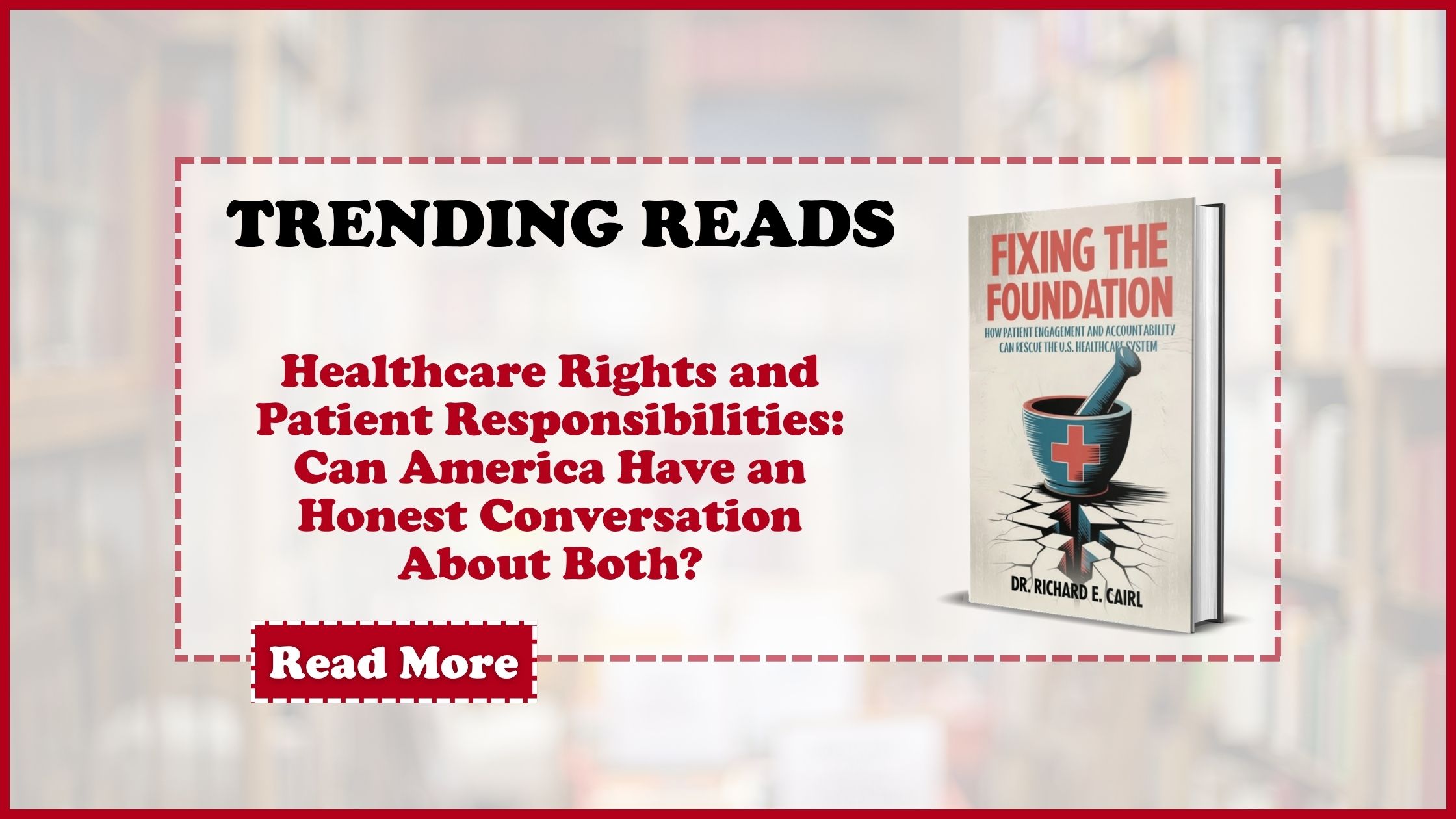
In Fixing the Foundation: How Patient Engagement and Accountability Can Rescue the U.S. Healthcare System, Dr. Richard E. Cairl argues that America needs a more balanced discussion one that recognizes the importance of healthcare access while also acknowledging that meaningful rights can coexist with meaningful responsibilities.
The book does not reject the idea that healthcare should be equitable and accessible. Instead, Dr. Cairl asks readers to consider what happens when the conversation focuses almost entirely on what the healthcare system owes the patient, while giving comparatively little attention to what patients can contribute to their own outcomes.
That contribution can take many forms.
Patients can ask questions when instructions are unclear. They can attend scheduled appointments, follow agreed-upon care plans, take medications as directed, seek recommended screenings, monitor chronic conditions and communicate honestly about barriers that make adherence difficult. They can also make informed lifestyle choices that support prevention and long-term health.
These expectations may sound straightforward, but they become complicated when the word “accountability” enters the conversation.
Too often, accountability is interpreted as blame.
Dr. Cairl challenges that assumption. In his framework, accountability is not about punishing people for becoming ill, denying care or ignoring the social and economic factors that shape health. It is about recognizing patients as capable participants whose decisions, behaviors and follow-through matter.
That distinction is essential.
A patient cannot reasonably be expected to manage a complicated condition without clear information, support, accessible resources and a healthcare provider who communicates effectively. Likewise, healthcare professionals cannot control what happens during the many hours a patient spends outside the clinic.
The solution, therefore, is partnership.
Fixing the Foundation presents patient engagement and patient accountability as mutually reinforcing ideas. Engagement gives people the knowledge, confidence, tools and support to participate in their care. Accountability encourages them to act on that support.
This approach becomes especially important in chronic disease management. Diabetes, hypertension, obesity, cardiovascular disease and other long-term conditions often require consistent self-management. A medical team can provide expertise and treatment, but many of the choices that shape outcomes happen in daily life.
Dr. Cairl also expands responsibility beyond patients. Providers must create genuine partnerships rather than simply issue instructions. Policymakers must build systems that reward engagement, prevention, health literacy and shared decision-making. Healthcare organizations must give professionals the time and tools needed to support meaningful patient participation.
That is what makes the book’s argument more nuanced than a simple call for “personal responsibility.”
It is a call for shared responsibility.
America does not have to choose between compassion and accountability or between healthcare rights and patient responsibility. A stronger healthcare system may require all of them.
In Fixing the Foundation: How Patient Engagement and Accountability Can Rescue the U.S. Healthcare System, Dr. Richard E. Cairl invites readers to reconsider the relationship between patients, providers and the system itself and to ask whether lasting healthcare reform can succeed without everyone having a meaningful role.
Read the book on Amazon: https://www.amazon.com/dp/B0GRCRBKB6/