Every person alive carries a history that stretches far beyond family photographs, written records, and remembered names. Long before our earliest human ancestors walked across ancient landscapes, the line that eventually produced us passed through countless forms of life. Mammals, reptile like ancestors, early land animals, fish, and organisms far simpler than anything we would recognize as human all belong somewhere in that immense biological story.
Science allows us to reconstruct parts of that history through fossils, genetics, comparative anatomy, and evolutionary biology. We can study how bodies changed, how species adapted, and how life survived environmental disasters. What science cannot currently offer is a conversation with those ancestors.
But what if it could happen?
Imagine being able to experience the world through the senses of an animal that lived hundreds of millions of years ago. You might feel the movement of an ancient river, sense a predator nearby, or witness forests filled with plants and creatures that vanished long before humans existed. Instead of studying evolution only through bones and rock, you would encounter it as lived experience.
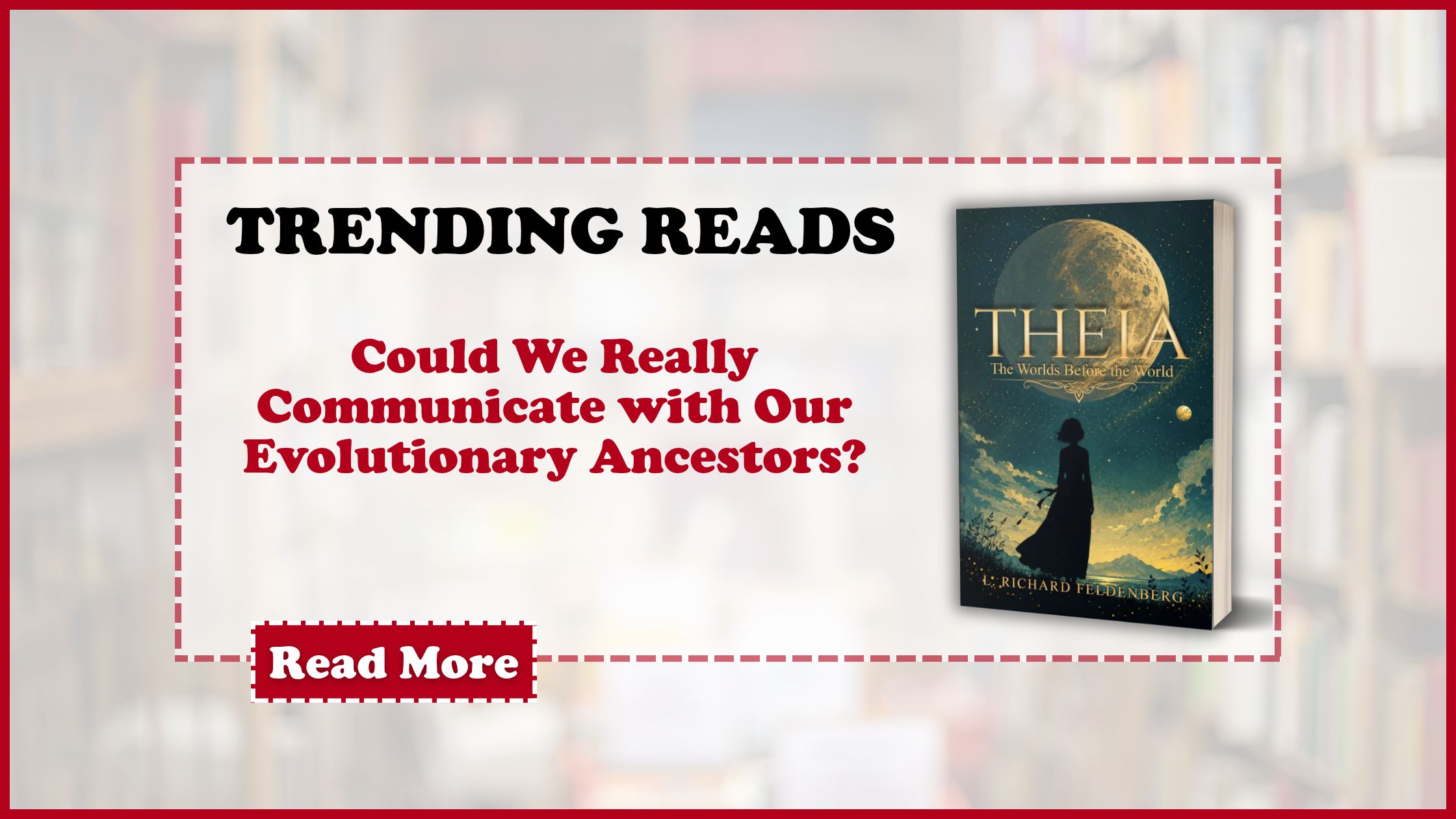
That possibility sits at the heart of Theia, a science fiction novel that turns the human family tree into something far more personal.
Theia Soul has an unusual ability. She can communicate mentally with beings from distant periods of evolutionary history. These companions are not ghosts or reconstructed memories. They are living creatures within their own moments in time, connected to Theia through a mysterious ability known as Prajna.
Through them, evolution stops feeling like a diagram in a textbook. It becomes a chain of individual lives. Each creature hunts, escapes danger, searches for food, forms relationships, and struggles to survive. Their worlds may be separated from Theia’s by millions of years, but their survival is tied to hers.
That connection raises a larger question. If every living organism belongs somewhere within the history of life, how separate are we really from the creatures that came before us?
Our bodies already contain traces of that past. Evolution has modified old structures rather than beginning again with every new species. Human anatomy carries evidence of earlier forms, while our DNA preserves relationships reaching deep into biological history.
Theia takes that scientific reality and pushes it into speculative territory. What if ancestry carried more than genes? What if consciousness itself could reach along the branches of life’s family tree?
As Theia begins to understand her ability, the question becomes more urgent. Her connection to the past may not exist merely so she can observe extinct worlds. It may have something to do with the future and with whether life survives another period of catastrophic change.
In Theia, our evolutionary ancestors are not simply creatures that disappeared.
They may still have something to tell us.
Want To Discover More? Head Over To Our Website: https://www.librarything.com/profile/RichFeldenberg