One of the questions I’ve been asked throughout my career is “How do we know whether leadership development is actually working?” At first glance, that sounds like a straightforward question. In reality, it’s one of the most important questions our profession has ever asked.
Organizations invest enormous amounts of time, energy, and resources developing leaders and send people to workshops, provide executive coaching, administer assessments, launch leadership academies, and create competency frameworks. Yet somewhere along the way, it doesn’t count for a change.
For many years, I don’t think leadership development answered that question particularly well, as we are measuring attendance, course completion, participant satisfaction, and knowledge retention as the main metrics of leadership. Occasionally, we measured behavior, but much less often, we measured growth. Organizations invest in leadership development not just to create knowledgeable leaders but to drive change. This includes clearer communication, stronger trust, deeper relationships, better decisions, flourishing teams, healthier cultures, and changed lives.
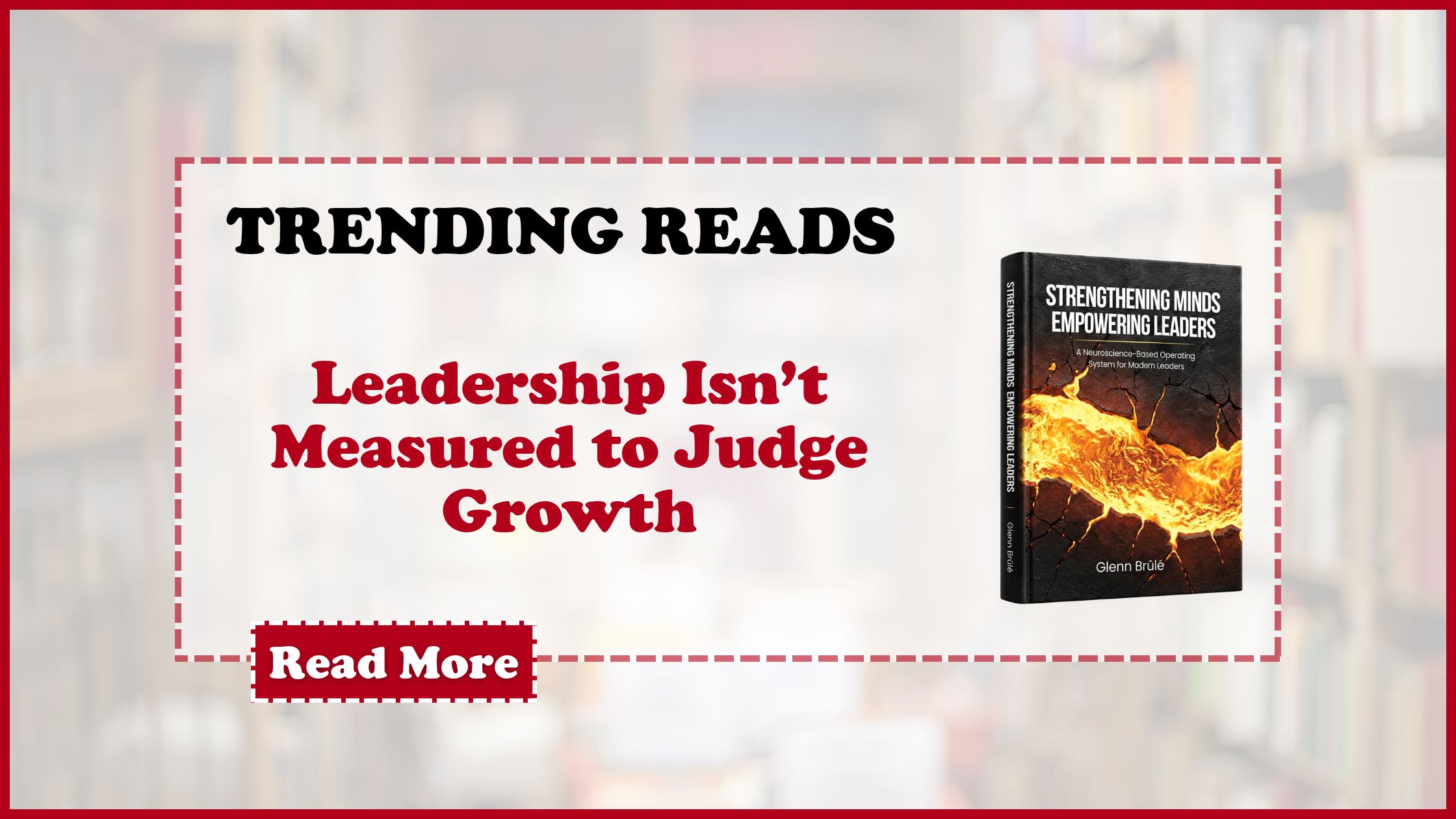
These outcomes deserve to be measured so we can understand whether we’re growing. When we make meaningful progress, dopamine reinforces the behaviors that led to it, and the brain motivates us. But when effort continues without visible evidence of growth, uncertainty increases, motivation starts to fade, and cortisol quietly rises, and the brain naturally begins to question whether the effort is worthwhile because the brain needs evidence that effort is producing growth. I, James Clear, in my book Strengthening Minds. Empowering Leaders captures this beautifully and asserts that improvement is rarely dramatic. It compounds quietly.
Measuring the Ecosystem
One of the promises I made throughout this book was that the IronMind Leadership Operating System® would remain the center of everything. Measurement should honor that promise. Rather than measuring isolated competencies, I believe leaders benefit far more from measuring the health of the entire ecosystem.
- Purpose: Am I leading intentionally?
- Relationships: Are trust and connection becoming stronger?
- Reflection: Am I intentionally learning from experience?
- Habits: Are my daily behaviors becoming more consistent?
- Coaching: Am I helping others discover their own potential?
- Culture: Are people experiencing greater psychological safety?
These aren’t simply metrics. They’re evidence. Evidence that leadership is becoming part of everyday life rather than remaining an occasional event. That’s the difference between measuring activity and measuring transformation.
The Leadership Growth Index™
One of the ideas that has continued evolving throughout the development of IronMind is something I now call the Leadership Growth Index™. It is a way of observing whether intentional leadership is actually becoming intentional living, and it begins with five questions:
- Am I clearer about my purpose than I was last month?
- Am I practicing the leadership habits I intentionally committed to?
- Am I reflecting consistently enough to continue learning?
- Am I reinforcing the behaviors I want to become natural?
- Are the people around me experiencing positive differences because of my leadership?
Notice what isn’t being measured: perfection, comparison, or ranking. Those have never been the purpose. The Leadership Growth Index™ asks, “Am I becoming?” That may be one of the most important measurements a leader ever makes.
After thirty years in leadership development, I’ve learned we often measure what’s easy—attendance, completion, activity—instead of what matters. Therefore, it is time we take into account transformation and measure patience, observation, reflection, conversation, and courage so that growth becomes visible and hope returns to the equation.
Drawing on decades of field experience, join me as I challenge the illusion that leadership can be upgraded through quick-fix management tips or passive information consumption. I provide an integrated operating system rooted in neuroscience, behavioral psychology, and coaching science, teaching leaders how to master emotional regulation, overcome automated stress responses, and cultivate deep self-awareness. Designed as a practical field manual rather than a theoretical textbook, this work equips modern executives with the tools needed to rewrite outdated mental models, build high-trust cultures, and lead with both analytical rigor and genuine human empathy.
Get the book on Amazon: https://www.amazon.com/dp/B0HK4YBJHR