Imagine sitting in a Security Operations Centre (SOC), watching hundreds of security alerts flood your dashboard. Some indicate routine system activities, others result from harmless user behavior and a few might signal genuine cyberattacks. The challenge? Identifying which warnings deserve immediate attention before something serious slips through the cracks.
This overwhelming situation is known as security alert fatigue, a growing operational challenge that can weaken an organization’s ability to identify cyber threats.
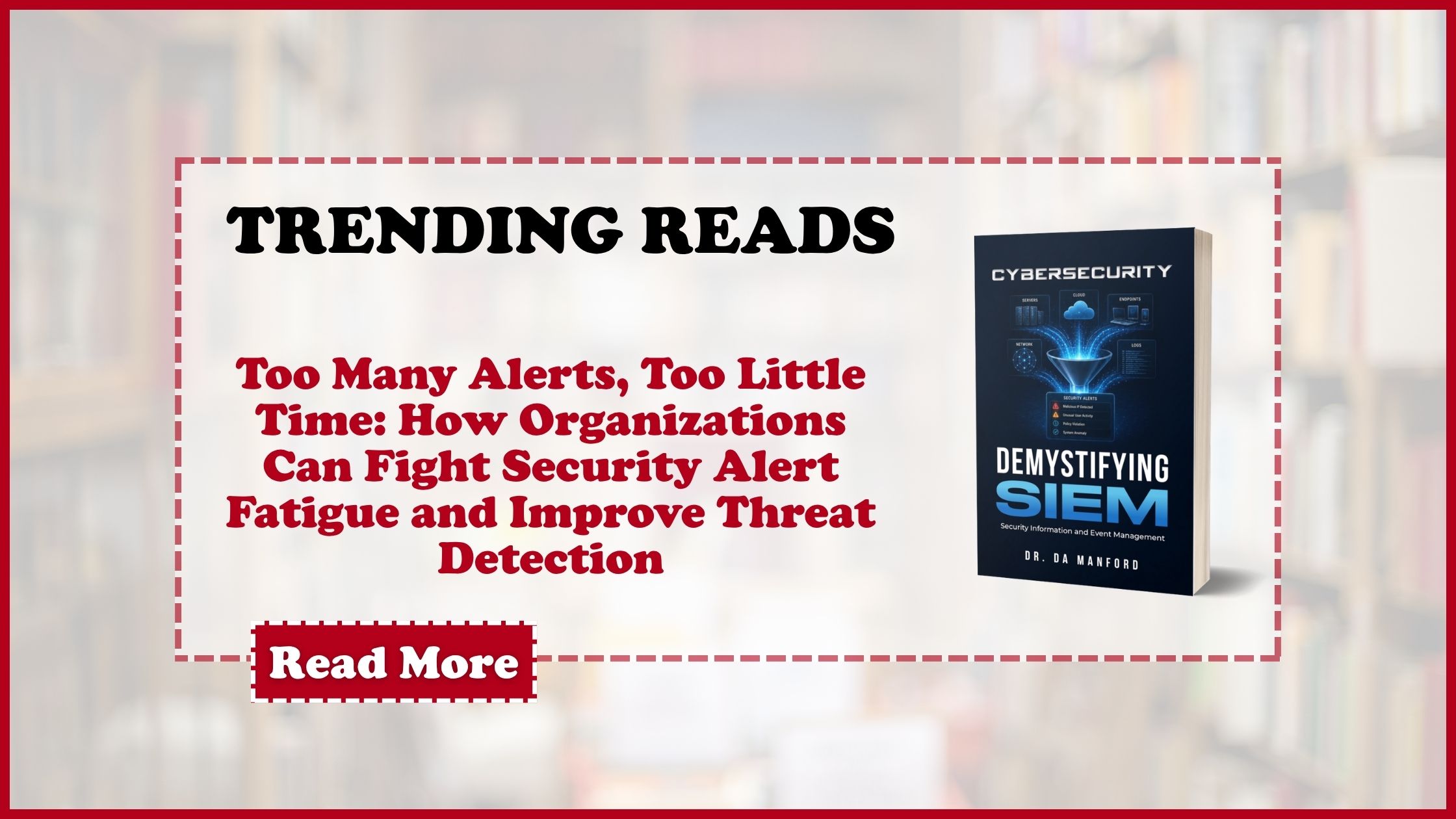
In his insightful book, Demystifying SIEM: Security Information and Event Management, cybersecurity specialist Dr David A. Manford explores why alert fatigue occurs and how organizations can improve security monitoring through smarter detection strategies, effective SIEM management and human expertise.
When Security Alerts Become Part of the Problem
Security Information and Event Management (SIEM) platforms collect and analyze data from networks, applications, endpoints and other systems. They identify suspicious activity and generate alerts that help security professionals investigate potential threats.
However, more alerts do not necessarily mean better protection.
Poorly configured detection rules, duplicate notifications and excessive false positives can overwhelm analysts. Eventually, constant exposure to low-value warnings may make it harder to recognize genuinely dangerous activity.
Dr Manford explains that poorly tuned SIEM systems can create operational inefficiencies, increase analyst frustration and reduce confidence in security monitoring capabilities.
The solution isn’t simply collecting more information. It is learning how to separate meaningful security signals from unnecessary noise.
How SIEM Tuning Helps Security Teams Focus on Real Threats
Effective SIEM monitoring requires continuous improvement rather than a one-time configuration.
One essential approach is SIEM tuning, which involves refining detection rules, adjusting alert thresholds and analyzing normal system behavior to improve detection accuracy.
For example, repeated unsuccessful login attempts might suggest a password attack. However, similar activity could result from an employee entering outdated credentials.
By considering factors such as user behavior, access history, asset importance and surrounding events, security teams can better determine whether an alert warrants investigation.
Demystifying SIEM emphasizes that reducing false positives should never come at the expense of missing genuine threats. Successful tuning balances operational efficiency with reliable detection.
Smarter Detection Through Context and Artificial Intelligence
Modern cybersecurity monitoring increasingly relies on behavioral analytics, contextual enrichment and artificial intelligence to improve threat identification.
Instead of treating every unusual event as equally dangerous, advanced SIEM capabilities can examine patterns across different systems and prioritize activities based on potential risk.
For instance, an unusual login, unexpected privilege escalation and suspicious data transfer might appear unrelated individually. When correlated, however, these activities could indicate a developing security incident.
AI-enhanced SIEM can also group related alerts, identify behavioral anomalies and give analysts additional investigative context.
Nevertheless, Dr Manford highlights an important principle: technology should support human decision-making, not replace it.
Building a Stronger, More Efficient Security Operations Centre
Reducing alert fatigue requires more than sophisticated software. Organizations must establish clear investigation workflows, regularly evaluate detection performance and provide ongoing training for security personnel.
Monitoring metrics such as false-positive rates, alert handling times and incident outcomes can reveal opportunities for improvement.
In Demystifying SIEM: Security Information and Event Management, Dr David A. Manford provides accessible explanations of SIEM architecture, detection logic, alert management, SOC workflows and continuous optimization.
His book offers valuable guidance for cybersecurity beginners, IT professionals, security analysts and organizational leaders seeking to strengthen their security operations.
Don’t let overwhelming security alerts hide the threats that truly matter. Discover how smarter SIEM practices can transform cybersecurity monitoring from endless notifications into meaningful protection.
Get your copy of Demystifying SIEM: Security Information and Event Management today: https://a.co/d/0i7kqXKD
Visit the Author’s Website: https://davidmanford.net/