Imagine walking into a classroom where everyone speaks a language you do not understand. Your classmates seem friendly, your teacher smiles warmly, but even asking a simple question feels difficult. For children adjusting to life in a new country, these everyday experiences can bring uncertainty, loneliness, and a desire to feel accepted.
Schools and communities play an important role in helping immigrant children overcome these challenges. Beyond academic learning, children need understanding, encouragement, and opportunities to participate without feeling that their cultural backgrounds make them different or unwelcome.
A Welcoming Classroom Can Change Everything
In 1961, eight-year-old Luli arrived in Hinsdale, Illinois, from Marianao, Cuba. Following the Cuban Revolution, she began third grade without speaking English, entering an educational environment unlike the one she had known.
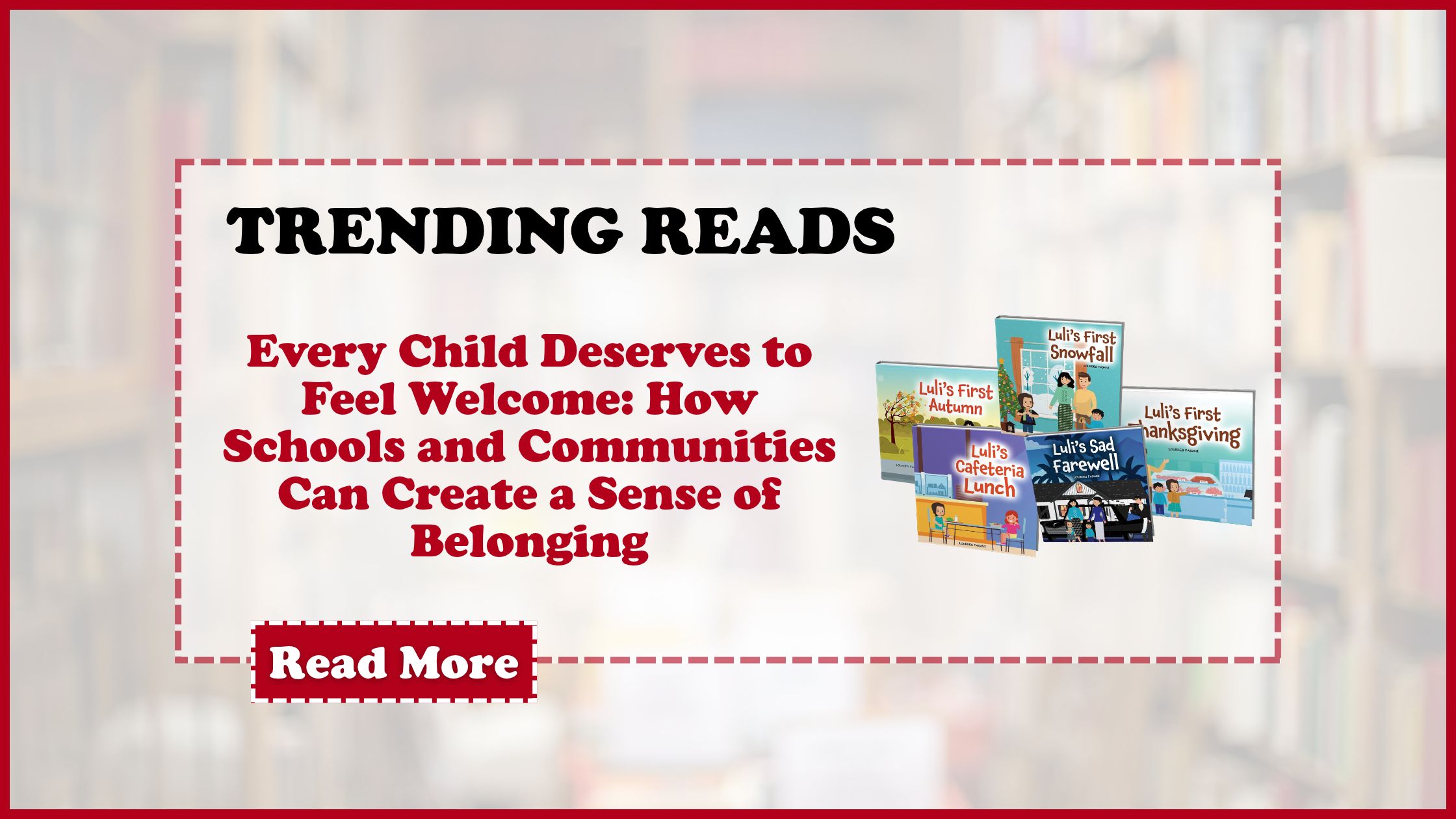
Her experiences, portrayed in Luli’s Cafeteria Lunch by Lourdes Fasani, demonstrate how meaningful a welcoming classroom can be.
When Mrs. Stevens introduced Luli, her classmates greeted her enthusiastically. Although she could not respond in English, their friendliness helped establish an encouraging atmosphere.
Later, during a Thanksgiving classroom activity, Mrs. Stevens helped Luli express what she was grateful for by writing her words on a paper maple leaf.
This simple gesture allowed Luli to participate alongside her classmates without making her limited English proficiency an obstacle to sharing something meaningful.
For educators, such moments offer an important lesson: inclusion begins with recognizing what children can contribute, rather than focusing only on what they have yet to learn.
Understanding Cultural Differences Through Everyday Experiences
A child’s adjustment to a new school involves more than learning a language. Unfamiliar food, routines, and expectations can also create discomfort.
In Luli’s Cafeteria Lunch, Luli struggles with ice-cold milk and steamed broccoli, foods that differ from her familiar Cuban meals.
When her teacher contacts her mother about her uneaten lunches, Luli’s mother finds a practical solution. She prepares small envelopes of powdered cocoa and garlic powder to help make the unfamiliar foods enjoyable.
This experience illustrates why communication between families and schools matters. Understanding a child’s cultural background can help adults respond with patience and creativity rather than misunderstanding unfamiliar behaviors.
Communities Can Help Children Feel They Belong
A sense of belonging extends beyond school walls.
In Luli’s First Autumn, Luli eagerly anticipates her school’s Halloween parade but worries about having a costume. Her family faces financial difficulties, making such purchases challenging.
Their neighbor Lisa generously offers to make costumes for Luli and her younger brother, Mayi.
This thoughtful act gives both children the opportunity to participate in a celebration they had never experienced in Cuba.
Similarly, in Luli’s First Thanksgiving, neighbors invite the family to share an American holiday meal, welcoming their Cuban traditions alongside familiar Thanksgiving dishes.
These experiences show how community generosity can create connections across cultural differences.
Creating Belonging Through Everyday Actions
Helping children feel welcome does not always require elaborate programs or major initiatives.
Teachers can encourage participation despite language barriers. Parents can share cultural experiences with educators. Neighbors can extend invitations that help newcomer families build relationships.
Equally important is allowing children to maintain connections to their heritage while exploring unfamiliar traditions.
For immigrant children, acceptance grows when their experiences are acknowledged and their differences are treated with respect.
Available On Amazon: https://www.amazon.com/stores/Lourdes-Fasani/author/B0FVGJBMBR
Visit the Author’s Official Website: https://lourdesfasanibooks.com/