Some of the deepest emotional wounds are the ones people never talk about. They hide behind familiar smiles, everyday conversations, and the comforting words, “I’m fine.” From the outside, life appears normal. Inside, however, an unspoken experience may continue to shape how someone thinks, loves, trusts, and sees themselves.
Shame has a way of turning painful experiences into private burdens. Instead of asking why something terrible happened, people sometimes begin questioning their own worth.
WHEN SILENCE FEELS SAFER THAN SPEAKING
Not every painful experience is easy to explain. Fear of judgment, rejection, or disbelief can make silence feel safer than vulnerability.
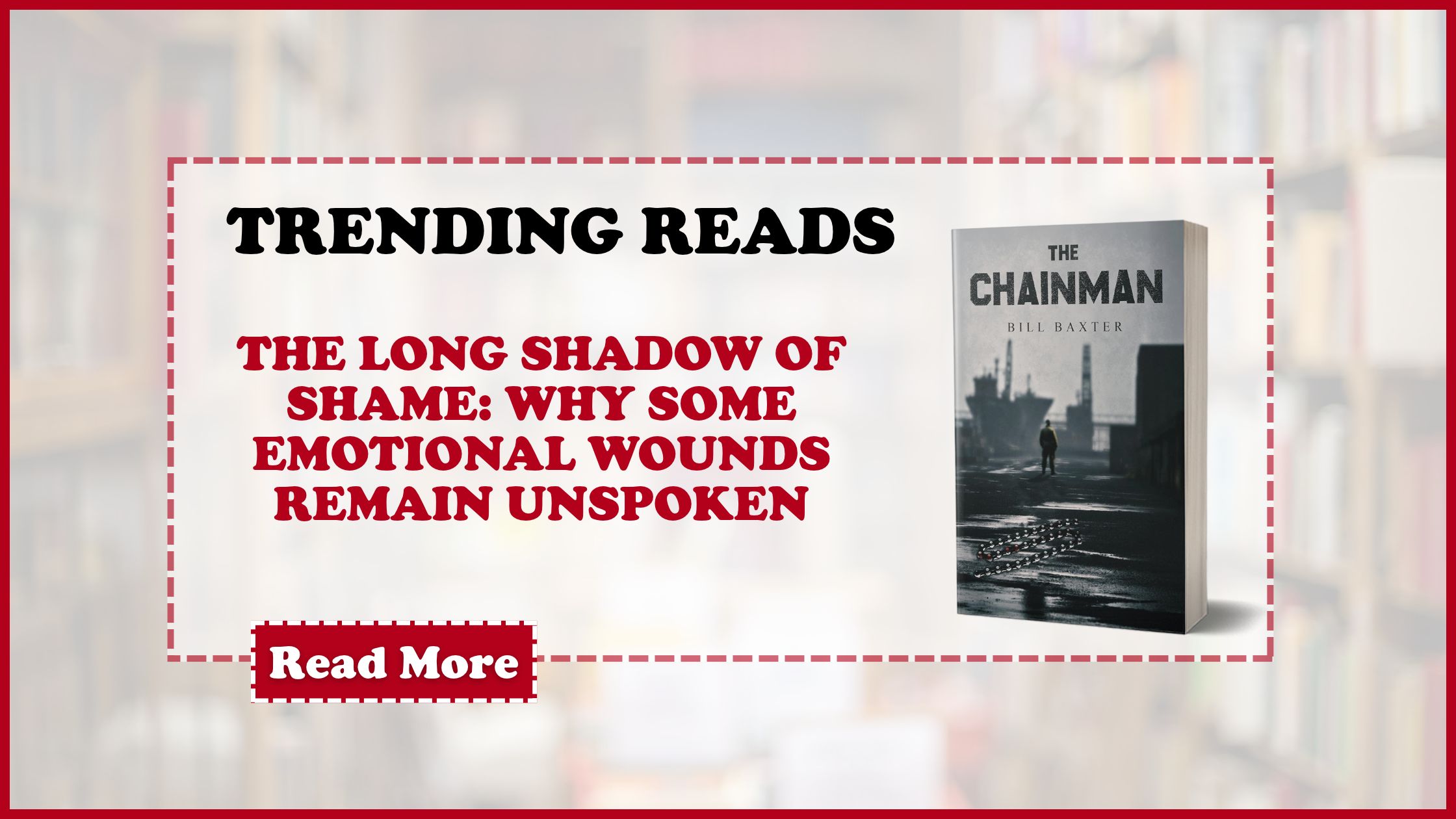
In The Chainman, emotional suffering emerges through characters who struggle to understand and communicate what they have endured. Their experiences reveal how easily distress can become hidden beneath ordinary routines, strained relationships, and attempts to move forward.
Silence is not always a sign that someone has moved on. Sometimes it is simply the only way they know to protect themselves from reopening a painful memory.
The difficulty is that unspoken wounds can influence decisions long after the original experience has passed.
THE EMOTIONAL WEIGHT OF SELF-BLAME
One of shame’s most damaging effects is the way it can distort responsibility.
People who have been mistreated may question whether they should have behaved differently, trusted someone else, or recognised danger sooner. Such thoughts can deepen suffering by placing responsibility on the person who was harmed.
Bill Baxter explores this complexity through Sarah, whose traumatic experiences affect her emotional well-being, relationships, and eventual dependence on alcohol.
Her struggles highlight an important distinction: harmful coping mechanisms may reflect unresolved pain rather than a lack of character.
Understanding someone’s suffering does not mean excusing every decision they make. It means recognising that behaviour often has a history we cannot immediately see.
HOW UNSPOKEN PAIN CHANGES RELATIONSHIPS
Emotional wounds rarely remain confined to one moment.
They can influence intimacy, trust, communication, and the ability to accept affection. Someone who longs for connection may simultaneously fear becoming vulnerable again.
Billy’s experiences in The Chainman reveal another expression of emotional suffering. Following humiliation, abuse, and personal turmoil, he increasingly withdraws from familiar relationships and environments.
His isolation illustrates how painful experiences can transform the search for peace into a desire to disappear from situations that once felt meaningful.
Bill Baxter portrays these different responses without reducing emotional pain to a single pattern. Some people seek distraction. Others retreat into solitude. Some struggle to explain what happened even to themselves.
HEALING DOES NOT REQUIRE ERASING THE PAST
Healing is rarely a straight path, and it does not require someone to pretend an experience never happened.
For Sarah, the journey toward sobriety reflects the difficult work of rebuilding a life beyond years of suffering. Billy’s search for refuge similarly suggests that finding stability may involve changing one’s surroundings and relationship with the past.
Neither journey offers a simple formula. Both remind us that recovery can involve setbacks, difficult choices, and the gradual rediscovery of personal agency.
Perhaps the most meaningful response to another person’s silence is not to demand an explanation but to offer patience, respect, and a space free from judgment.
Pain does not become less real because it remains unspoken. And a person’s worth is never determined by what they have suffered.
Explore the story: Discover the book on Amazon