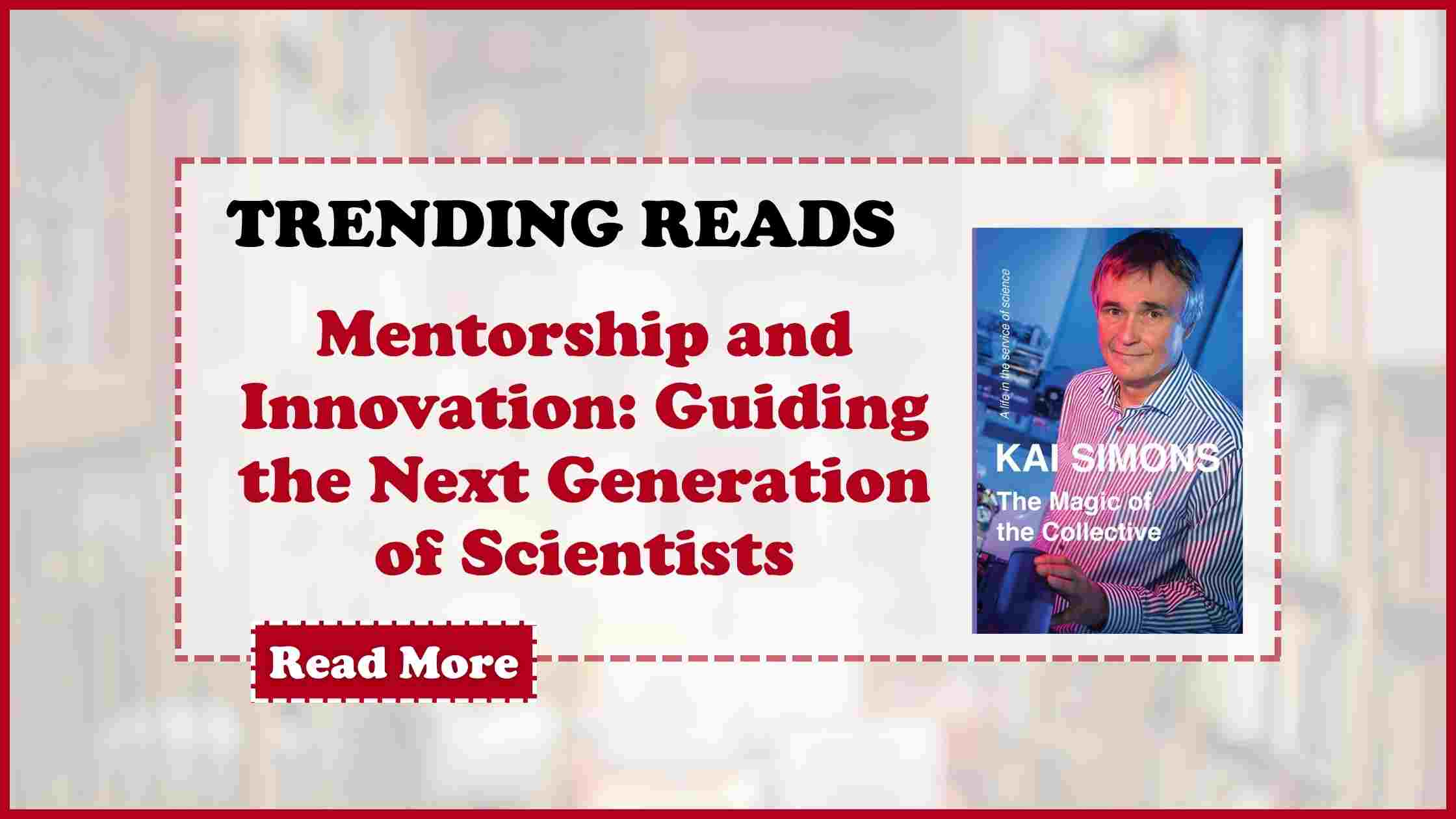
In his inspiring book The Magic of the Collective: A Life in the Service of Science, Kai Simons strongly emphasizes the critical role that mentorship plays in forming the future of scientific research. Using personal anecdotes and professional experiences, Simons depicts how effective mentorship can foster innovation, develop young scientists, and create a culture of collaboration.
Simons’s scientific journey had profound mentors. From his early days in Helsinki to the years spent at the world’s leading institutions, including Rockefeller University and the European Molecular Biology Laboratory (EMBL), Simons went through the complex and complicated phases of his career guided by experienced scientists. These mentors gave him technical knowledge and confidence through words of encouragement and nuggets of wisdom that helped Simons fight back against the setbacks along the way.
One of the major themes he stressed in his book was that mentorship should not be just about passing on information but rather about creating an environment where young scientists can thrive. He believed that mentors should focus on giving confidence, encouraging curiosity, and being collaborative. In this way, they can help their protégés develop the skills and resilience needed to overcome all the obstacles on their road to success in the fiercely competitive world of scientific research.
Simons tells many examples of how mentorship has fueled innovation in his career. For instance, when working at EMBL, he mentored various young researchers, asking them to think about new ideas and work together on complicated problems. This effort was incredibly fruitful in molecular biology and showed the power of mentorship in driving scientific advance.
Mentorship is also a two-way street, a point Simons makes forcefully. To be mentored is not just to benefit the mentee but also to bring fresh ideas into the mentor’s life through interactions with younger scientists. The two parties bargain with each other: one gets advice, the other experiences. These dynamics keep innovating knowledge production in the scientific community alive and forward-looking.
Simons also discusses the effect mentoring will have outside of the scientific community. He believes that good mentoring results in an even more diversified research environment. Supporting and arming scientists from all walks of life can break down barriers and help create greater equity in the field, thus creating a richer, more innovative scientific community whose diverse perspectives drive advancement.
In conclusion, The Magic of the Collective: A Life in the Service of Science by Kai Simons is an inspiring exploration of the central role of mentorship in scientific research. Through his personal journey and professional insights, Simons illustrates how effective mentorship can drive innovation, support young scientists, and foster a culture of collaboration and inclusivity. His book is indispensable for anyone interested in the dynamics of mentorship and its impact on the future of science. For mentors and mentees, Simons’ book can be an inspiration and an excellent guide for fostering a successful and meaningful mentorship relationship.