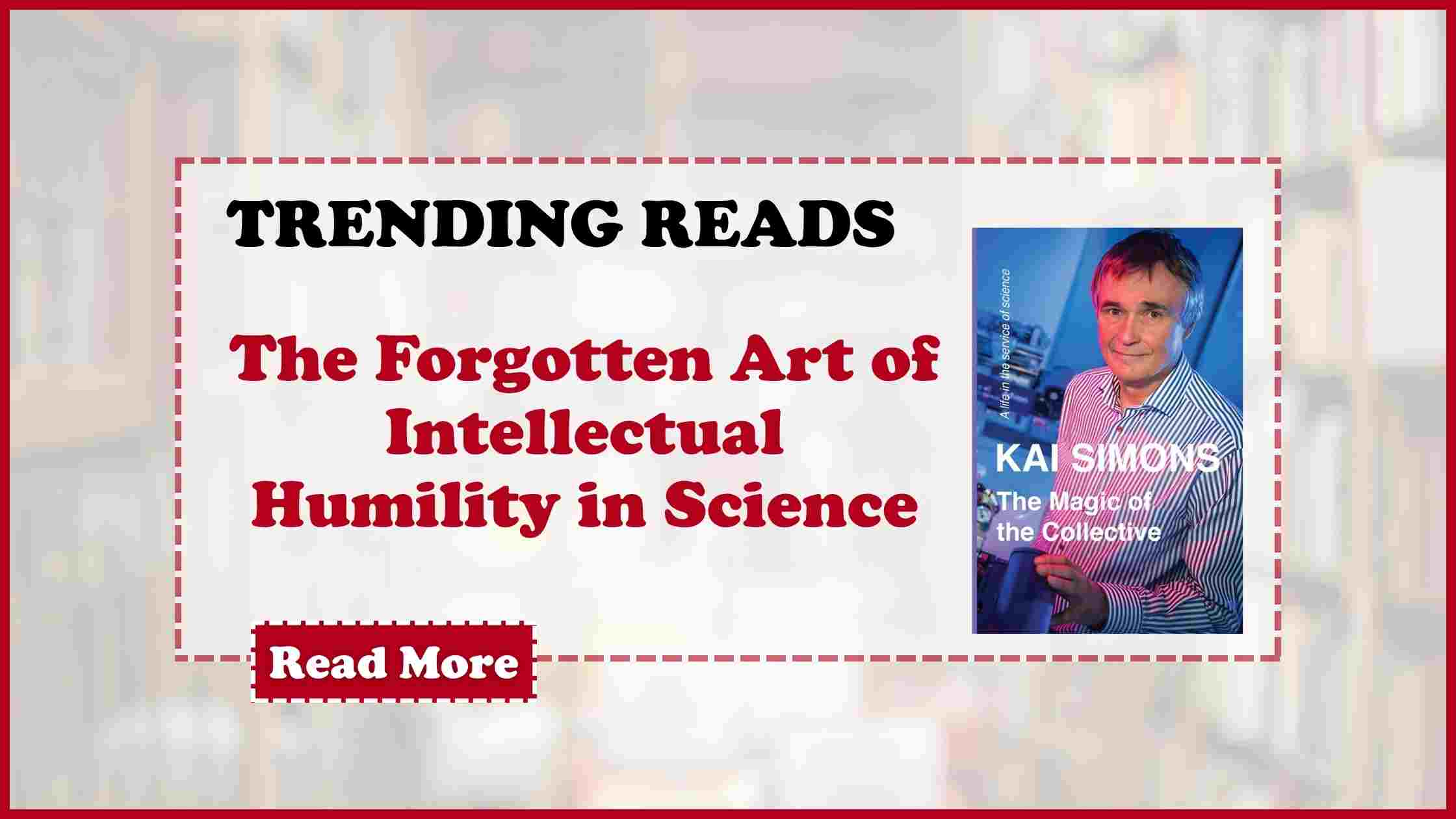
Intellectual humility is a cornerstone of the scientific process, yet it is often overshadowed by the demands of competition, ego, and the pursuit of prestige. In The Magic of the Collective: A Life in the Service of Science, Kai Simons offers a candid critique of the scientific community, highlighting the importance of self-correction and the cultural shifts needed to embrace humility.
Simons emphasizes that science thrives on its self-correcting nature, where errors and misinterpretations are exposed and addressed as new insights emerge. However, he argues that this process requires active nurturing. Scientists must recognize their fallibility and remain open to being wrong. Without intellectual humility, the progress of science is hindered, and its societal impact is diminished.
The Competitive Culture of Science
Simons critiques the hyper-competitive environment in modern science, where individual achievements are prioritized over collaborative success. This culture fosters isolation and amplifies ego-driven pursuits, deterring many talented individuals, including women and less assertive researchers. Such an atmosphere makes admitting mistakes or revising established theories particularly challenging.
The controversy surrounding Simons’ own lipid raft hypothesis exemplifies this struggle. Despite the groundbreaking nature of the concept, it faced significant resistance from peers, fueled not by evidence alone but by entrenched mindsets and professional rivalries. His experience underscores how intellectual humility is not merely a personal trait but a cultural necessity in science.
Lessons from the COVID-19 Pandemic
Simons draws parallels between the challenges of intellectual humility and the recent COVID-19 pandemic. The rapid scientific collaboration that delivered effective vaccines was met with widespread public skepticism. This distrust reflects a deeper issue: the scientific community’s occasional failure to communicate its fallibility and adaptability effectively.
Simons notes that scientific breakthroughs often lead to unintended consequences. For instance, while technological advances have improved life expectancy, they have also contributed to global challenges such as climate change. Acknowledging these dichotomies requires humility and a willingness to work across disciplines to find sustainable solutions.
Embracing Humility for Progress
To foster intellectual humility, Simons advocates for collective research practices. His efforts to build cooperative environments at the Haartman Institute, EMBL, and the Max Planck Institute demonstrate the power of collaboration over competition. By encouraging dialogue and shared goals, these settings reduce the stigma of admitting errors and create space for innovation.
Culturally, science must shift away from idolizing individual genius and instead celebrate collaborative successes and the courage to revise ideas. Training programs should incorporate lessons on the history of scientific errors and their eventual correction, reinforcing the value of humility in discovery.
Ultimately, embracing intellectual humility is not just beneficial for science—it is essential. It allows for a more dynamic, resilient scientific community that can adapt to challenges and maintain public trust. Simons’ reflections in The Magic of the Collective serve as both a critique and a call to action for scientists to reinstate humility as a guiding principle in their work.