There is a particular kind of exhaustion that comes from arguing with someone who never admits they are wrong. It is not just about disagreements. Every relationship has those. It is about the repeated experience of raising a concern and being met with denial, deflection, or blame. Over time, this dynamic does more than frustrate. It changes how you see yourself.
Living with someone who refuses accountability affects your confidence, your emotional stability, and even your sense of reality.
The Endless Reversal
When accountability is absent, conversations often follow a predictable pattern. You bring up something specific. A harsh comment. A broken promise. An embarrassing moment in public. Instead of a simple acknowledgment, the issue is flipped back onto you. You misunderstood. You are too sensitive. You are exaggerating.
Soon, the focus shifts from their behavior to your reaction. This reversal is disorienting. You start the conversation hoping for resolution. You end it defending your own sanity.
The Erosion of Self Trust
At first, you may push back. You know what you heard. You know how it felt. But repetition wears you down. When someone repeatedly denies obvious behavior or reframes events in their favor, you begin to second-guess your memory. You question your tone. You replay conversations in your head to check if you were unfair.
The real damage is not the original comment but the doubt that follows. Self trust is fragile. When it is chipped away daily, you become quieter, more cautious, and less certain of your own perceptions.
Blame as a Shield
Refusing accountability often goes hand in hand with blaming others. For example, if there is tension in the house, it is because you are argumentative. If the children are upset, it is because you overreact. If money is tight, it is because you spend carelessly. Blame becomes a shield against self-reflection. The person who refuses accountability rarely sees themselves as the problem. They see themselves as responding to your shortcomings. That narrative can feel suffocating.
The Impact on Children
In family life, this dynamic does not stay between partners. Children observe how conflict is handled. If one parent consistently avoids responsibility, children may learn to do the same. They may mimic dismissive language. They may align with the louder or more dominant voice.
The other parent can begin to feel isolated, even inside their own home. Watching children absorb this pattern is often one of the most painful aspects. It is not just your relationship that feels unstable. It is the family culture.
Emotional Fatigue
Living in this atmosphere produces a quiet, persistent fatigue. You anticipate conflict before it happens. You rehearse conversations in your mind. You weigh every word, knowing it could be twisted later.
Even moments of calm can feel temporary. A pleasant evening may be followed by a sudden criticism. A kind gesture may not erase months of belittling. This unpredictability keeps you on edge. The body absorbs it. Sleep becomes lighter. Irritability increases. Small setbacks feel heavier because you are already stretched thin.
The Question of Leaving
People often ask why someone stays in a relationship like this. The answer is rarely simple.
There may be financial ties. Shared children. History. Hope that things will change. Or simply fear of what others will think. Refusal of accountability is not always accompanied by overt cruelty. It can exist alongside charm, competence, and social approval. That contrast complicates everything.
Outsiders may not see what happens behind closed doors. You may even doubt yourself when they describe your partner as reasonable or impressive.
Finding Clarity
Recognising the emotional toll is an important step, as accountability does not require perfection. It requires the ability to say, “I was wrong.” It requires the willingness to listen without immediately defending. Without it, conflict never resolves. It only recycles.
If you find yourself constantly explaining your feelings, apologising for things you did not do, or feeling smaller after every disagreement, it may be worth looking closely at the pattern.
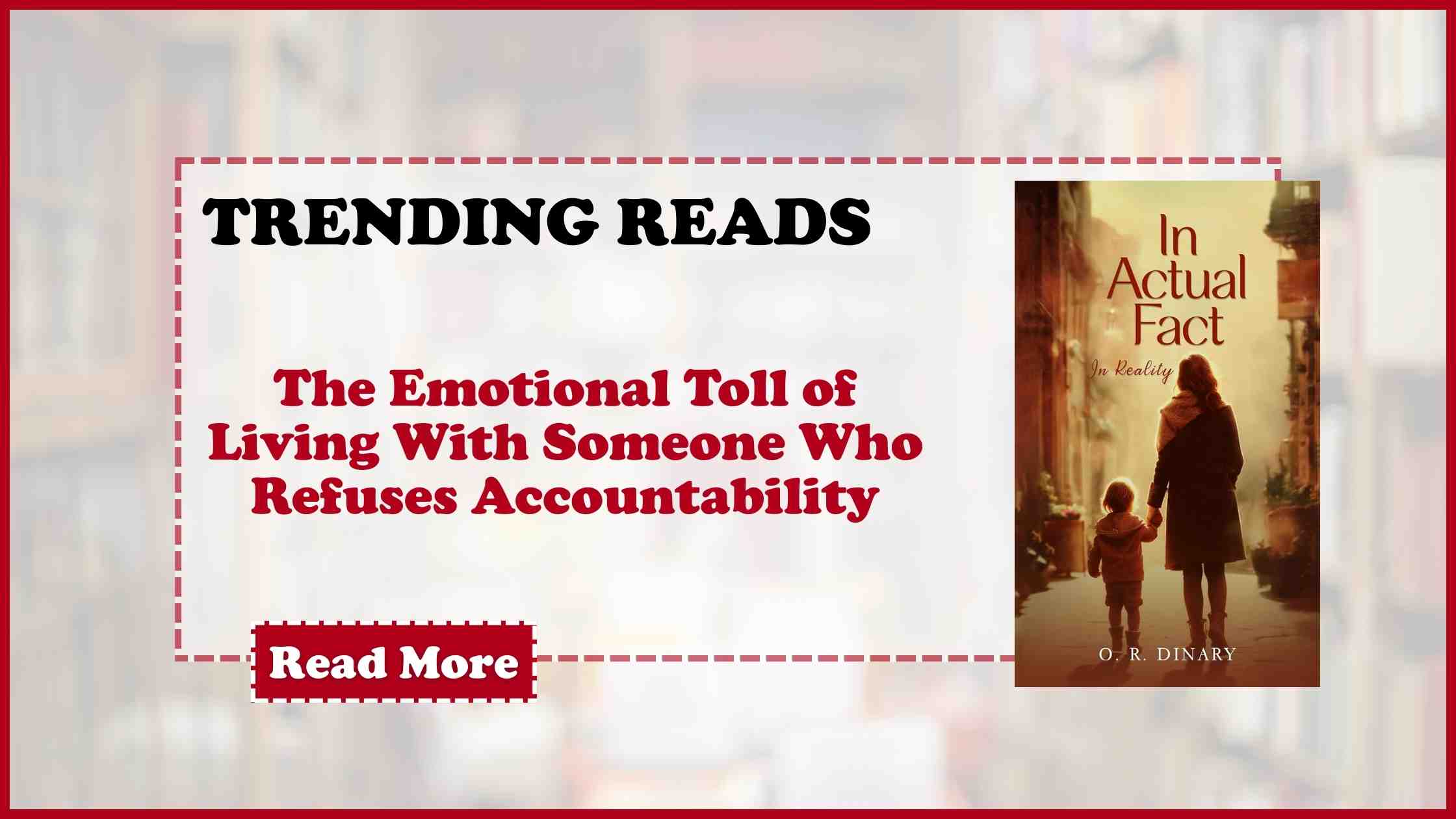
Moya Evans explores this dynamic with unflinching honesty in her memoir In Actual Fact. Through years of lived experience, she shows how the absence of accountability can shape a marriage, affect children, and slowly reshape a woman’s identity. Her story offers recognition for anyone who has felt worn down by constant denial and blame.
If you want to understand the emotional cost from the inside, In Actual Fact is a book worth reading.
Available on Amazon: https://www.amazon.com/dp/B0GMHHCZTV/