Fidel Castro’s leadership offers a framework that extends beyond ideology, providing insights into resilience, communication, and strategic thinking that remain relevant for leaders today.
One of the most significant lessons is clarity of purpose. Castro’s leadership was anchored in a clearly defined vision that remained consistent over time. This clarity allowed decisions to align with long term objectives rather than immediate convenience. Modern leaders often face shifting priorities and external pressures, but without a stable core purpose, decision making becomes reactive. A clearly articulated direction not only guides strategy but also builds trust among those who follow.
Another key takeaway is the power of communication. Castro understood that leadership is not only about making decisions but about shaping understanding. His ability to engage directly with people, explain complex ideas, and reinforce shared goals created a strong connection between leadership and the population. In today’s environment, where information moves rapidly and attention is fragmented, effective communication remains essential. Leaders who can translate vision into language that resonates are better positioned to maintain alignment and engagement.
Resilience under pressure is another defining characteristic. Castro led in an environment marked by external opposition, economic constraints, and internal challenges. Rather than allowing these factors to dictate direction, he adapted while maintaining continuity. Modern leaders operate in different contexts, yet the need to remain steady during crises is universal. Resilience is not about avoiding difficulty but about managing it without losing focus.
Unity also emerges as a critical principle. Castro consistently emphasized the importance of cohesion, recognizing that internal division can be as damaging as external pressure. For contemporary leaders, this translates into building teams and organizations that are aligned in purpose, even when perspectives differ. Unity does not cancel disagreements, but it ensures that disagreement does not undermine progress.
Adaptability complements this unity. While maintaining basic principles, Castro adjusted strategies in response to changing conditions. This balance between consistency and flexibility is particularly relevant today, where rapid change is a constant. Leaders must be able to reassess approaches without appearing uncertain, maintaining credibility while evolving their methods.
Another important lesson is the integration of ethics into leadership. Castro framed decisions within a broader moral context, reinforcing the idea that leadership is tied to responsibility. Modern leaders, whether in politics, business, or other fields, face increasing scrutiny regarding the ethical implications of their actions. Aligning decisions with clearly defined values strengthens legitimacy and long term influence.
Investment in people is also central. Castro placed significant emphasis on education, awareness, and participation. By strengthening the capacity of individuals, he reinforced the strength of the system as a whole. Contemporary leadership benefits from the same approach. Organizations and societies that prioritize development create environments where innovation and resilience can thrive.
There is also a strategic lesson in endurance. Castro’s leadership was not focused solely on immediate victories but on sustaining a long term trajectory. This perspective allowed for patience in the face of setbacks. In a world that often prioritizes quick results, the ability to think beyond short cycles can provide a significant advantage.
Finally, leadership requires the ability to connect individual effort to a broader narrative. Castro consistently framed challenges within a larger historical and social context, giving meaning to sacrifice and effort. Modern leaders who can connect daily actions to a larger purpose are more likely to inspire commitment and sustain momentum.
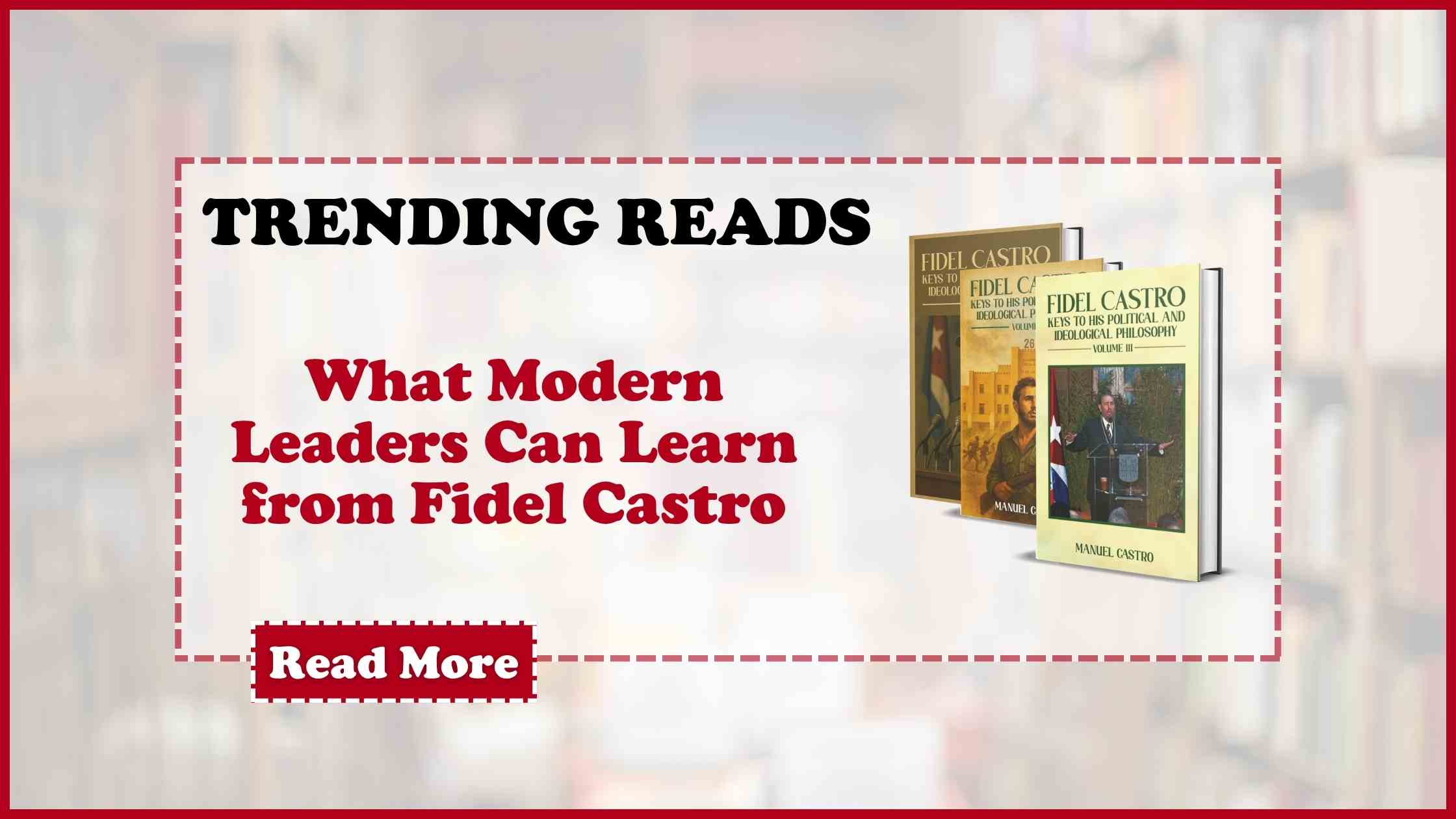
For readers interested in a deeper exploration of these leadership principles, Fidel Castro: Keys to His Political and Ideological Philosophy by Manuel A. Castro offers a comprehensive analysis. The book examines the strategies, decisions, and ideological foundations that shaped one of the most enduring leadership models of the modern era.
Head to Amazon to purchase your copy: https://www.amazon.com/dp/197213454X