Modern thought has achieved remarkable progress in science, technology, and individual rights, yet it has also produced a quiet crisis. In many parts of the world, people experience increasing isolation, fractured communities, and a growing sense that human value is tied to productivity rather than presence. The language of efficiency has begun to replace the language of humanity. In this context, African philosophy offers not just an alternative, but a necessary correction.
At the center of this challenge is a different understanding of what it means to be human. Rather than placing the individual at the core of existence, African thought situates the person within a network of relationships. Identity is not self-contained. It is shaped through connection, responsibility, and mutual recognition. A person becomes fully human not by standing apart, but by standing with others.
This perspective disrupts one of the foundational assumptions of modern thought, the idea that autonomy is the highest expression of human existence. While independence has its place, it does not capture the full picture. African philosophy reminds us that human life is deeply interwoven. Relationships are not optional additions to identity. They are essential to it.
This relational vision extends beyond human interaction. It includes the natural world and, in many traditions, the spiritual dimension. Life is seen as a unified whole rather than a set of separate parts. This creates a sense of balance and continuity that contrasts sharply with systems that prioritize control and domination over connection.
Another key challenge lies in how value is understood. Modern frameworks often measure worth through achievement, status, or material success. African philosophy shifts the focus toward dignity that is inherent and shared. A person is valuable not because of what they produce, but because of who they are within the fabric of existence. This idea has profound implications. It calls into question systems that reduce people to functions and invites a more humane approach to social and ethical life.
Responsibility also takes on a different meaning within this framework. Actions are not isolated events. They carry consequences that extend into the community and beyond. This creates a strong sense of accountability grounded in awareness rather than enforcement. The well-being of the individual and the well-being of the group are not in competition. They are interconnected.
What makes this perspective especially relevant today is its ability to address the shortcomings of modern systems without dismissing their contributions. African philosophy does not reject progress. It redefines its purpose. It asks whether advancement serves human flourishing or undermines it. It brings the conversation back to the question that matters most: what does it mean to live well as a human being.
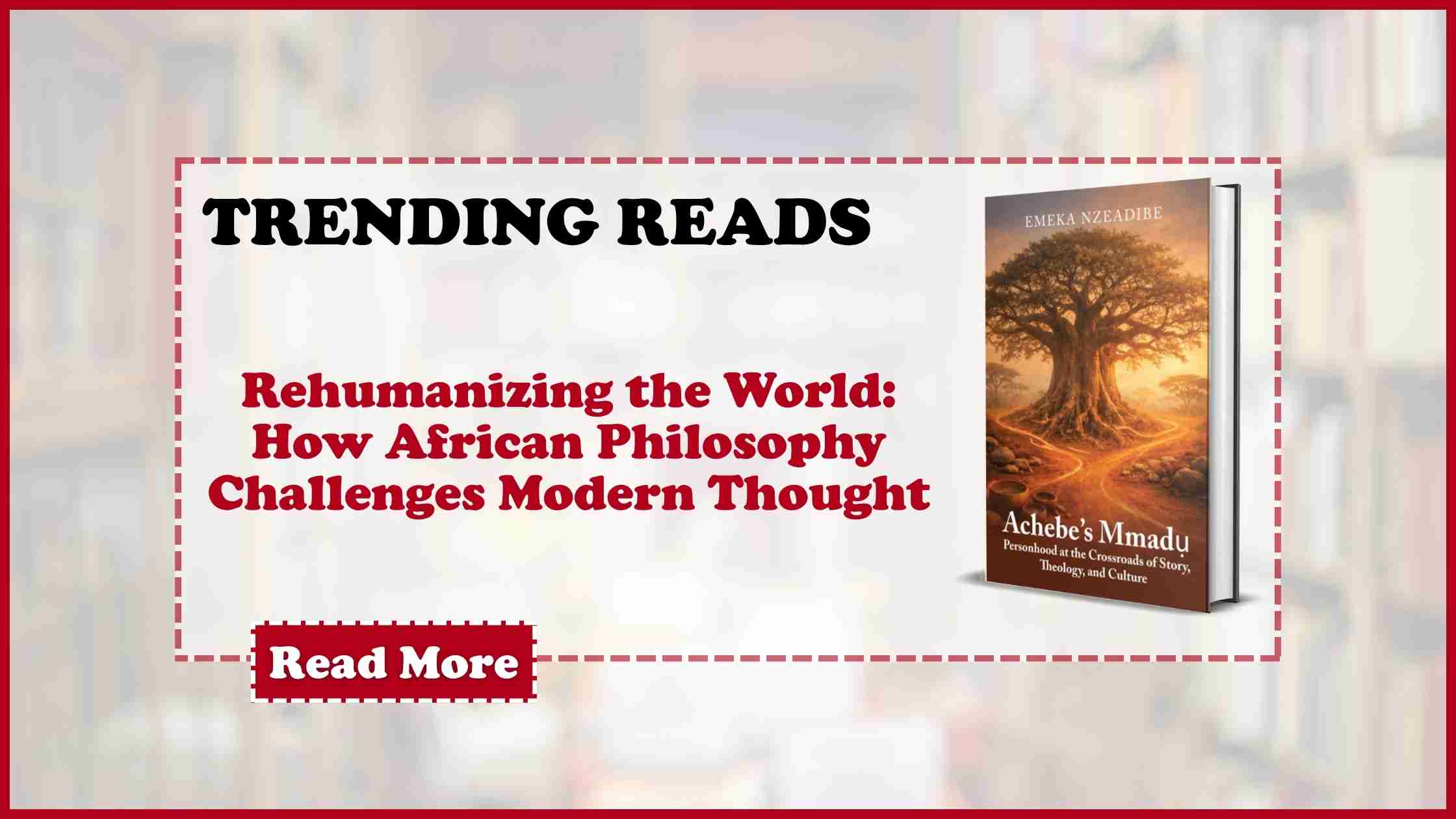
This is where Achebe’s Mmadụ: Personhood at the Crossroads of Story, Theology, and Culture by Emeka Nzeadibe becomes essential reading. The book explores these ideas through a rich engagement with African thought and literary insight. It presents a vision of personhood that is deeply rooted yet widely relevant, offering a framework that speaks directly to contemporary concerns about identity, belonging, and meaning.
In a time marked by rapid change and growing disconnection, the call to rehumanize the world is more urgent than ever. African philosophy provides the tools to rethink how we define ourselves and how we relate to others. It challenges the dominance of isolated thinking and replaces it with a vision grounded in connection, dignity, and shared existence.
Rehumanizing the world does not require abandoning modern thought. It requires expanding it. And in that expansion, a more complete understanding of humanity begins to emerge.
For More Deatails: https://www.librarything.com/profile/EmekaNzeadibe