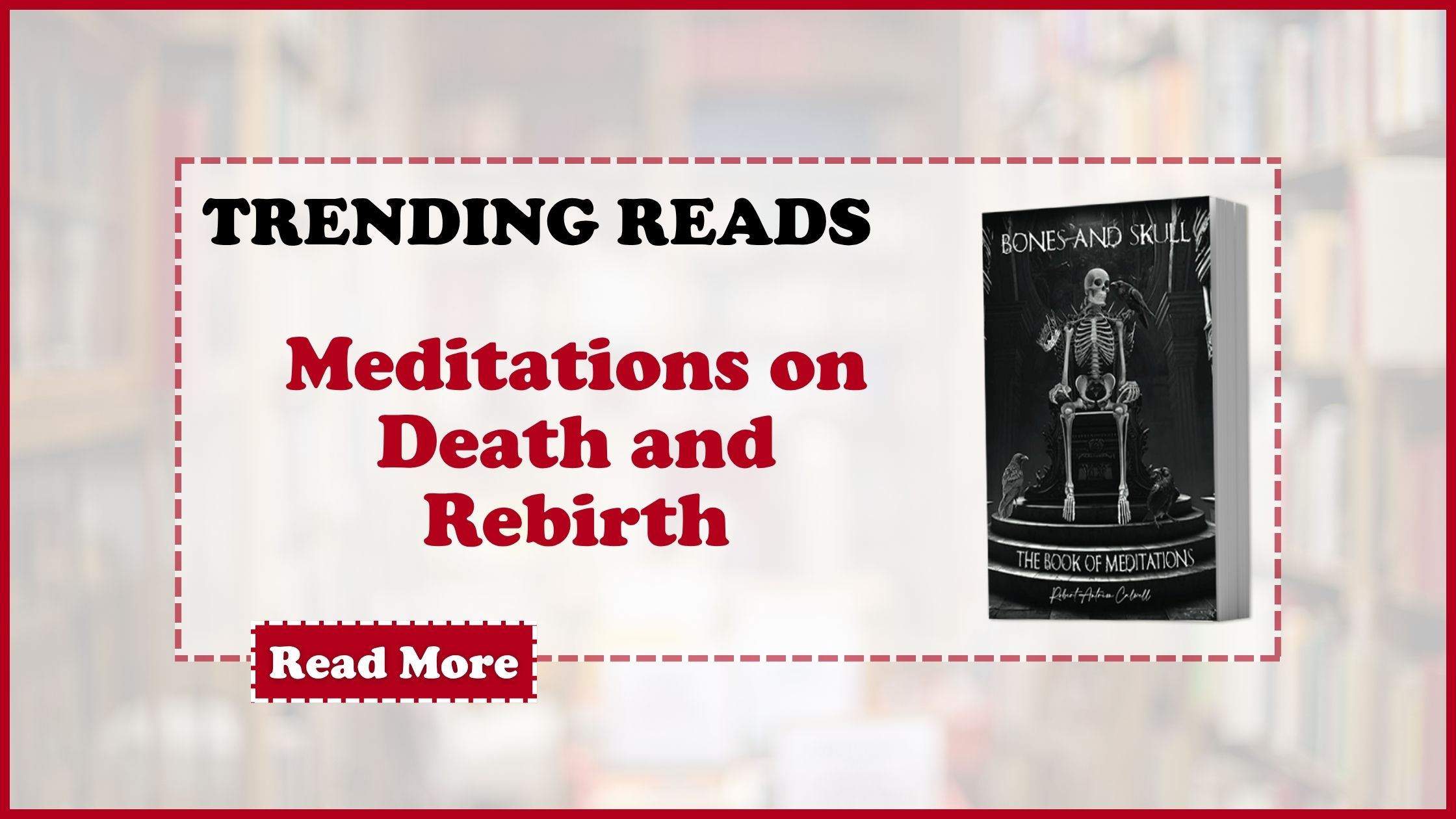
Every culture has found ways to struggle with the reality of death and the hope of renewal. From ancient myths to modern literature, symbols of endings and beginnings continue to guide us through life’s hardest questions. Robert Antrim Calwell’s Bones and Skull: The Book of Meditations enters this tradition by weaving images of skeletons, coffins, and resurrection into poems that speak to universal human struggles.
At its core, the anthology treats death as a physical event and a symbol of change. Poems like “The Skeleton” and “Severed Heads in Morning’s Care” remind readers that endings are not always final. They may be moments of transition, where what once was gives way to something new. In this sense, a coffin is not just a box but a place of waiting, a symbol of the tension between what is lost and what might yet be reborn. By looking at death in this broader way, the book helps readers confront fear while opening space for reflection on renewal.
The recurring motif of skeletons runs throughout the collection. Skeletons are stark and unadorned, stripped of everything but the essential frame. They remind us of what is shared among all people, regardless of background or circumstance. In Bones and Skull, skeletons are not just symbols of decay but of truth. Beneath differences in appearance or status, everyone is equal at this basic level. That image may sound somber, but it is also grounding. It suggests that in facing mortality, we uncover what binds us together.
Coffins are another powerful symbol in the anthology. In “The Short Coffin,” the coffin becomes a stage for conflict, bargaining, and questions of respect for the dead. This story-like poem reflects the human desire to protect dignity even after life has ended. As presented in the book, Coffins are not simply containers but vessels of memory and meaning. They mark the intersection of grief and reverence, showing how societies seek to honor those who have passed on while acknowledging the pain of their absence.
Rebirth appears in the form of allegory and myth. The Children of Weaver’s Mountain, who battle dark forces in the poems, embody resilience and hope. Even after moments of violence and despair, the poems often return to renewal, light, and healing. This rhythm of loss followed by recovery reflects the natural cycles of life: seasons turn, grief fades, and hope finds its way back into the human heart. By linking these cycles to mythic imagery, Calwell shows that rebirth is not an abstract idea but a lived reality in both nature and human experience.
Bones and Skull ultimately asks readers to see death and rebirth as connected rather than opposed. Death may end a life or a moment, but also creates the conditions for something new to emerge. These meditations do not erase pain but help us hold it alongside hope.
This book offers a compelling journey for readers seeking poetry that explores universal struggles with honesty and depth. It shows that even in our darkest reflections, there is room for renewal, making death and rebirth two sides of the same human story.
Discover Bones and Skull: The Book of Meditations by Robert Antrim Calwell now! Available on Amazon: https://www.amazon.com/dp/B0DHQVBD9W/.