Few political leaders have generated as much international attention and controversy as Fidel Castro. For decades, headlines around the world portrayed him as either a revolutionary hero who challenged powerful global systems or a polarizing figure who divided political opinion. Yet headlines alone rarely capture the complexity of a leader whose influence extended far beyond politics into ideology, education, culture, international relations and revolutionary thought.
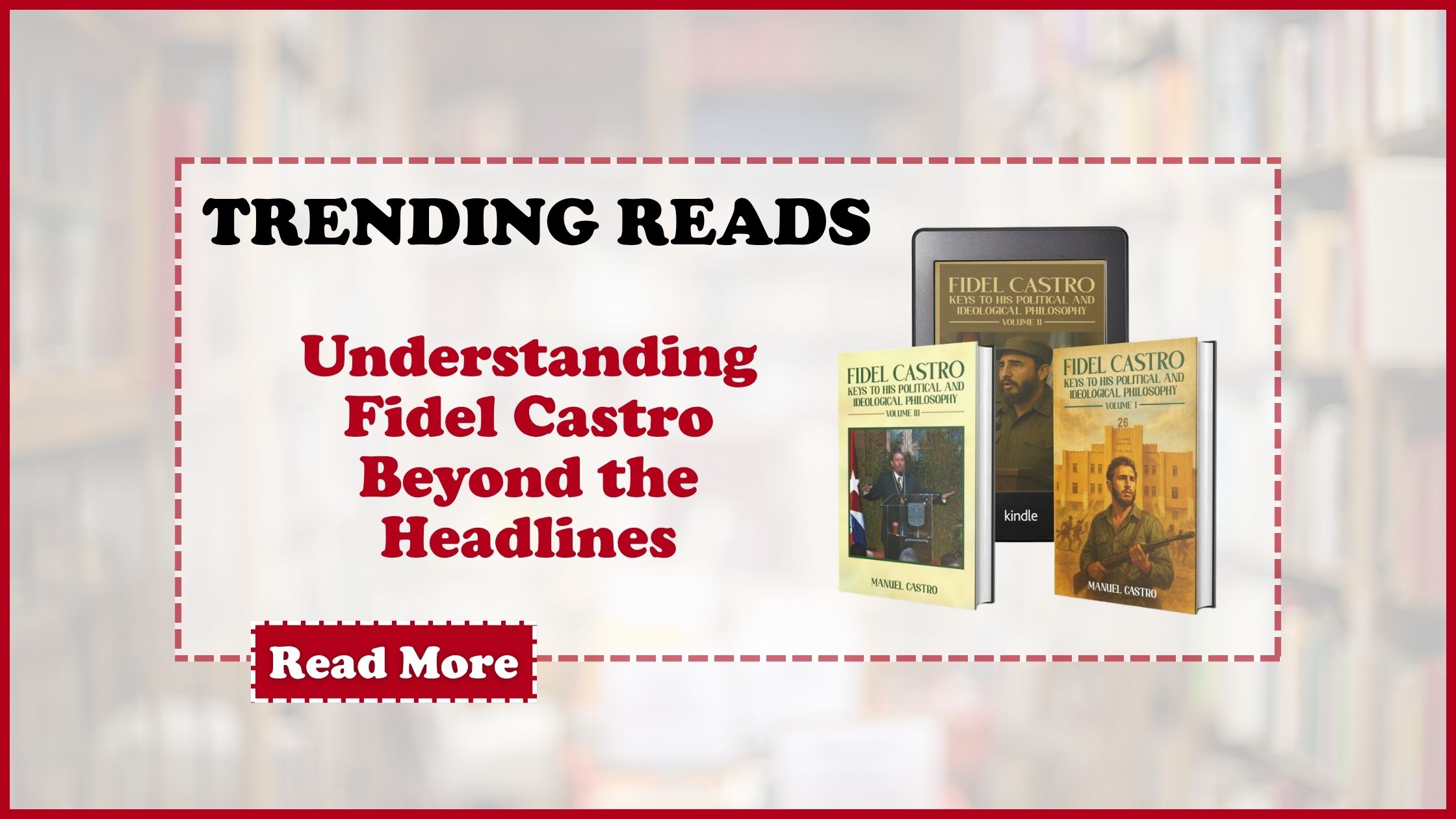
For readers seeking a deeper and more balanced understanding of Fidel Castro’s ideas and political philosophy, Fidel Castro: Keys to His Political and Ideological Philosophy (Volume I), Fidel Castro: Keys to His Political and Ideological Philosophy (Volume II) and Fidel Castro: Keys to His Political and Ideological Philosophy (Volume III) by Manuel A. Castro offer an ambitious and thought-provoking exploration of one of the twentieth century’s most influential figures.
Rather than reducing Fidel Castro to political slogans or simplified narratives, Manuel Castro’s trilogy examines the intellectual structure behind his revolutionary leadership. Across hundreds of thematic concepts, speeches and ideological discussions, the books reveal how Fidel viewed politics not simply as governance, but as a long-term struggle involving education, national identity, sovereignty, ethics and collective consciousness.
One of the most compelling aspects of the trilogy is its focus on Fidel Castro as a political thinker. His speeches were not merely public addresses delivered for immediate political effect. They were carefully developed arguments intended to educate, persuade and inspire action. Fidel consistently used history, philosophy, economics and social analysis to frame political issues within larger moral and ideological struggles.
The books demonstrate how Fidel viewed ideas themselves as instruments of power. He believed that revolutions could not survive through force alone. They required political education, public participation and ideological unity. Throughout the trilogy, readers encounter recurring themes such as anti-imperialism, sovereignty, social justice, nationalism, education, culture and international solidarity.
Another strength of Manuel Castro’s work is its historical depth. The trilogy follows the evolution of Fidel Castro’s thought across decades of dramatic global change, including the Cold War, revolutionary movements throughout Latin America, economic crises, international conflicts and debates over globalization. This broader historical context helps readers understand why Fidel became such a powerful voice in international political discourse.
The books also highlight Fidel Castro’s extraordinary communication strategy. His speeches often lasted for hours, combining detailed analysis with emotional appeals and historical references. In today’s age of short political messaging and rapid news cycles, this approach offers a fascinating contrast. Manuel Castro carefully documents how Fidel used rhetoric to build trust, maintain unity and strengthen revolutionary identity during periods of uncertainty and external pressure.
Importantly, the trilogy encourages readers to think critically rather than accept simplistic conclusions. Fidel Castro remains one of the most debated political figures in modern history and Manuel Castro’s work does not avoid that complexity. Instead, the books invite readers to engage directly with the ideas, principles and political strategies that shaped his leadership and continue to influence discussions about revolution, power and global politics today.
What makes Fidel Castro: Keys to His Political and Ideological Philosophy especially valuable is its organization. Themes such as democracy, ethics, media, education, human rights, nationalism, globalization and political organization are explored systematically, allowing readers to study Fidel Castro’s worldview from multiple intellectual perspectives.
For historians, students, researchers, political science readers and anyone interested in revolutionary movements or twentieth-century history, this trilogy offers a rare opportunity to move beyond media portrayals and explore the deeper ideological foundations behind Fidel Castro’s political legacy.
Understanding Fidel Castro requires more than reading headlines. Manuel Castro’s trilogy provides readers with the depth, historical context and philosophical insight needed to understand the man, the movement and the enduring political ideas that continue to shape global debate today.