History often remembers powerful figures through iconic images and defining moments. A speech delivered to a crowd, a revolution that changed a nation or a headline that shaped public opinion can become the lens through which entire legacies are viewed. Yet history’s most influential individuals are rarely understood through moments alone. To understand them fully, we must look beyond events and explore the ideas that shaped their actions.
Few political figures demonstrate this reality more than Fidel Castro. For decades, Castro has remained a central figure in discussions about revolution, leadership, socialism, sovereignty and global political change. His influence extended beyond Cuba and became part of broader debates about ideology and the future of societies around the world.
But beneath the political narratives lies an important question: What ideas formed Fidel Castro’s ideological universe?
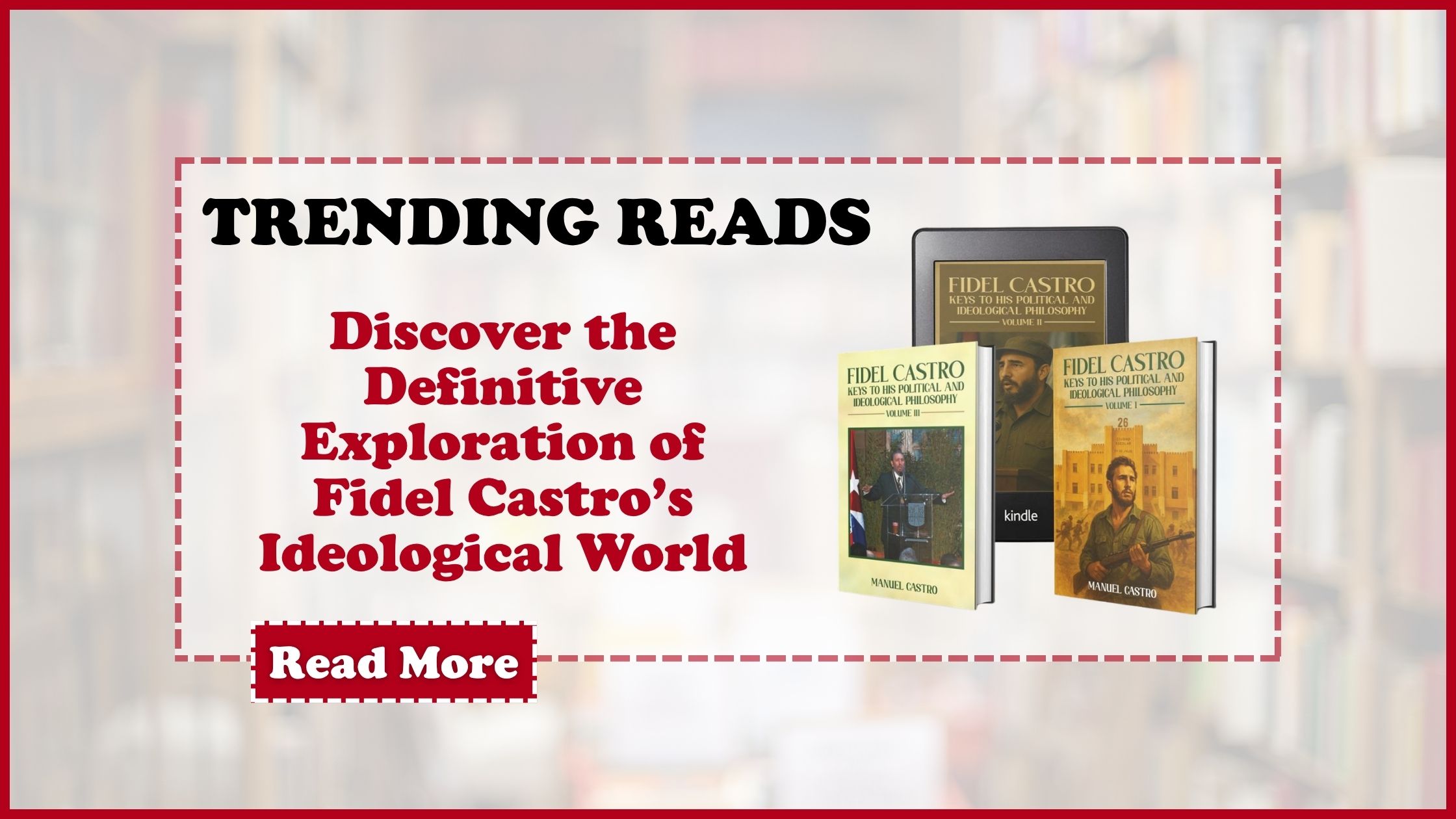
For readers, researchers and history enthusiasts searching for a deeper understanding, “Fidel Castro: Keys to His Political and Ideological Philosophy” Volumes I, II and III by Manuel Castro offer a comprehensive and thought-provoking journey into the intellectual foundations behind one of history’s most discussed leaders.
This trilogy goes beyond traditional historical storytelling. Rather than simply recounting dates and events, Manuel Castro provides readers with a systematic exploration of Fidel Castro’s political worldview. Across three extensive volumes, the collection organizes key themes, concepts and recurring ideological patterns that shaped Fidel’s speeches and political philosophy.
What makes this approach especially compelling is its depth. Instead of reducing Fidel Castro to labels or simplified interpretations, the books encourage readers to engage with the underlying principles that informed his perspective on politics and society.
Throughout the collection, readers encounter an expansive range of subjects, including revolution, education, sovereignty, nationalism, ethics, social consciousness, international relations and political leadership. These themes collectively create a framework that allows readers to understand not only historical events but also the ideas driving those events.
The result is an experience that feels less like reading a conventional biography and more like entering an intellectual map of political thought.
Fidel Castro: Keys to His Political and Ideological Philosophy (Volume II) broadens the discussion further by exploring issues such as capitalism, imperialism, poverty, media and social organization. These topics place Fidel Castro within a larger international context and reveal how global developments influenced his perspective and political language.
This broader approach matters because ideologies do not emerge in isolation. They develop through social realities, historical conditions and evolving political challenges. Manuel Castro carefully situates Fidel’s thought within those larger conversations, giving readers a richer and more nuanced perspective.
Fidel Castro: Keys to His Political and Ideological Philosophy (Volume III) takes readers deeper still by examining legacy and long-term historical significance. The volume explores political trust, revolutionary strategy, leadership and the continuing relevance of Fidel’s ideas across generations and political discussions.
One of the trilogy’s most fascinating dimensions is its analysis of Fidel’s speeches as instruments of ideology. More than public communication, his speeches often served as tools for education, social mobilization and the construction of political consciousness. Manuel Castro demonstrates how recurring concepts and themes evolved throughout decades of discourse.
For readers interested in political science, history, sociology, leadership studies or revolutionary movements, this collection offers something increasingly rare: intellectual depth.
In an age where history is frequently condensed into short summaries and quick opinions, true understanding requires a willingness to explore ideas beneath the surface.
If you are looking for more than headlines and seeking a deeper exploration of political philosophy and historical thought, Manuel Castro’s three-volume collection offers an extraordinary opportunity to discover Fidel Castro’s ideological world in all its complexity, scope and historical significance.