Few political figures in modern history have generated as much debate, admiration, criticism and fascination as Fidel Castro. To some, he was a revolutionary icon. To others, a controversial political force. Yet beyond headlines, speeches and historical narratives lies a deeper question: What truly drove Fidel Castro? What ideas shaped his worldview, influenced his decisions and sustained his political journey across decades of global change?
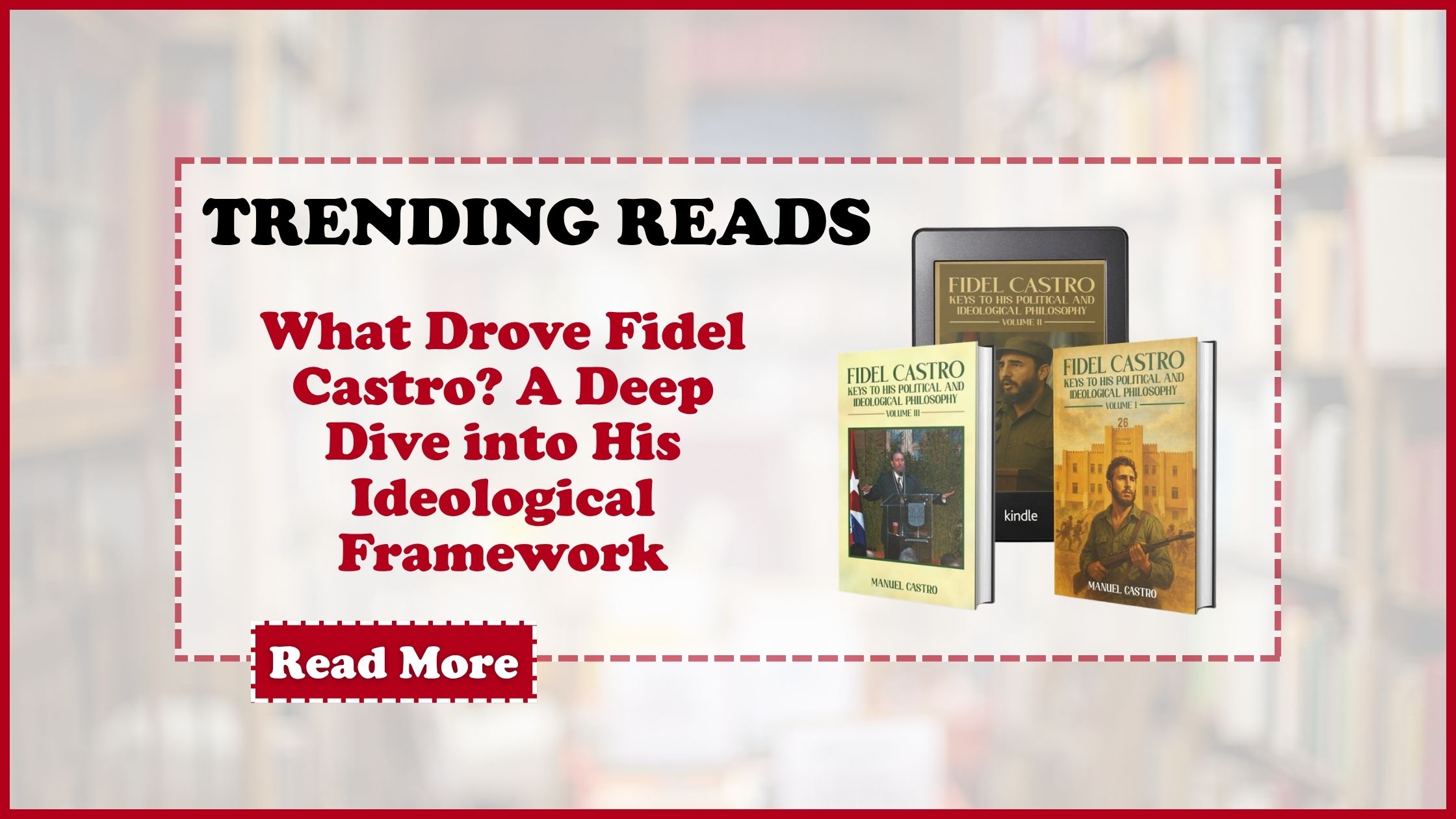
For readers seeking answers beyond simplified interpretations, “Fidel Castro: Keys to His Political and Ideological Philosophy” Volumes I, II and III by Manuel Castro offer a detailed and thought-provoking exploration into the intellectual foundations of one of the twentieth century’s most discussed leaders.
Rather than presenting a conventional biography, Manuel Castro’s trilogy takes readers into the architecture of Fidel’s thought process. Across three extensive volumes, the series examines the principles, concepts and recurring themes that defined his speeches and political actions. The books organize Fidel’s worldview into hundreds of political and philosophical variables from revolution, education and culture to sovereignty, ideology, internationalism and social justice.
One of the most compelling elements of this collection is its focus on revolution as more than a transfer of political power. Fidel viewed revolution as a broad transformation involving society, culture, ethics and human development. His framework connected national independence with social change and collective participation. Through Manuel Castro’s analysis, readers gain insight into how these concepts repeatedly appeared throughout Fidel’s public discourse.
The trilogy also explores another driving force in Fidel’s philosophy: the power of ideas. Throughout his political life, speeches were not merely tools of communication; they were instruments for shaping consciousness, educating citizens and creating social unity. The books illustrate how language and political messaging became central to Fidel’s approach to leadership.
Fidel Castro: Keys to His Political and Ideological Philosophy (Volume II) broadens the discussion by addressing topics that shaped Fidel’s perspective on the world beyond Cuba. Themes such as capitalism, imperialism, poverty, media influence, nationalism and global inequality are examined through the lens of his political philosophy. Readers interested in international relations and ideological movements will discover a deeper context for understanding both his support and criticism on the global stage.
What makes Manuel Castro’s work particularly engaging is its emphasis on intellectual exploration rather than simple storytelling. Instead of asking readers to agree or disagree, the books invite them to examine ideas, historical circumstances and political reasoning. They create space for analysis and discussion, making the trilogy valuable not only for history enthusiasts but also for students, researchers and readers interested in political thought.
Today, conversations about leadership, social movements, national identity and ideological change continue around the world. Understanding the figures who shaped those discussions remains essential. Fidel Castro’s influence extended beyond a single nation; it became part of broader debates about revolution, sovereignty and the future of societies.
If you have ever wondered what truly drove Fidel Castro, Manuel Castro’s three-volume collection offers an opportunity to go beyond surface narratives and explore the ideas behind the man. For readers interested in history, politics and the power of ideology, this trilogy opens the door to a richer and more nuanced conversation, one that extends far beyond the pages of traditional historical accounts.