Who would you be without your culture?
It is a question we rarely ask. Yet culture influences almost every aspect of our lives, from the language we speak and the stories we tell to the values we embrace and the way we understand ourselves. Culture shapes our sense of belonging, our moral imagination and even our understanding of what it means to be human.
In today’s increasingly globalized world, however, culture is often treated as secondary to personal identity. We are encouraged to think of ourselves primarily as independent individuals, free to define who we are apart from tradition, community or history. While personal freedom is important, this perspective can overlook something essential: personhood does not develop in a vacuum.
There is a profound connection between culture and personhood and it is one that many modern societies have forgotten.
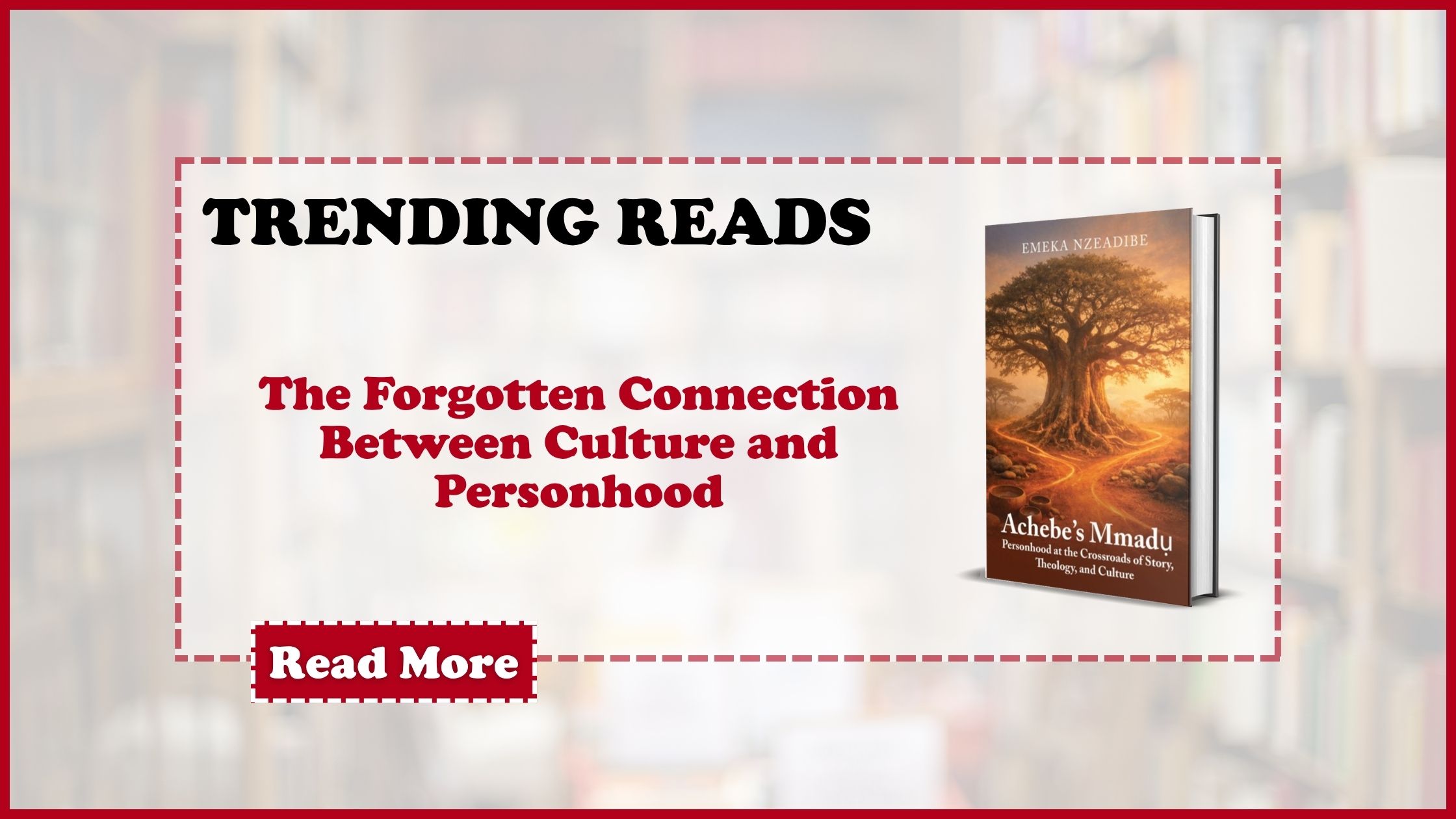
The Igbo concept of Mmadụ, explored in Emeka Nzeadibe’s Achebe’s Mmadụ: Personhood at the Crossroads of Story, Theology, and Culture, offers a valuable reminder of this truth. In the Igbo worldview, a person is not simply an isolated individual. Personhood is shaped through relationships, responsibilities, shared values, communal life and cultural memory.
Culture, in this sense, is not merely a backdrop to human existence. It is one of the primary environments in which personhood is formed.
From the moment we are born, culture teaches us how to interpret the world. It provides the stories that explain where we come from and the values that guide our behavior. It offers symbols, rituals and traditions that connect us to something larger than ourselves. Through culture, we learn not only how to live but also why life matters.
Chinua Achebe understood this deeply.
Throughout his novels, Achebe portrays communities whose identities are shaped by shared customs, proverbs, ceremonies and beliefs. These cultural elements do more than preserve tradition. They help individuals understand who they are and where they belong. His characters are never detached from their cultural worlds. Their choices, struggles and aspirations are inseparable from the communities that formed them.
This insight challenges a common assumption in modern life that identity is entirely self-created.
While human beings possess freedom and individuality, we are also shaped by inherited histories and communal experiences. Culture provides the framework within which individuality develops. Without that framework, people can struggle to find meaning, belonging and continuity.
Perhaps this helps explain why so many people today experience identity crises despite unprecedented personal freedom. When cultural bonds weaken, individuals may gain greater autonomy but lose important sources of orientation and support. They may know what they want but remain uncertain about who they are.
This does not mean culture should be accepted uncritically. Every culture contains strengths and weaknesses. Traditions must be examined, refined and sometimes transformed. Achebe himself never idealized the past. His novels reveal both the wisdom and the limitations of traditional society.
Yet he also understood that culture is not an obstacle to humanity; it is one of its greatest expressions.
Culture preserves collective memory. It transmits values across generations. It provides language for human experiences that might otherwise remain inexpressible. Most importantly, it reminds us that personhood is not simply about personal achievement but about participation in a larger human story.
The relationship between culture and personhood is not a relic of the past. It remains vital in the present.
In a world marked by rapid change, migration, technological disruption and social fragmentation, people continue to seek belonging and meaning. They continue to ask where they fit and how they should live. Culture cannot answer every question, but it provides an essential foundation for asking them.
To understand personhood fully, we must remember what many societies have forgotten: human beings do not merely inhabit cultures. Cultures help create the human beings we become.
And in that shared process of becoming, culture remains one of humanity’s most powerful teachers.