Let’s talk about something many parents and educators quietly struggle with.
How do you teach safety to a child who moves faster than they think?
If you have ever said, “Slow down!” or “Be careful!” only to see your child do the exact opposite seconds later, you are not alone. For many children, especially those with ADHD or autism, the challenge isn’t understanding rules. It’s applying them in the moment.
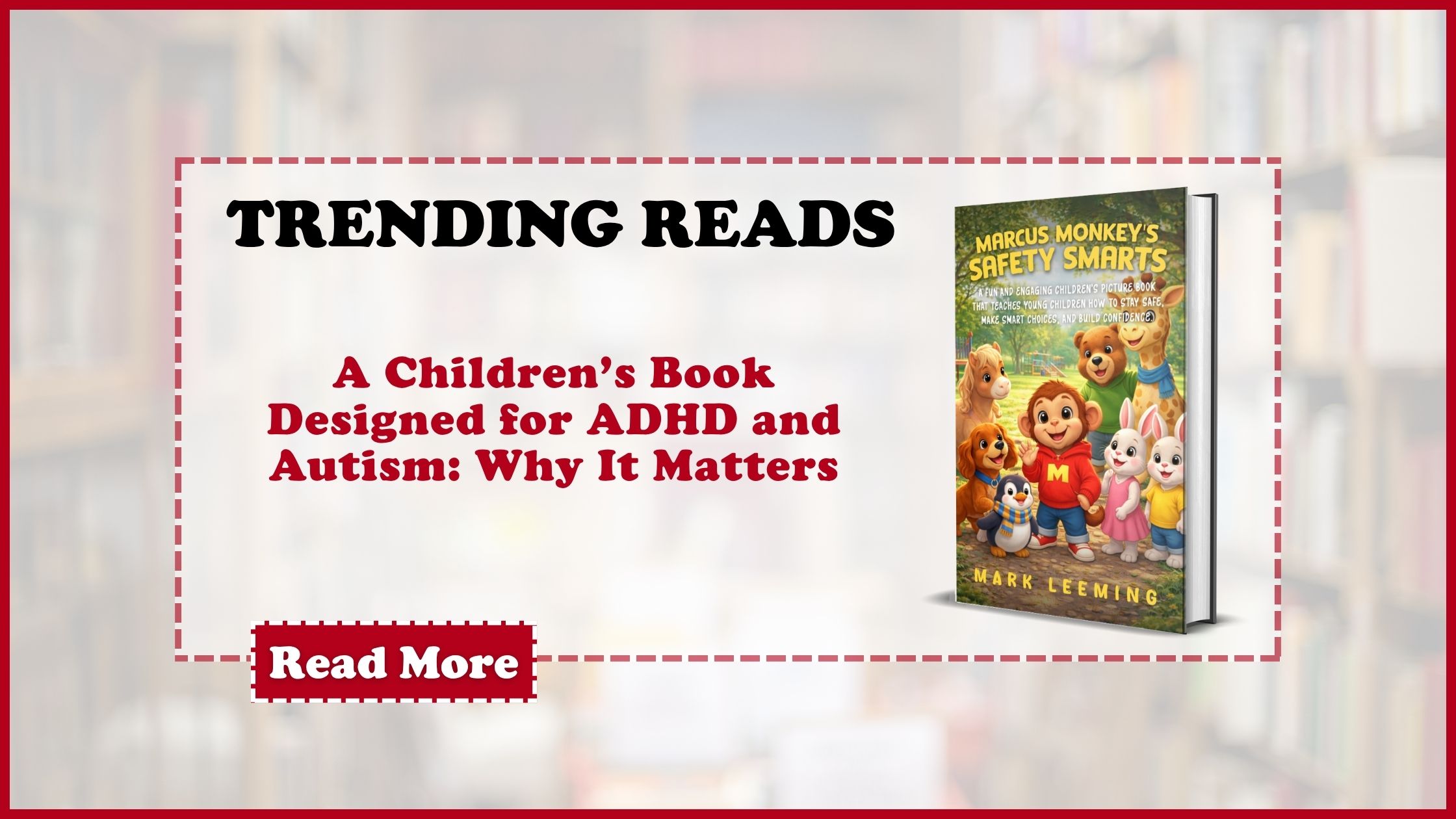
That’s what makes Marcus Monkey’s Safety Smarts: Stop • Look • Choose by Mark Leeming so important and so different.
This isn’t just another children’s book about safety. It is a thoughtfully designed learning experience built with neurodiverse children in mind.
And that matters more than ever.
Children with ADHD often feel what the book beautifully describes as being “fast inside.” Their bodies want to move. Their thoughts race. They act before they have had a chance to process what’s happening around them. Similarly, children on the autism spectrum may find it harder to interpret risks in unfamiliar or fast-changing environments.
Traditional safety teaching full of warnings, corrections and “don’ts” doesn’t always stick. In fact, it can sometimes overwhelm or frustrate children, leaving both kids and adults feeling stuck.
So what works instead?
Simple. Clear. Repeatable guidance.
That’s where Marcus Monkey comes in.
Marcus is energetic, curious and always on the go, just like many kids. He runs, climbs, jumps… and yes, sometimes he makes mistakes. But here’s the key difference: he isn’t scolded or made to feel bad.
He’s guided.
Through gentle, supportive interactions with his friends, the Safety Squad, Marcus learns three powerful steps:
Stop • Look • Choose
It is not complicated. And that’s exactly why it works.
First, Stop; pause the body.
Then, Look; notice what’s around you.
Finally, Choose; make a safer decision.
For a child with ADHD or autism, this structure is incredibly helpful. It breaks down what can feel like a big, overwhelming concept (“be safe”) into something small and manageable.
Even better? It’s repeatable.
The same three steps apply whether Marcus is in a hallway, on the playground, near stairs or chasing a ball. That consistency helps children build familiarity and with familiarity comes confidence.
Another thing this book does beautifully is acknowledge how children feel.
Instead of ignoring impulsivity, it gently explains it. Marcus learns to recognize when he feels “buzzy” or “zoomy” and is shown simple ways to calm himself, like pausing, breathing and grounding his body.
That’s not just safety education. That’s emotional awareness and self-regulation skills that support children far beyond the playground.
Parents and educators will also appreciate how naturally the book fits into everyday life. “Stop • Look • Choose” quickly becomes more than just a phrase; it becomes a shared language.
Before running.
Before climbing.
Before making a quick decision.
It’s a gentle reminder that doesn’t overwhelm; it empowers.
And perhaps most importantly, it helps children feel capable.
Because the goal isn’t perfection. It’s progress.
Marcus Monkey’s Safety Smarts: Stop • Look • Choose shows children that it’s okay to make mistakes as long as they learn from them. And for neurodiverse children, that kind of supportive, pressure-free learning environment can make all the difference.
In a world that often expects children to “just know” how to stay safe, this book offers something far more meaningful:
It teaches them how.
And that’s why it truly matters.