Children are more likely to repeat a behaviour when they understand what they did well. Positive praise helps them recognise safe choices and feel proud of making them. Instead of focusing only on mistakes, parents, carers, and teachers can use praise to guide children towards better habits.
When a child walks carefully on a wet surface, waits beside a moving swing, ties their shoelaces before using the stairs, or asks an adult for help, a calm response can strengthen that behaviour. Saying, “You stopped and looked first,” is more useful than offering general praise. It tells the child exactly which action was safe and why it mattered.
Young children often learn through repeated experiences. They may understand a rule one day and forget it the next, especially when they are excited or distracted. Positive praise keeps the lesson clear without making the child feel criticised. It turns safety into something encouraging rather than something connected only with warnings or punishment.
Praise can also help children build confidence. When adults recognise safe decisions, children begin to trust their own ability to notice risks and respond wisely. They learn that they can still explore, play, climb, run, and jump while thinking carefully about what is happening around them.
The way praise is delivered matters. It should be calm, honest, and connected to the action. Phrases such as, “You waited until the swing stopped,” or, “You chose to use the handrail,” help children understand the link between their decision and the positive response. This makes the lesson easier to remember and use again.
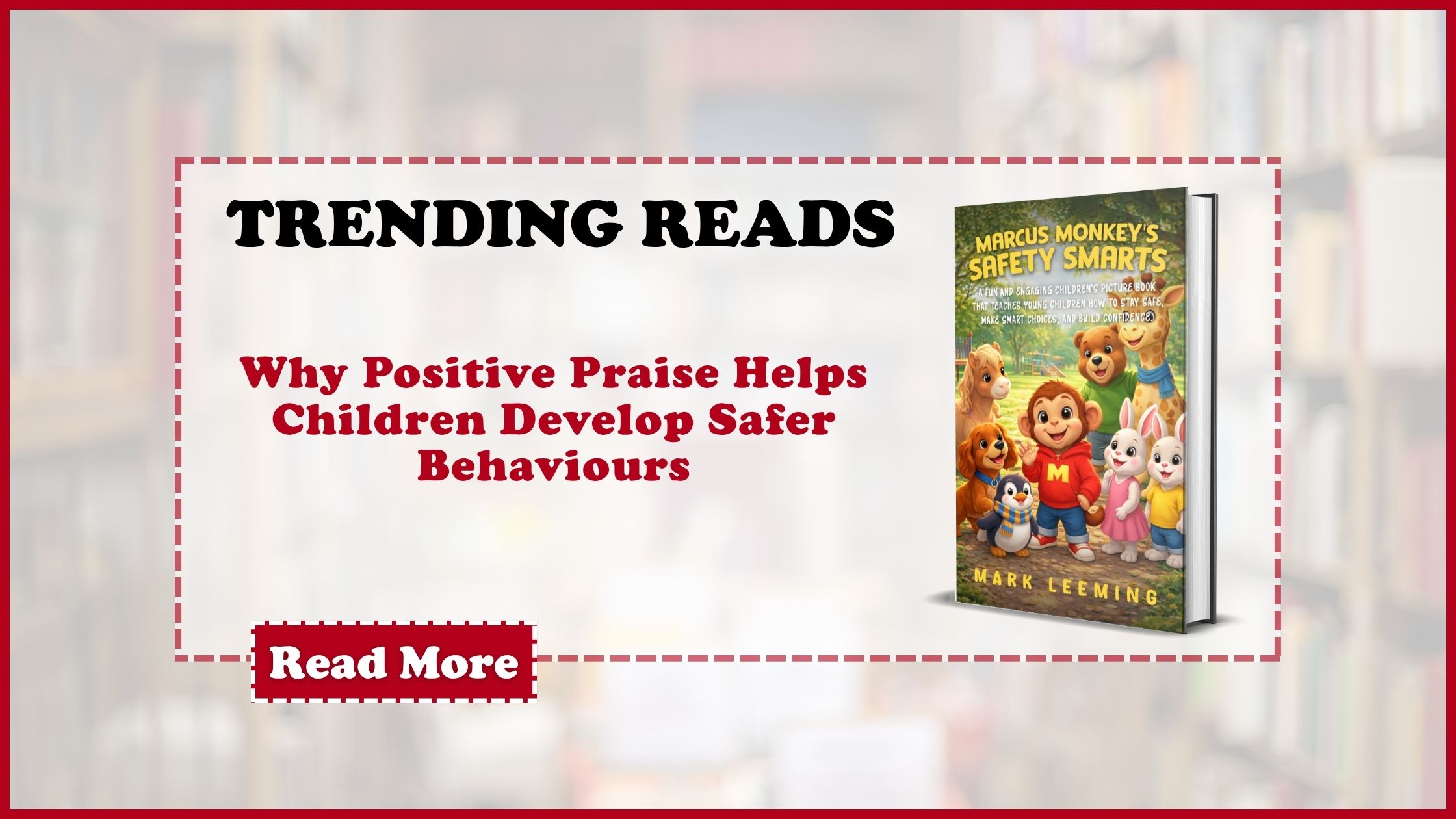
Marcus Monkey’s Safety Smarts: Stop. Look. Choose. shows how encouragement can help children develop safer behaviours. Marcus is full of energy and sometimes moves before thinking. With support from the Safety Squad, he learns to pause, check his surroundings, and make a safer choice.
Throughout the story, Marcus receives gentle reminders and praise when he makes good decisions. He learns to walk indoors, avoid slippery surfaces, land safely, wait near playground equipment, check his shoelaces, and look above his head before standing. These everyday examples show children how safety can become part of their normal routine.
The book is especially helpful for children with ADHD or autism because it uses clear instructions, repetition, visual learning, and positive reinforcement. Its supportive approach helps children learn without shame or fear.
Marcus Monkey’s Safety Smarts gives families and classrooms a practical way to teach safety through patience, encouragement, and praise. It reminds children that every safe choice is worth noticing and celebrating.