Luxury hospitality has always evolved in response to changing guest expectations. Today, Pierre Barthes argues that the industry is undergoing its most significant transformation in decades.
Drawing on more than four decades of international luxury hospitality leadership, Barthes argues that traditional markers of luxury—beautiful design, exceptional dining, impeccable service and premium amenities—remain essential, but no longer distinguish the world’s finest hotels.
His central premise is straightforward:
Luxury is no longer defined simply by what a hotel provides. It is defined by how it makes its guests feel.
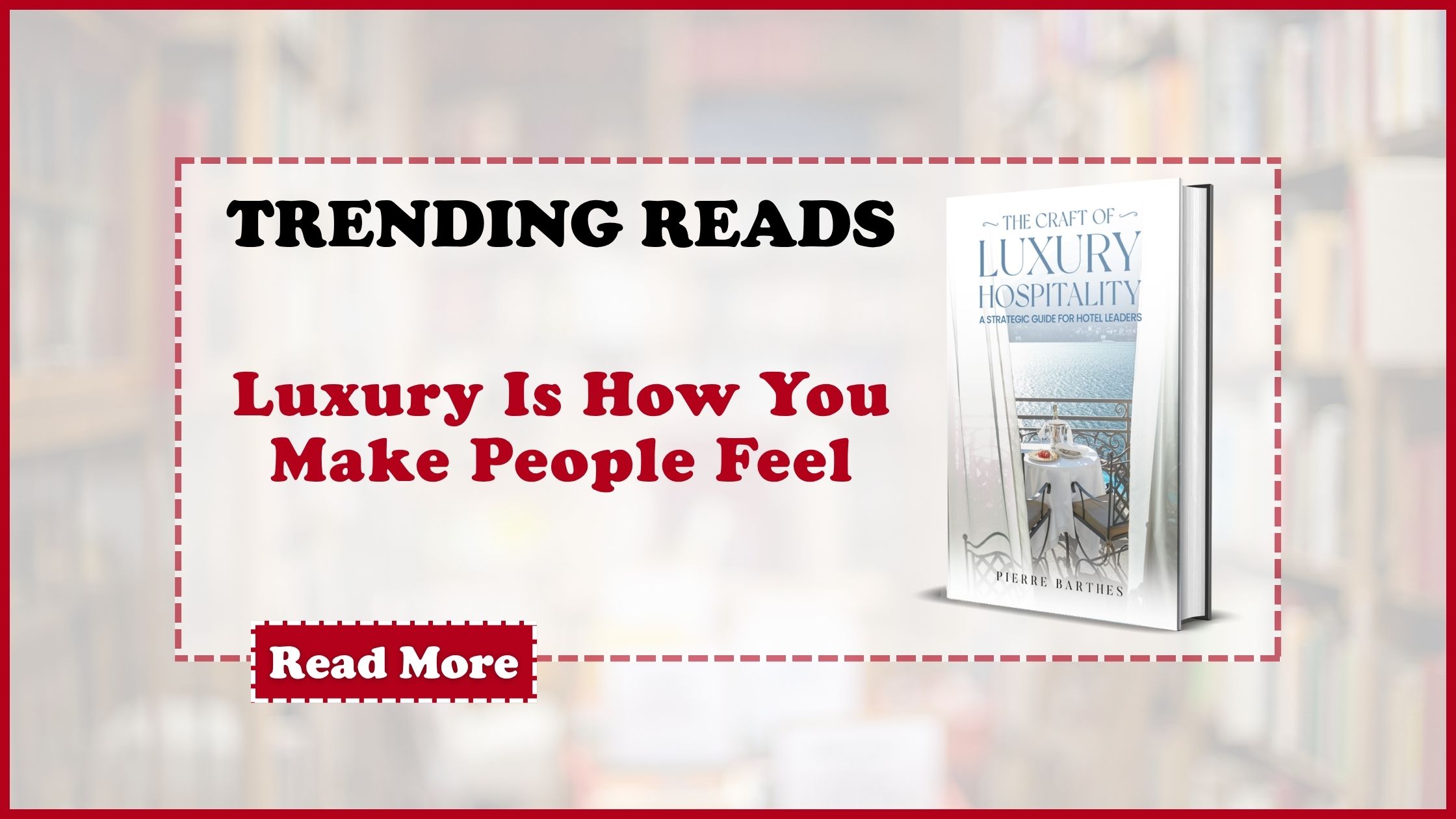
This philosophy lies at the heart of The Craft of Luxury Hospitality: A Strategic Guide for Hotel Leaders and challenges hotel leaders to reconsider how luxury should be understood in an era where physical excellence has become the expected standard rather than the exception.
From Opulence to Emotional Connection
According to Barthes, the evolution of luxury hospitality is not about replacing traditional standards with something new. Exceptional facilities, outstanding cuisine, seamless technology and flawless service remain the foundation of every world-class hotel.
What has changed is what guests value most.
Luxury travellers continue to appreciate beautiful surroundings and impeccable execution, but these qualities are increasingly viewed as expectations rather than differentiators. Lasting loyalty is created through experiences that feel personal, authentic and genuinely thoughtful.
Guests rarely remember every operational detail of a stay. They remember being recognised without being prompted. They remember a concierge who listened before recommending, or a team member who sensed that empathy mattered more than efficiency.
Barthes distinguishes between delivering service correctly and delivering it meaningfully. Standards determine what should happen. Emotional intelligence shapes how that service is experienced.
For today’s luxury hotel, technical excellence remains essential. But it is the ability to create genuine human connection that transforms excellent service into memorable hospitality.
The Guest Is More Than a Room Number
One of the book’s recurring principles is remarkably simple: the guest is the hotel’s true boss.
That philosophy changes how leaders evaluate every decision.
A policy may make operational sense, but does it improve the guest experience? A technology platform may increase efficiency, but does it strengthen or weaken human connection? A beautifully designed room may impress visually, but does it actually make the guest more comfortable?
For Barthes, luxury begins when hotel teams stop viewing hospitality as a sequence of transactions and start treating guests as individuals who want to feel understood, welcomed and valued.
This requires more than expensive hardware. It requires culture, training, empowerment, judgment and leadership.
Five-Star Hospitality Needs Both Precision and Humanity
Throughout his career, Barthes has consistently argued that operational excellence and human connection should never be viewed as competing priorities.
Luxury hospitality depends on both.
Standards, measurement, accountability and operational discipline provide the consistency guests expect from a world-class hotel. They protect quality, reinforce brand standards and ensure that every guest receives the level of service the brand promises.
Yet technical excellence alone does not create memorable hospitality.
What distinguishes exceptional hotels is the ability to combine flawless execution with genuine emotional awareness. A guest may appreciate efficiency, but loyalty is often earned through empathy, recognition and thoughtful human interaction.
This balance between operational precision and emotional intelligence forms one of the central themes of Barthes’ philosophy. Rather than treating emotional intelligence as an intangible quality, he argues that it should be recognised as an essential component of luxury hospitality.
It is this combination of precision and humanity that allows hotels to deliver experiences that guests remember long after their stay has ended.
The Future of Luxury Hospitality
The luxury hospitality industry will continue to evolve. Technology will become more sophisticated, guest expectations will continue to rise, and competition will become increasingly intense.
According to Barthes, these changes make one principle more important than ever. Luxury can no longer be defined solely by physical assets or operational excellence. Those qualities remain essential, but they are no longer sufficient to distinguish the world’s finest hotels.
The hotels that will earn lasting loyalty are those that combine exceptional standards with genuine human connection, creating experiences that guests remember long after their stay has ended.
This philosophy lies at the heart of The Craft of Luxury Hospitality: A Strategic Guide for Hotel Leaders, in which Barthes explores the evolving role of leadership, culture and emotional intelligence in shaping the future of luxury hospitality.
His conclusion is simple and enduring:
Luxury is not ultimately measured by what a hotel provides.
It is measured by how it makes its guests feel.