Foster parents are often warned about attachment.
“Be careful.”
“Guard your heart.”
“Don’t get too attached.”
On the surface, that advice sounds practical. Foster care is uncertain. A baby may reunify with biological parents, move to relatives or transition to another placement. Loving deeply can make goodbye incredibly painful.
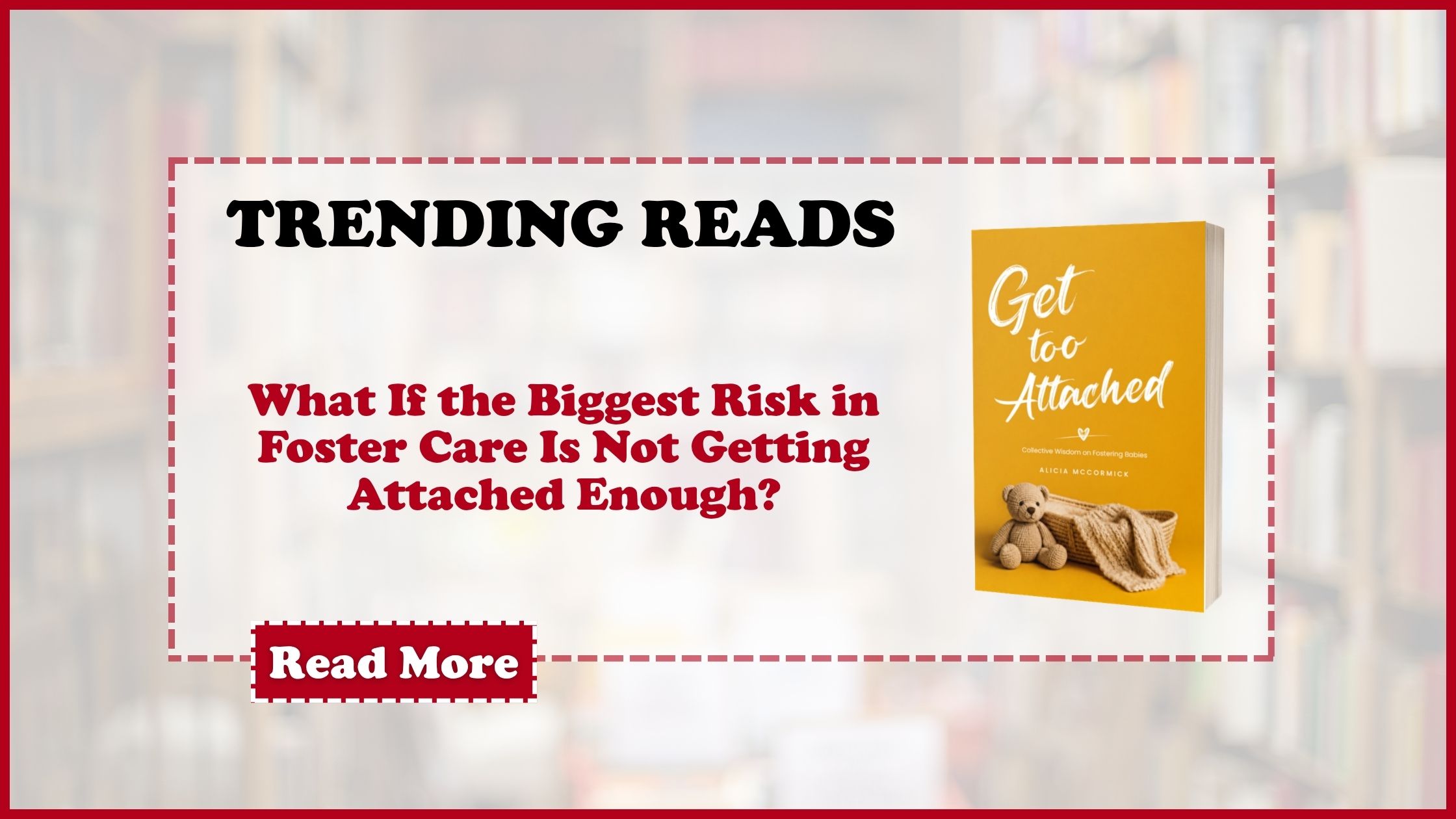
But Get Too Attached: Collective Wisdom on Fostering Babies by Alicia McCormick, PhD, asks readers to consider a different possibility:
What if the bigger risk is not getting attached enough?
Babies Need More Than a Safe Place
A foster home can provide a clean crib, warm clothes, bottles, diapers and medical care.
Those things matter.
But babies also need connection.
The foster parents featured throughout McCormick’s book describe infants who arrive with very different responses to trauma. Some cry constantly and struggle to settle. Others barely cry at all. Some resist being held, while others need almost constant physical comfort. Some struggle with feeding, sleep, sensory regulation or development.
These behaviors can be confusing unless caregivers understand that babies may already have experienced stress, instability, separation, neglect or prenatal substance exposure.
For those babies, attachment is not simply emotional closeness.
It can become part of how they begin learning that adults are safe.
Emotional Distance May Protect the Wrong Person
The instinct to “guard your heart” is understandable.
If a foster parent knows a child may leave, holding something back can feel like self-protection.
But the baby cannot understand that strategy.
A child does not know that the caregiver is trying to make a future goodbye easier. The baby only experiences whether someone responds, comforts, holds, soothes and shows up consistently.
That is why several foster parents in Get Too Attached reject the idea that caregivers should remain emotionally guarded. One contributor explains that children need adults who are willing to become attached and be fully present as parents, regardless of how long the placement lasts.
The adult has support systems, language, therapy, friends and the ability to process grief.
The baby has none of those things.
Attachment Does Not Guarantee Permanence
Getting attached does not mean ignoring the purpose of foster care.
McCormick’s book is equally clear that foster parents may need to support reunification with biological families when it is safe and appropriate. Loving a baby fully does not give the foster parent ownership over that child’s future.
It means being fully committed in the present.
That might involve rocking a baby through another sleepless night, attending therapy appointments, learning trauma-informed parenting, supporting visits with biological parents or advocating for early intervention.
None of it guarantees forever.
But none of it is wasted.
Maybe “Too Attached” Is the Wrong Standard
The title Get Too Attached deliberately challenges one of the most familiar fears surrounding foster care.
McCormick herself acknowledges becoming attached to the babies in her care. She describes foster parents not as people who avoid heartbreak, but as people willing to carry some of the pain of separation so that vulnerable children can experience more love and security.
Perhaps the goal should never be to avoid becoming “too attached.”
Perhaps the real goal is to make sure a baby never has to wonder whether the adult caring for them is emotionally all in.
Read the book on Amazon: https://a.co/d/021kJ9Y3