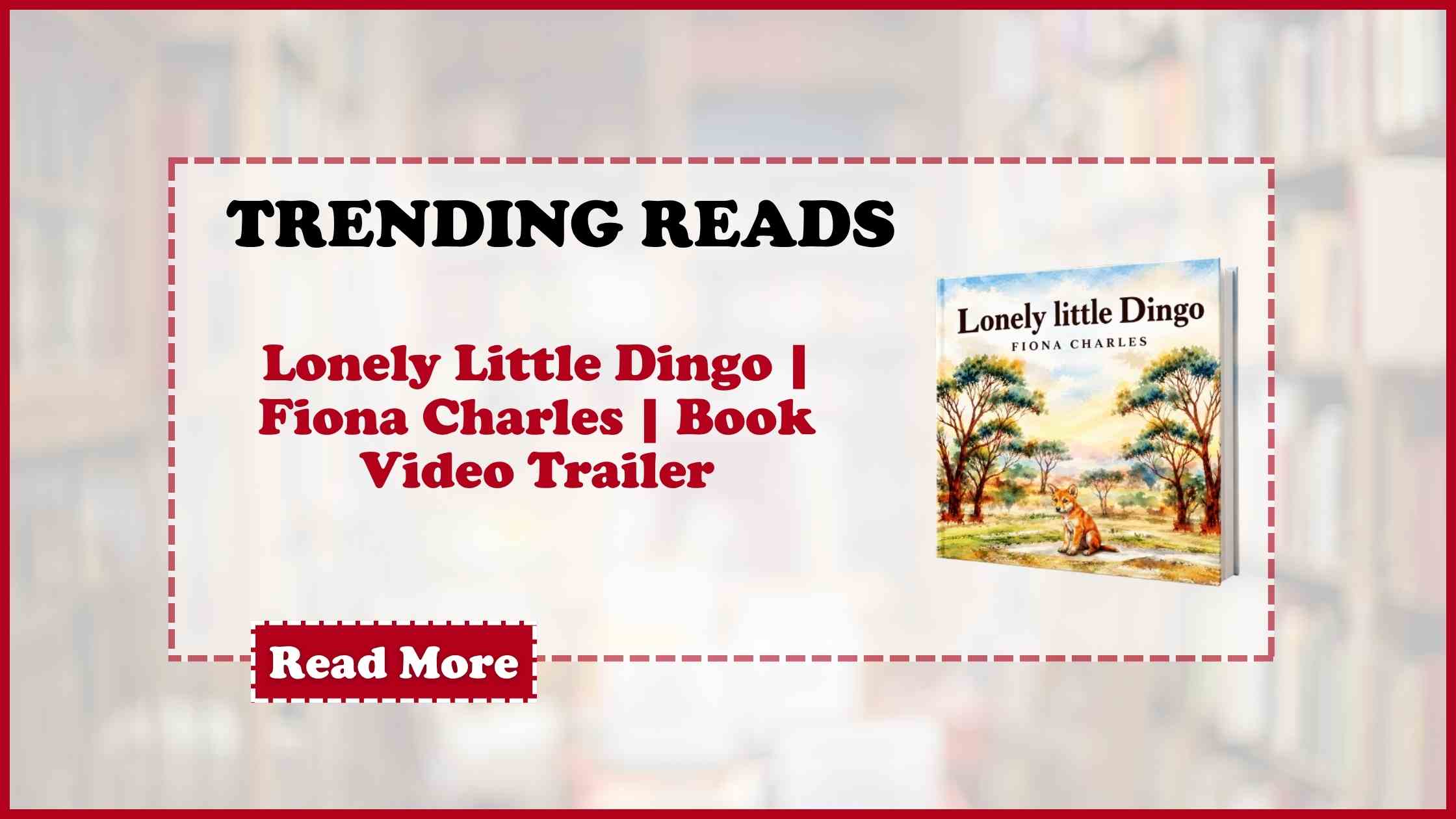
The most memorable children’s books often work on two levels. They give young readers a character and story they can emotionally follow, while also offering parents and caregivers something deeper to think about. Fiona Charles’s Lonely Little Dingo has that kind of appeal, pairing an illustrated Australian wildlife story with themes of fear, belonging, recovery and hope.
At the center of the book is Little Dingo, a vulnerable young pup whose earliest experiences are anything but secure. He is born beneath the Southern Cross in a crowded den, surrounded by other wild dogs but uncertain about who will care for him. Growling, snapping, biting and hunger quickly become part of his world.
For children, Little Dingo is immediately sympathetic. He is small, frightened, curious and trying to understand his surroundings. Those qualities make it easy for young readers to become invested in what happens to him next.
Parents, meanwhile, may notice the story’s emotional depth. Little Dingo’s behavior is shaped by what he has experienced. When he begins exploring outside the den, he gradually becomes more confident because the world beyond it feels calmer and safer.
That progress is interrupted when a trap catches his hind leg. Unable to run or move, Little Dingo becomes hungry, exhausted and weak before unfamiliar hands finally rescue him.
The rescue might seem like the natural place for a traditional children’s story to turn cheerful. Instead, Charles allows the emotional consequences of Little Dingo’s past to remain present.
Even after being fed, cleaned and treated, he is still scared. He greets his new carers with hissing and bared teeth, tears apart his bed and strikes at his cage. His body may be healing, but trust does not arrive instantly.
That can make the story especially valuable for shared reading. Children can understand that Little Dingo is frightened, while adults can use his reactions to begin gentle conversations about why someone may remain upset, defensive or cautious even after circumstances improve.
The book also refuses to make Little Dingo’s feelings overly simple. He remembers the biting and growling of his old den with sadness and anger, yet he still longs to see his fractured family again.
That emotional contradiction feels recognizably human. Children do not always experience one feeling at a time and Lonely Little Dingo leaves room for love, fear, hurt, anger and hope to exist together.
The ending reinforces that message. Little Dingo is released and must face an uncertain future on his own. Beneath the familiar Southern Cross, he walks forward without knowing exactly what comes next. His only companion is hope.
That is perhaps why Lonely Little Dingo has the potential to connect across generations. Children can follow the journey of a brave little animal trying to survive. Parents can recognize a broader story about resilience, emotional recovery and the importance of continuing even when the future is unclear.
With expressive illustrations, an Australian setting and a compassionate message, Fiona Charles’s Lonely Little Dingo offers more than an animal adventure. It creates space for families to talk about difficult feelings while ending with something every reader can hold onto: hope.
Lonely Little Dingo by Fiona Charles is available now on Amazon: https://www.amazon.com/dp/B0HLYCX8X3