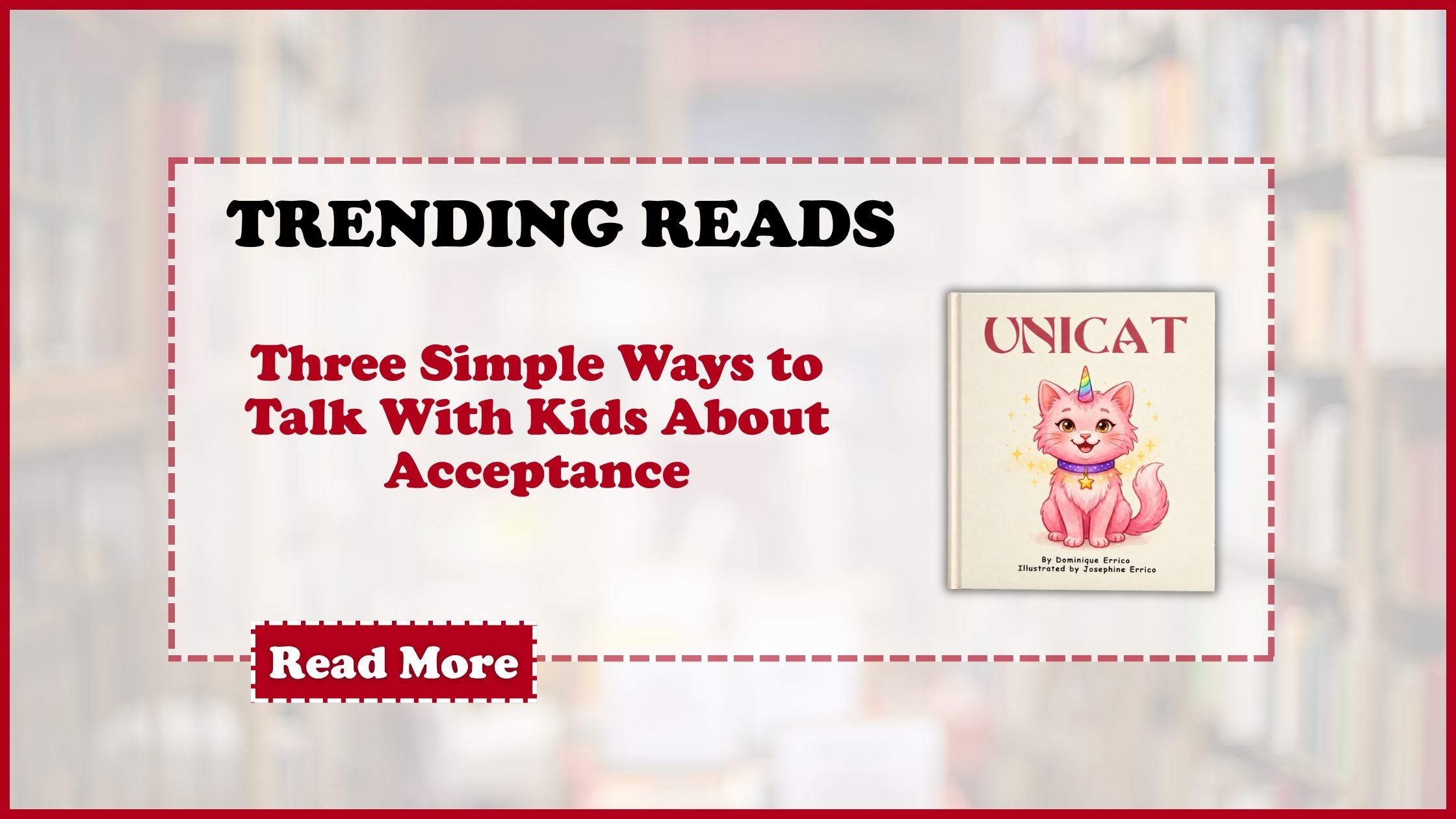
Kindness is simple to celebrate but rarely taught. Children often do not respond to lectures but look up to role-models. So, stories. The story of Unicat, a picture book written by Dominique Errico, is an incredible example of kindness, forgiveness, and acceptance which have managed to find their way into a child’s heart through a beloved story. The dedication mentions the themes of forgiveness, kindness, and acceptance, and the story provides ample material to talk about these values.
Below are three conversation starters that can be used after reading this book.
1. What Do You Do When Someone Seems Different?
Jess, a calico cat, gets lost and ends up running into a dog named Rufus. He notices right away that she isn’t typical and exclaims this fact to her. Then something good happens. He asks for her name, gives him his own and listens patiently to her story. He doesn’t laugh or walk away.
Possible questions to ask could be:
• What did Rufus notice about Jess, and what did he ask her?
• How might Jess have felt when he pointed it out?
• What could Rufus have said that would have been worse?
2. Sometimes You’re the Last to Know
Jess knows nothing about what Rufus is talking about. She looks at her paw, then her head, and finally, her reflection. She is confused and surprised when she sees what she does. Not ashamed.
Children face similar issues as well. Other people may see something about you that you didn’t know, and it can be embarrassing to hear. This is also a good opportunity to talk about the difference between curiosity and cruelty. Ask them how they would want someone to bring up something strange about them to their friend.
3. Being Loved Without Having to Change
The story ends at Jess’s front door, where Jessica is calling for her. Jessica picks her up, spins her around, and tells her how much she missed her. Despite her new look, Jess remains her perfect unicat.
I will not go through all the details because, by now, it should be clear. The feeling of belonging is something that has nothing to do with being the same. For a child who worries about being different, these are words to live by. And you could have asked, who makes you feel welcome just the way you are, and how you could make him or her feel that way.
Bonus: Read It Out Loud
The dialogue is playful. Jess throws in meows and Rufus answers with woofs. Younger listeners can participate by giving a doggie response to the sound words, which keeps reading the story from being such a serious task.
The Girl Behind the Story
The author’s note introduces Dominique (Niquee) as an eight-year-old who loves the color pink and unicorns. She has written the story for her animal-loving friends to spread awareness about kindness and acceptance. In the acknowledgments, she thanks her second-grade teacher Ms. Verdoorn for inspiring her to write the story and her mama for helping with the typing. The note is a reminder to young readers that they too can turn their ideas into books someday.
Any educator worth their salt will tell you that you don’t need a special program to teach acceptance. Sometimes all it takes is a lost cat, a curious dog, and the right questions to get kids asking the tough ones. Unicat makes asking the hard questions easy.
Unicat by Dominique Errico will be available on Amazon shortly.
Want To Discover More? Head Over To Our Website: https://www.librarything.com/profile/DominiqueErrico