Becoming a manager can feel exciting, validating and completely overwhelming at the same time. One day, you may be recognised as a capable and dependable team member. The next, you are expected to manage people, solve conflicts, make difficult decisions, protect standards and remain calm under pressure.
For many new managers, the promotion arrives before the preparation.
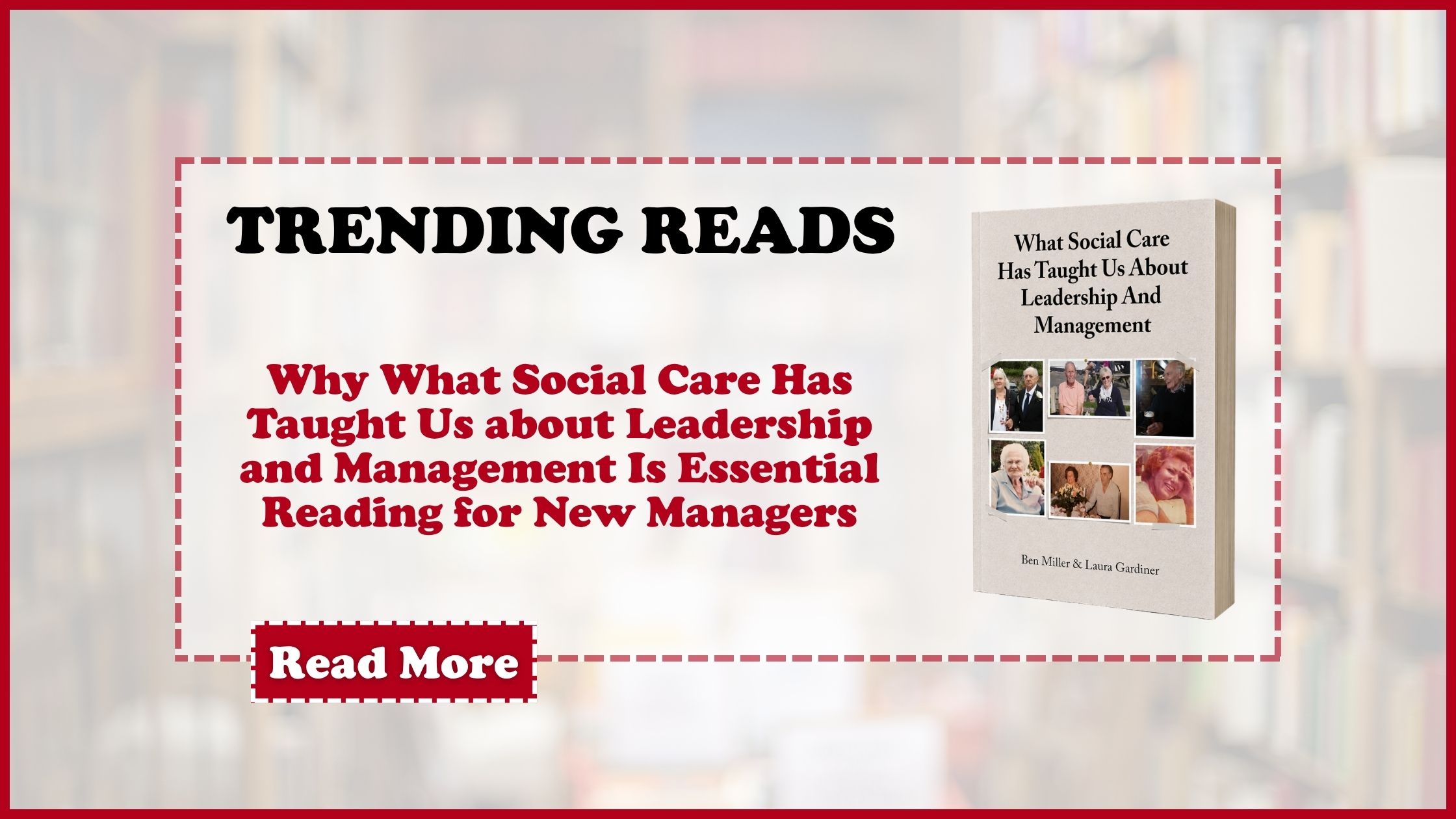
That is exactly why What Social Care Has Taught Us about Leadership and Management by Ben Miller and Laura Gardiner is such an important read. Written from the perspective of professionals who have experienced the realities of leadership in social care, the book offers practical guidance, honest reflection and reassurance for people who are still finding their feet.
It Addresses the Reality of Being Promoted Without Enough Support
The authors recognise that many people enter leadership because they are good at their existing jobs. In social care, a strong carer, nurse, senior team member or coordinator may be promoted because they are reliable and compassionate. However, being good at care does not automatically prepare someone to manage conflict, delegate responsibilities, respond to inspections, support staff or make difficult operational decisions.
The book was created partly because accessible guidance for new and aspiring social care leaders can be difficult to find. Miller explains that many managers are expected to succeed without receiving the coaching, mentoring or preparation they genuinely need.
New managers in any industry may recognise that experience. Expectations increase immediately, while confidence and knowledge take time to develop.
It Reminds Managers They Do Not Have to Work Alone
One of the most valuable lessons in the book is the importance of support networks and mentors. New leaders often believe they must prove themselves by solving every problem independently. Unfortunately, that mindset can make management more stressful and isolating.
Miller and Gardiner encourage readers to identify people who can offer guidance, perspective and constructive challenge. A useful mentor does not simply agree with every complaint or decision. They help managers think more clearly, consider alternatives and continue developing.
For a new manager, knowing when and how to ask for help can be just as important as learning how to lead a team.
It Treats Wellbeing as a Leadership Responsibility
Management can quickly consume a person’s time and energy. Calls outside working hours, unfinished tasks, staffing problems, difficult conversations and constant responsibility can leave leaders emotionally exhausted.
The book makes it clear that wellbeing is not separate from effective leadership. Managers who neglect themselves may eventually struggle to think clearly, communicate calmly or support their teams consistently. The authors openly discuss stress, burnout, emotional pressure and the importance of recognising personal limits.
That honesty is especially valuable for new managers who may assume that feeling uncertain means they are failing.
It Encourages Thoughtful, Humble Leadership
The book also challenges the belief that managers must always have an immediate answer. Readers are encouraged to pause, consider alternatives, involve other people and avoid reacting emotionally whenever possible.
Its guidance reminds managers that taking time to think is not a weakness. Leaders can strengthen their teams by asking employees to contribute solutions rather than becoming responsible for fixing every minor problem themselves.
It Offers Hope Without Pretending Leadership Is Easy
Perhaps the book’s greatest strength is its realism. Miller and Gardiner do not portray management as effortless or glamorous. They acknowledge that social care leadership can feel lonely, demanding and emotionally draining. At the same time, they show why it can be deeply meaningful.
What Social Care Has Taught Us about Leadership and Management gives new managers something many desperately need: the knowledge that they are not alone, they do not need to know everything immediately and they can become stronger leaders one step at a time.
Read the book on Amazon: https://a.co/d/0aOrMfZp