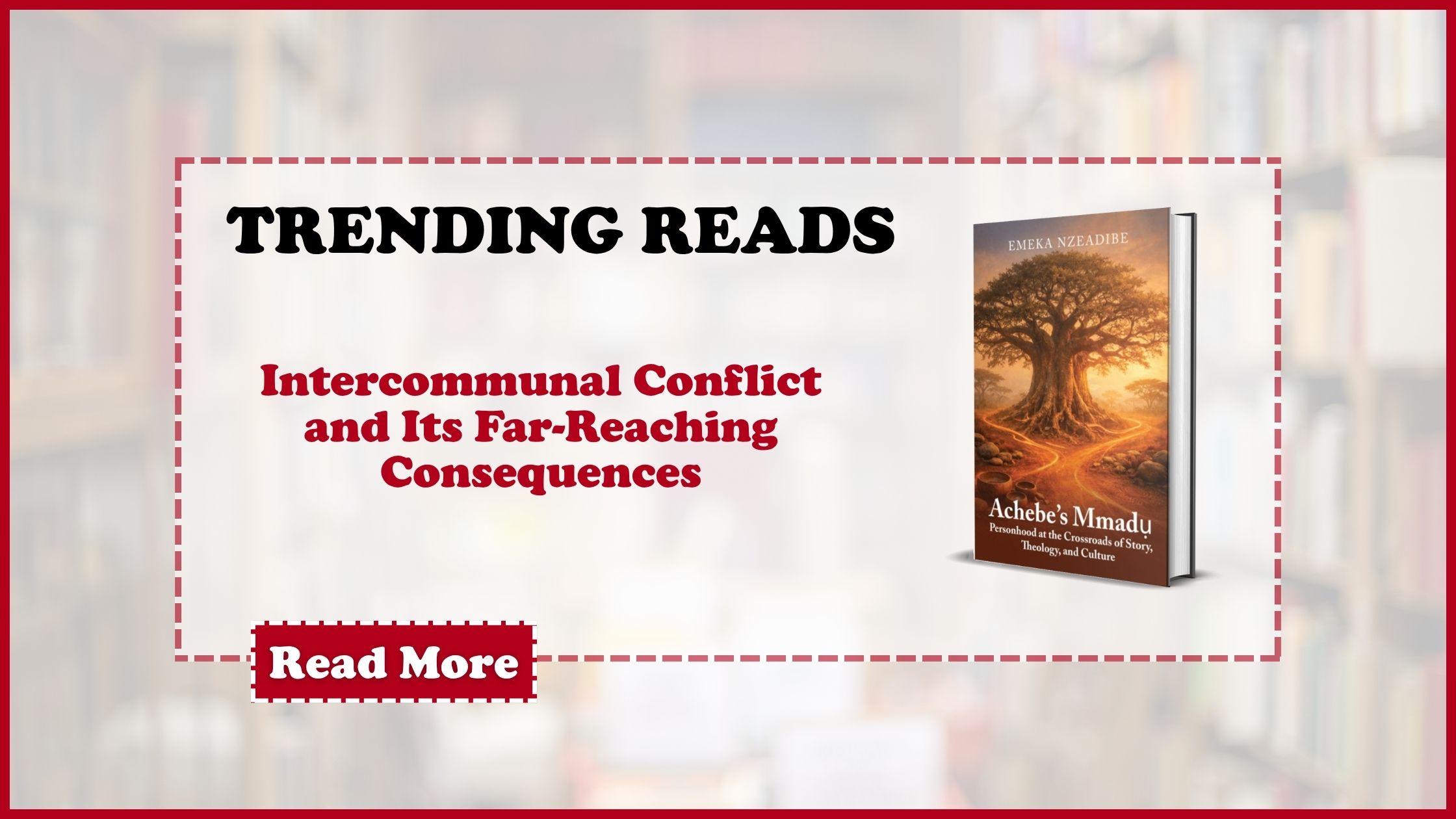
Before moving ahead, if you want to explore how these intense struggles of power, storytelling, and cultural anthropology intersect with theological reflection, Achebe’s Mmadụ: Personhood at the Crossroads of Story, Theology, and Culture offers a brilliant analytical companion. The book unpacks how literary masterpieces like Arrow of God and others capture the complexities of human dignity, community collapse, and the search for cosmic balance.
For readers interested in Chinua Achebe, African thought, theology, cultural identity, or the enduring question of what makes us human, this book opens an important and deeply rewarding conversation.
Read the book on Amazon: https://a.co/d/0363OG8A
That said, every community relies on a delicate balance of shared values, customary laws, and trust to maintain its social fabric. However, when internal tensions collide with external pressures, that fabric can unravel rapidly and can disrupt our lives. But Chinua Achebe’s classic novel Arrow of God masterfully captures this fragile dynamic, and it beautifully traces how a localized dispute can snowball into a massive societal crisis with irreversible consequences for both individuals and the collective community.
The narrative shift in Arrow of God accelerates when a bitter land dispute erupts into armed conflict between the six villages of Umuaro and the neighboring village of Okperi. Amidst the brewing hostility, Ezeulu, the Chief Priest of the supreme deity Ulu, takes a courageous and controversial stance. Armed with the full weight of his sacerdotal authority, Ezeulu testifies before the British colonial administration that his own village of Umuaro is in the wrong regarding the contested land.
Convinced that his sacred office demands absolute truth, Ezeulu asks, “How could a man who held the holy staff of Ulu know that a thing was a lie and speak it?” For Ezeulu, telling the truth is not merely a situational choice; it defines his very personhood. However, his public testimony against his own people earns him the deep resentment and scorn of his fellow villagers, fracturing his relationship with the clan.
Before the intercommunal conflict can resolve organically, the British colonial administration forcibly intervenes under District Officer Captain Winterbottom. While Winterbottom is personally impressed by Ezeulu’s integrity during the land hearing, the broader colonial apparatus sets in motion a series of heavy-handed policies. Trying to govern a fiercely republican society through centralized control, the British implement their “Indirect Rule” policy by appointing local “warrant chiefs”. This policy fundamentally misunderstands Igbo political structures, which traditionally abhorred kings and central authorities (Igbo Amaghi Eze). By imposing unaccountable warrant chiefs over a decentralized, democratic society, the colonial administration creates artificial friction, sparking deep resentment among the indigenous population.
Because Winterbottom respects Ezeulu, the colonial administration attempts to install him as a warrant chief. When Ezeulu categorically refuses to become anyone’s chief except his god’s, colonial misunderstandings lead to his imprisonment in Okperi for several weeks. This injustice is proof of the humiliation for a man of Ezeulu’s stature. Upon his return, nursing a wounded ego and a desire for vindication, Ezeulu allows his personal grievances to interfere with his sacred priestly duties. Refusing to compromise during a critical famine, he hides behind the alleged will of his god, alienating his suffering people and opening the door for Christian missionaries like John Goodcountry to sweep in.
The trajectory of Umuaro shows that when leaders become too rigid, external imperial forces disrupt organic community structures, and personal pride eclipses collective well-being, entire societies fall into chaos. Arrow of God remains a timeless reminder that maintaining community harmony requires constant flexibility, mutual empathy, and an acute awareness that no single individual, no matter how powerful they are, can stand successfully against the collective heartbeat of their people.
Read the book on Amazon: https://a.co/d/0363OG8A