Change is often required because we are looking to introduce a new process, strategy or way of working. Whilst leaders will have an understanding of what needs to happen with the support of plans, timelines and expectations, no matter how well thought out the strategy is, there will be an issue if the people involved in delivering it are unsure, excluded or unsupported.
The problem isn’t necessarily the change but the uncertainty.
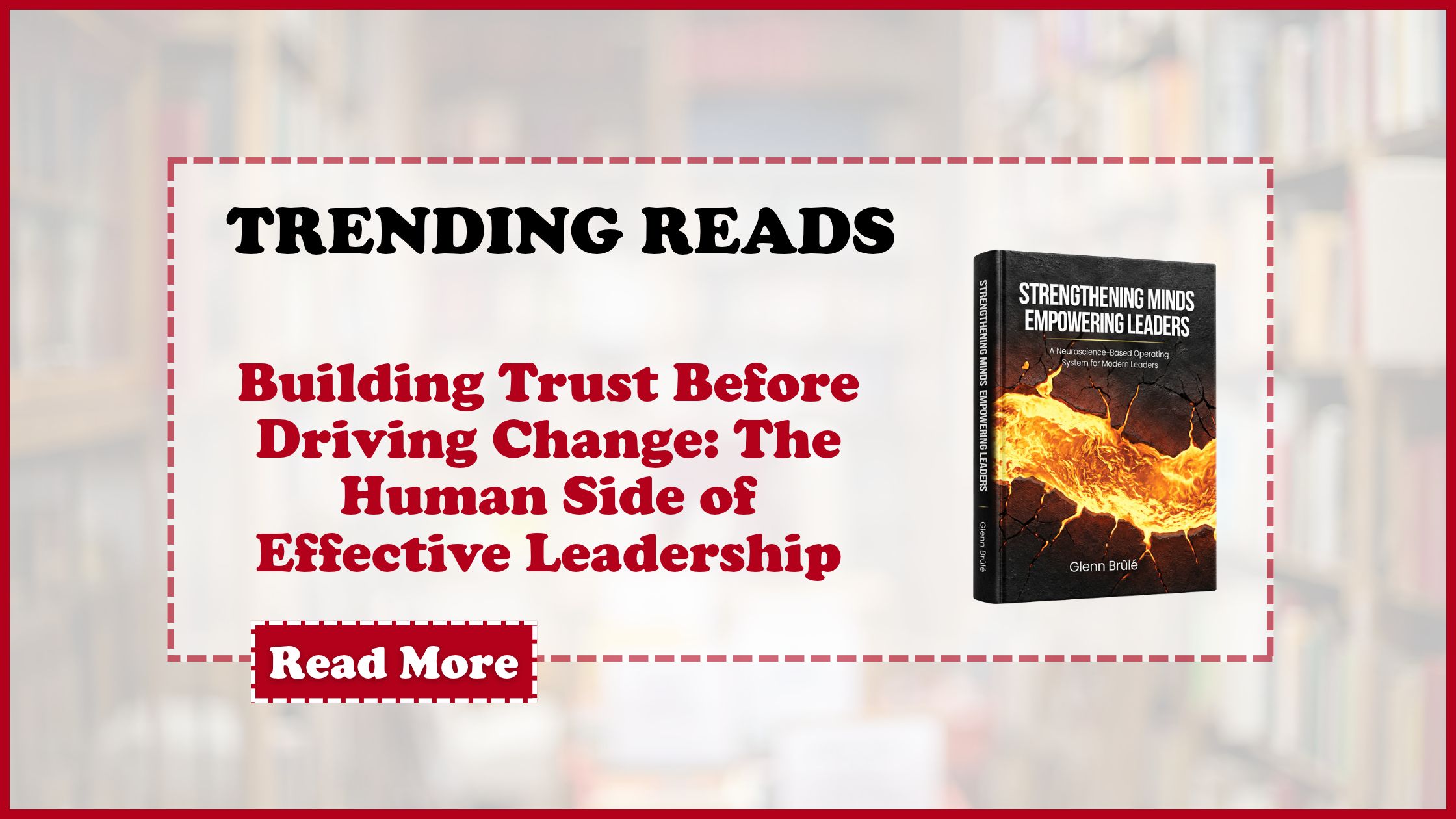
In Strengthening Minds, Empowering Leaders Glenn Brûlé talks about a very strong principle that people don’t necessarily dislike change but they dislike change without trust. Leadership becomes more focused on understanding what individuals need to take them forward. As Glenn explains, organisations will sometimes have great change methodologies but fail due to not understanding how challenging it is for humans to go through change.
Trust is gained by being transparent in your actions. If employees know that you have clear communication, you’re listening to their concerns, taking on board alternative views and treating everyone fairly then trust will be formed. However if priorities change suddenly with no explanation, you’re not providing constructive feedback and there is micromanaging then confusion will occur. Even with the best intentions, people will start to question their role, are they making a difference and where are they going.
Psychological safety will make people feel valued and safe to be honest. They will feel more inclined to ask questions, raise concerns, own up to mistakes and provide new ideas. However if they do not feel psychologically safe they will become focused on protecting themselves. They may shy away from asking challenging questions or not want to challenge an assumption that could benefit the team.
An effective leader will focus on building relationships first. This does not mean they do not hold people accountable or have high standards, but instead, they create an environment where others can be given feedback and learn from their mistakes. When having a difficult conversation, ensuring they feel respected will result in more productive conversations.
They will communicate effectively. The way you come across when communicating can be affected by your tone of voice, active listening, body language, consistency and openness to listening. If you ask for feedback but seem distracted it can come across as you do not want people to contribute. Whereas if you give clear explanations and show you are really listening it can make people feel part of the process.
Finally we must also consider that people feel uncertainty differently. Some may be excited by change and new ideas where others will want proof, assurance and time to understand the changes. By understanding this leaders are able to offer support.
Glenn Brûlé highlights the connection between trust, relationships and psychological safety in creating an environment where people can learn and give their best (Strengthening Minds, Empowering Leaders). This helps us to also understand how sustainable change requires great relationships to be built by leaders during the process.
Do you want people to be excited about the next change? Ensure they can trust the person leading the change by explaining why the change is happening. Provide an open environment to ask genuine questions and ensure that you are a good listener. It may not always be possible to control changes but you want people to feel that their opinions and experiences matter. Being able to trust someone doesn’t take away the uncertainty but provides a more solid base.
Get the book on Amazon: https://www.amazon.com/dp/B0HK4YBJHR