While many will highlight the importance of trust as the basis for effective leadership, individuals can be reluctant to ask challenging questions, take responsibility for mistakes, challenge current thinking and express uncertainty. Building strong teams requires creating an environment where you can build positive relationships but also feel secure to be authentic and learn and develop.
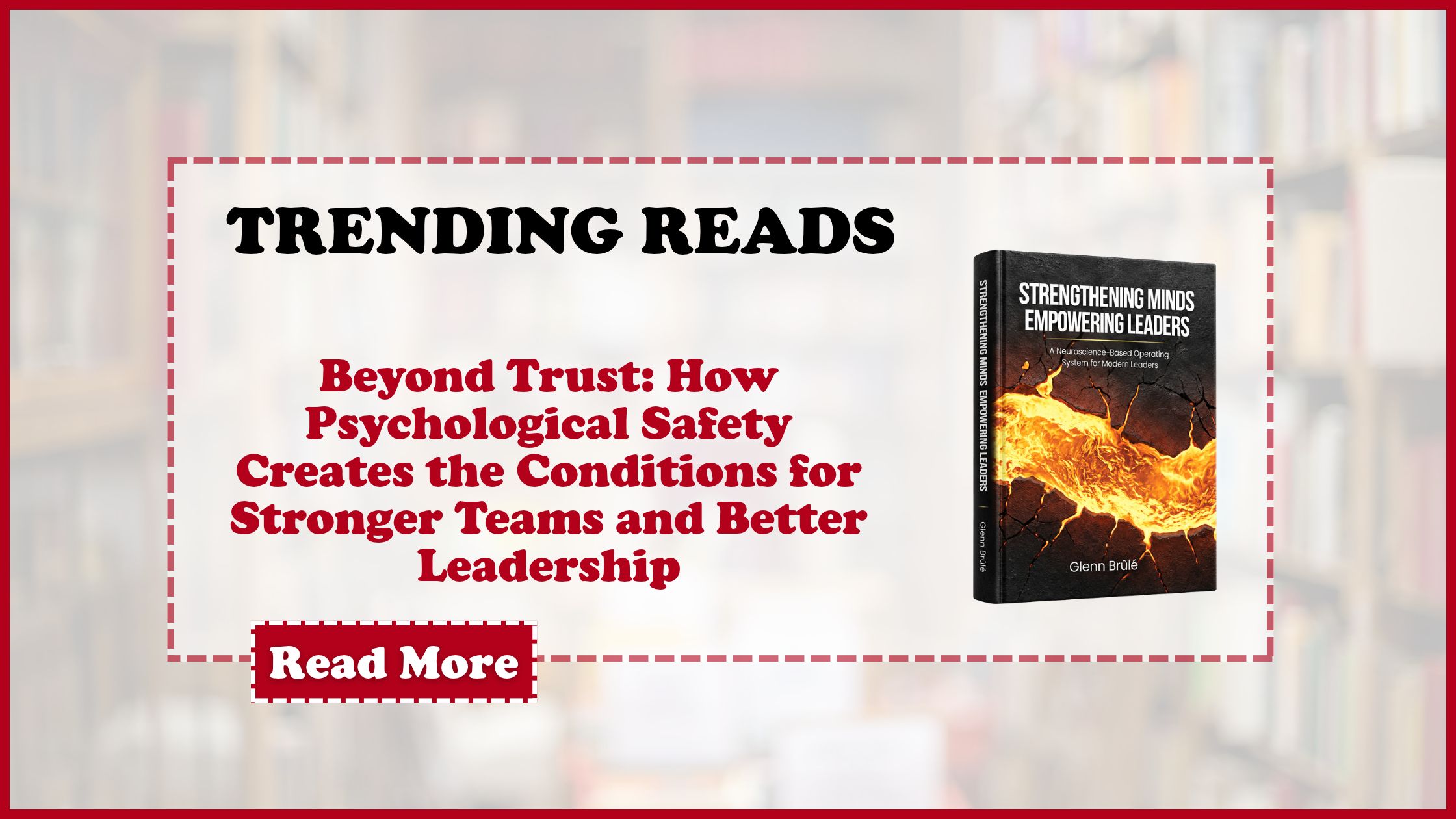
Psychological safety offers a useful insight into this. In Strengthening Minds. Empowering Leaders., Glenn Brûlé links psychological safety with neuroscience, social relationships and the conditions under which we think and act. Using Amy Edmondson’s research, the book explains that high performing teams are successful due to them creating the conditions that allow people to be authentic before mistakes happen.
Our brains are constantly looking at social situations. David Rock has created a model called the SCARF Model which describes 5 areas of our brain – Status, Certainty, Autonomy, Relatedness, Fairness. This relates to how we feel valued, make sense of situations, have meaningful choices, feel safe around others and feel we are being treated fairly. If these needs are met it makes it easier for us to be curious, learn, be creative and work together. However if they aren’t met our focus can become narrower, we can become more defensive and our trust can start to slip.
Everyday leadership behaviours can impact on these. By making negative comments, creating unclear expectations, micro-managing, failing to recognise a persons contributions or changing priorities with no explanation we are creating unnecessary uncertainty. Even if we don’t mean to put people off contributing they may become more hesitant.
Psychological safety isn’t about letting people off the hook, reducing standards or compromising your position to agree with everyone. It is about creating an environment where people feel valued and supported so they can learn and react positively. This means having a mindset of ‘connect before you correct’. You can still hold people to high standards but have a curious, respectful and genuinely interested approach to having challenging conversations.
When people feel like they are heard and their concerns will be taken into consideration they are more likely to put themselves forward. By actively listening, being clear, showing appreciation and thoughtfully responding to feedback you create an environment where people will build better working relationships with you. This will start to impact the culture of your team over time.
This is also why leadership cannot be seen as a personal achievement. In the book ‘Strengthening Minds. ‘Empowering Leaders.’ Glenn Brûlé shows how community, connection, coaching and relationships are vital to continue developing. It is rarely achieved through policies but through how we treat each other in our relationships.
When people feel trust in their daily interactions, they will become stronger teams. Leaders who understand this can change how they ask their team for better performance. They can start asking what they need to do to create the conditions for people to think, learn, give and perform at their best. This will create openness, collective learning and sustainable collaboration.
Get the book on Amazon: https://www.amazon.com/dp/B0HK4YBJHR