Modern medicine can do remarkable things. It can detect disease earlier, manage complex chronic conditions, perform advanced procedures and extend lives in ways that were unimaginable generations ago.
Yet America still faces rising healthcare costs, widespread chronic disease and growing pressure on hospitals, providers and families.
That raises an important question: What if treating disease is only part of the solution?
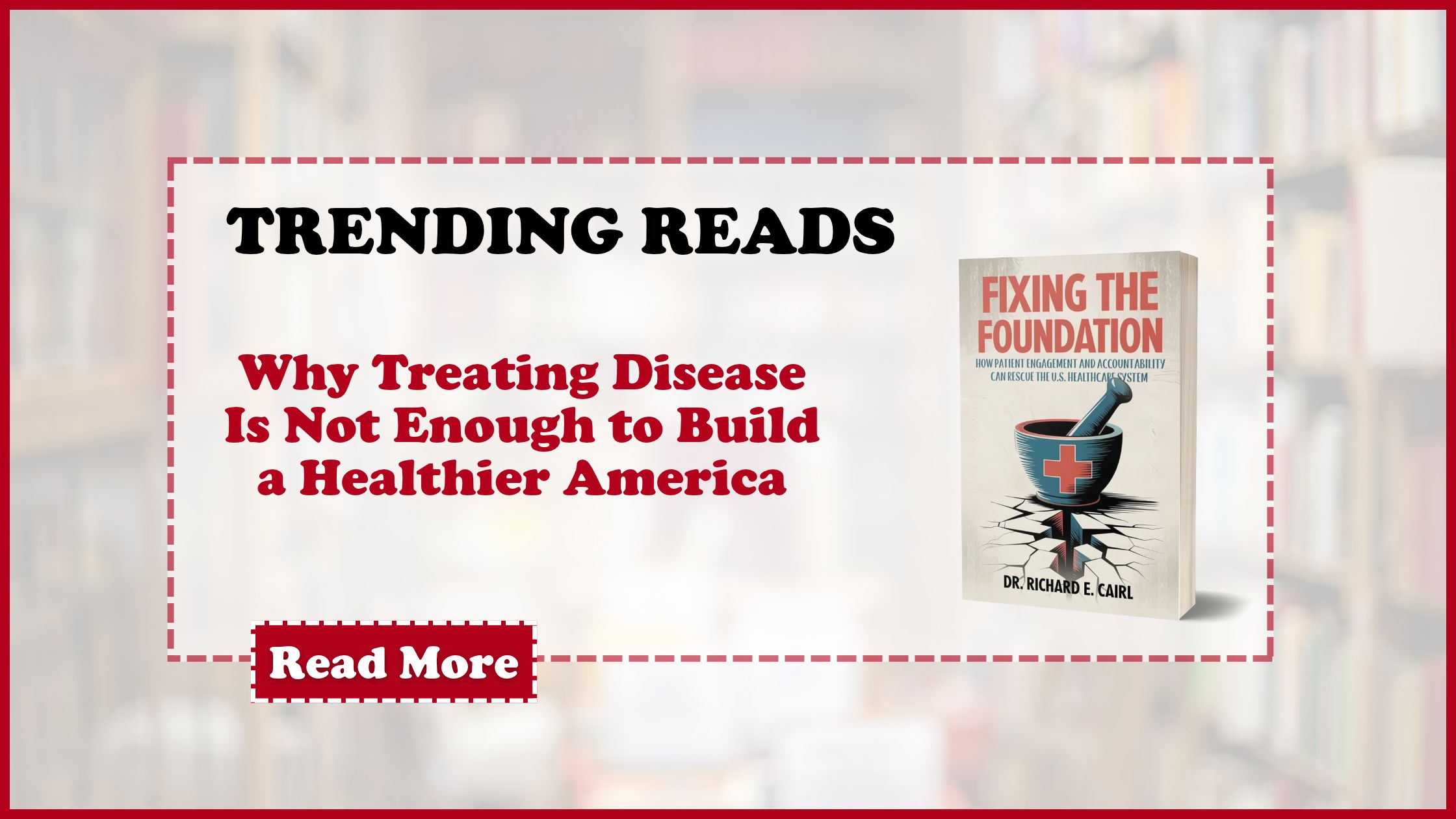
In Fixing the Foundation: How Patient Engagement and Accountability Can Rescue the U.S. Healthcare System, Dr. Richard E. Cairl argues that the country cannot build a healthier future by focusing mainly on what happens after people become sick. A more sustainable system must also invest in prevention, patient engagement and the everyday behaviors that influence long-term health.
The Limits of a Treatment-First System
Much of the healthcare system is designed to respond once a problem has already appeared.
A patient develops high blood pressure. Diabetes progresses. A chronic condition worsens. Symptoms become severe enough to require emergency care or hospitalization.
At that point, the healthcare system steps in.
But Dr. Cairl argues that many chronic conditions are strongly influenced by what happens before that crisis point. Diet, physical activity, medication adherence, self-monitoring, follow-up care and other daily behaviors can all shape health outcomes over time.
The book emphasizes that the period between doctor visits is especially important because that is where most health-related decisions actually take place.
Prevention Requires Participation
Prevention is not simply about telling people to make healthier choices.
Dr. Cairl challenges the assumption that information alone is enough to create lasting change. Patients may understand what they should do and still struggle with motivation, habits, stress, environmental barriers or competing priorities.
That is why Fixing the Foundation explores a range of practical strategies, including behavioral coaching, goal setting, incentives, self-monitoring, digital nudges and communication-based interventions.
The goal is to help patients turn knowledge into action.
A Shared Responsibility for Better Health
The book also makes an important distinction between engagement and accountability.
Engagement means giving patients the knowledge, support, tools and confidence needed to participate in their own care.
Accountability means taking ownership of the actions and behaviors that influence health.
Dr. Cairl does not present accountability as blame. Instead, he frames it as part of a partnership. Healthcare systems and providers must create the conditions that make engagement possible, while patients must participate meaningfully in the process.
Both sides matter.
From Sick Care to Sustainable Care
Fixing the Foundation argues that America’s healthcare challenges cannot be solved through technology, payment reform or expanded access alone. Those elements are important, but they do not eliminate the need for prevention and patient participation.
A healthier America will require more than better treatment after illness develops.
It will require a system that helps people stay engaged before complications occur, supports healthier behaviors between appointments and recognizes patients as active contributors to their own outcomes.
That is the broader challenge Dr. Richard E. Cairl places before readers.
Because the future of healthcare may depend not only on how well America treats disease.
It may depend on how well it helps people protect their health before disease takes control.
Discover Fixing the Foundation: How Patient Engagement and Accountability Can Rescue the U.S. Healthcare System by Dr. Richard E. Cairl.
Available on Amazon: https://www.amazon.com/dp/B0GRCRBKB6/
Visit the Author’s Official Website: https://richardcairl.com/