When people think about fixing healthcare, they often picture bigger reforms: new policies, better hospitals, lower drug prices, improved insurance coverage or more advanced technology.
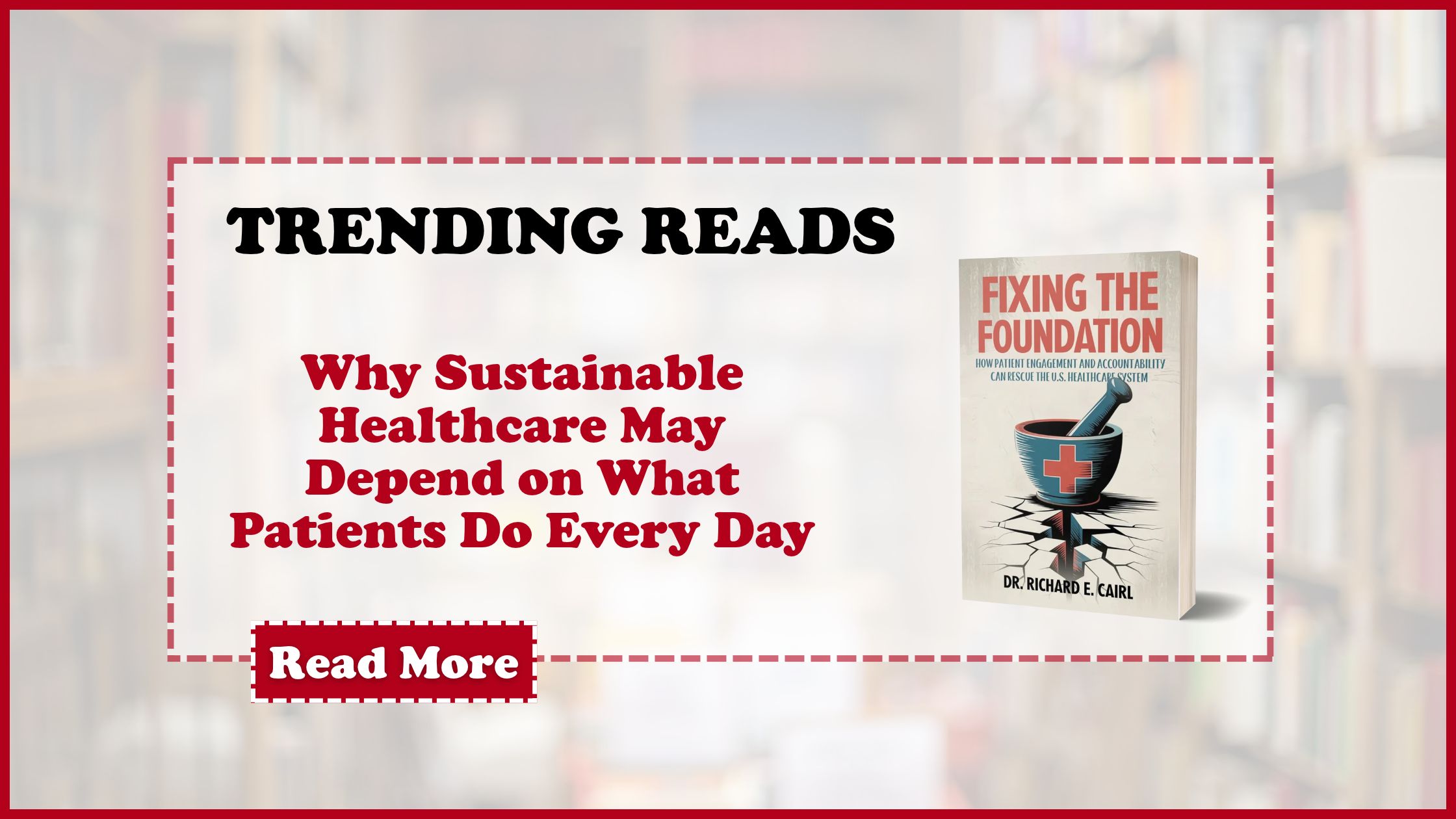
Those issues matter. But Fixing the Foundation: How Patient Engagement and Accountability Can Rescue the U.S. Healthcare System by Dr. Richard E. Cairl asks readers to consider something more personal and immediate.
What happens when the patient leaves the doctor’s office?
That question sits at the heart of the book’s argument. Dr. Cairl emphasizes that health is shaped not only by clinical encounters, but by the thousands of everyday decisions people make between appointments. Medication routines, eating habits, physical activity, follow-up care, symptom monitoring and adherence to treatment plans can all influence long-term outcomes.
Healthcare Does Not End at the Clinic Door
A physician can recommend a treatment plan, but the patient ultimately has to live with it.
For someone managing diabetes, that may involve monitoring blood glucose, taking medication consistently, adjusting diet and responding to changes in symptoms. For someone with cardiovascular disease, daily routines around medication, movement, nutrition and follow-up care can play a major role in disease management.
Dr. Cairl argues that these everyday actions should not be treated as secondary to healthcare. They are part of healthcare.
The book repeatedly returns to the idea that patients spend far more time managing their health on their own than they do in direct contact with medical professionals. That makes the period between appointments critically important.
Sustainable Care Requires More Than Treatment
One of the central concerns in Fixing the Foundation is the growing burden of chronic disease and the cost of managing conditions that often require long-term behavioral change.
Treating complications after they occur is expensive. Supporting patients earlier, before problems escalate, offers a different path.
Dr. Cairl explores approaches such as action planning, behavioral nudges, incentives, self-monitoring tools, communication strategies and digital support. These methods are designed to help patients move from simply knowing what they should do to actually sustaining healthier behaviors.
That distinction matters because information alone rarely changes deeply established habits. A person may know that exercise, medication adherence or healthier eating is beneficial and still struggle to act consistently.
Accountability Should Be Shared
The book does not reduce healthcare problems to individual behavior or suggest that patients should simply “try harder.”
Instead, Dr. Cairl presents accountability as something that must be supported.
Patients need clear information, understandable care plans, appropriate tools, respectful communication and systems that make healthy choices easier to maintain. Providers and healthcare organizations also have responsibilities to build engagement into care instead of treating it as an optional extra.
In this model, accountability becomes a partnership rather than a punishment.
A Different Path to Sustainability
A sustainable healthcare system cannot depend only on treating illness after it becomes severe. It must also help people participate more effectively in protecting and managing their own health.
That is the challenge at the center of Fixing the Foundation.
Dr. Richard E. Cairl invites readers to look beyond hospitals, insurance systems and medical technology and consider the role of everyday behavior in the future of healthcare.
Because if healthcare is going to become more sustainable, the solution may not begin with one dramatic reform.
It may begin with what patients do tomorrow morning and every day after that.
Discover Fixing the Foundation: How Patient Engagement and Accountability Can Rescue the U.S. Healthcare System by Dr. Richard E. Cairl.
Available on Amazon: https://www.amazon.com/dp/B0GRCRBKB6/
Visit the Author’s Official Website: https://richardcairl.com/