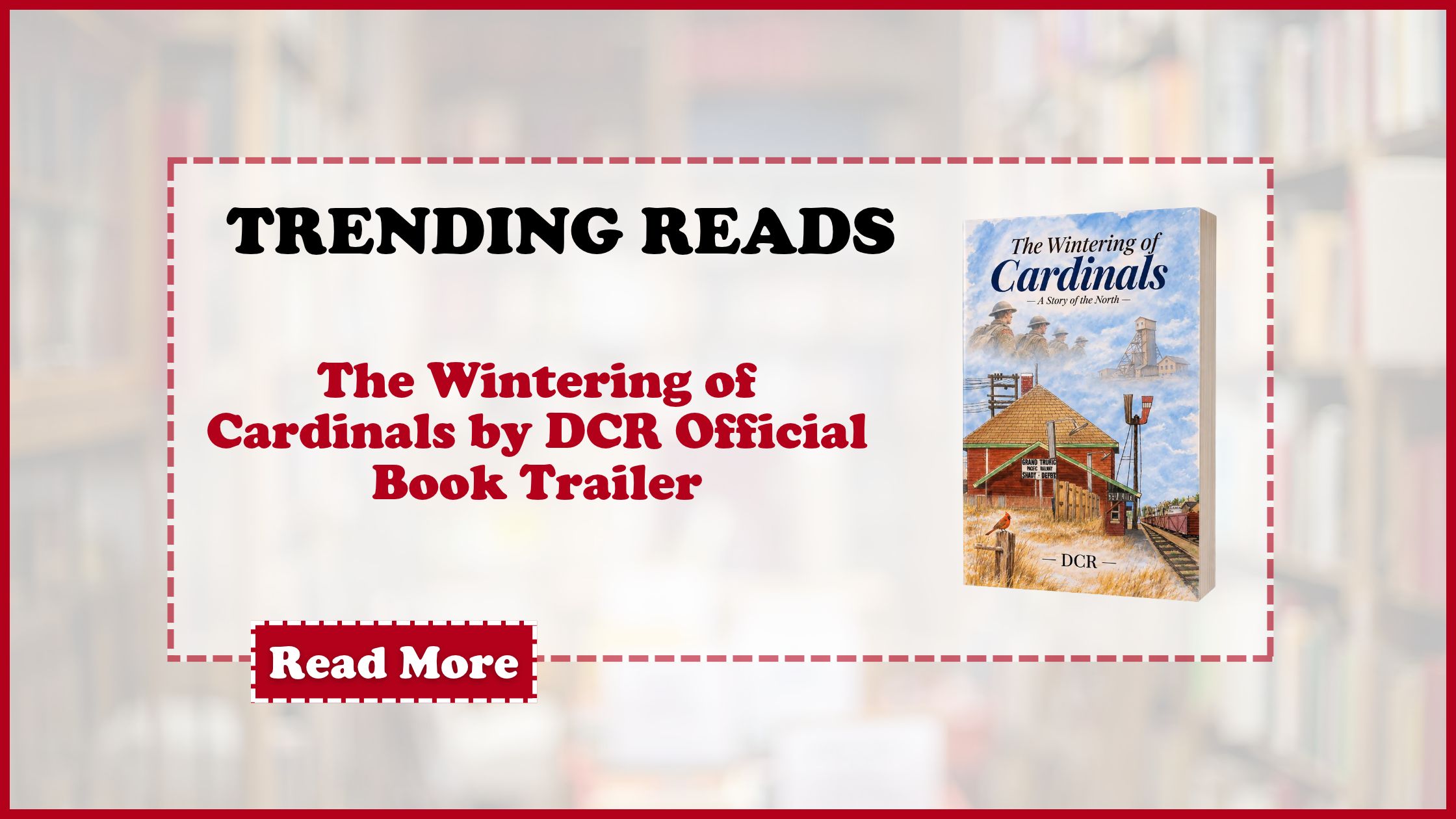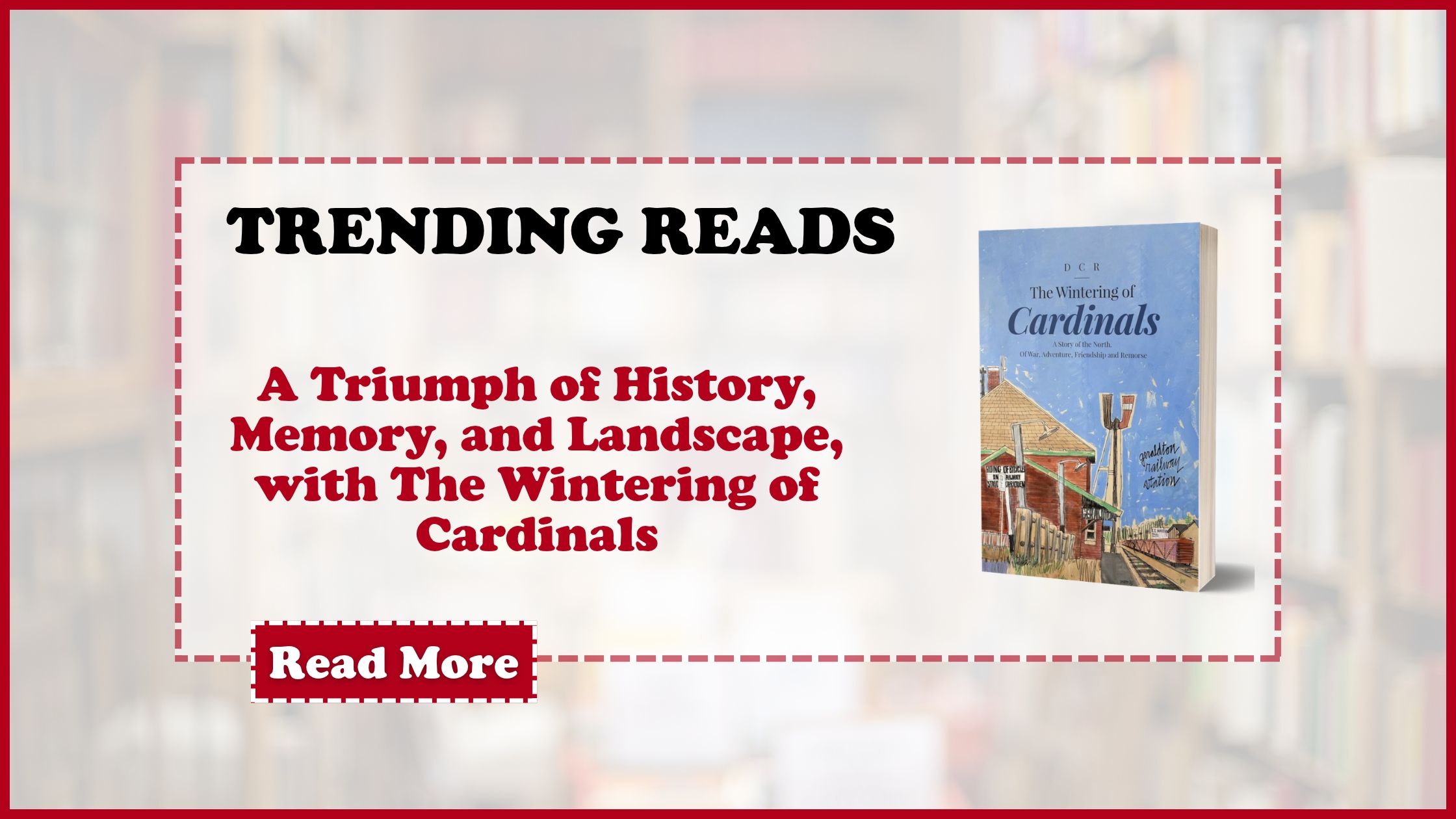
If you are a book lover, you can relate to the fact that not every book is the same, even if they are from the same author. Be it fiction, non-fiction, a diary on the past, a thriller, a memoir, or a window to the overlooked aspects of history, a good story like DCR’s The Wintering of Cardinals should give you a reason to read it and provide you with the best experience, you know, when you can literally feel transported to the pages of the book. Bridging the seventeenth-century clash of civilizations in the wilds of early Canada with the rugged, powder-Keg boomtowns and European battlefields of the mid-twentieth century, The Wintering of Cardinals is arichly textured and atmospheric read that lingers long after the final page is turned.
The narrative opens with detailing the devastating 1649 strategic assault by the Iroquois Confederacy on the heart of the Wendat (Huron) nation. Here, the past was driven by shifting fur trade pressures, Dutch demands, and the ravages of European-introduced diseases, and over a thousand warriors executed a brilliant winter campaign across the frozen waterways of the Trent-Severn corridor. DCR handles this foundational tragedy with immense weight, illustrating how an entire civilization was abruptly uprooted from the ashes of this destruction. This also includes the escape of a small band of survivors, who vanished deep in the impenetrable muskeg, sandhills, and slow-moving channels of the Wintering River, which is a symbol of resilience and a refuge where a “lost tribe” protected its memories and heritage from the prying eyes of a changing world.
From these ancient, moss-draped roots, the novel seamlessly transitions to the twentieth-century frontier of Northern Ontario and specifically, the gold-mining community of Geraldton, we get to see the lives of the people of the north of Lake Superior. Here, the landscape is defined by roaring steam locomotives, headframes piercing the sky, and the relentless hum of industrial enterprise. In this vibrant, hard-edged boomtown, we meet the novel’s core ensemble: hardened miners, prospectors, loggers, and dreamers who treat the pristine lakes and working mines as their personal playground.
Among them are Dante Cardinal-Redmond (descendant of the hidden Wendat) and Robb Christian, a man with a mysterious past who reinvented himself on the Canadian frontier. When the world is plunged into the dark chaos of World War II, these hardy young men accustomed to the bitter cold, isolation, and explosive danger of the northern shield. They traded their mining tools for Bren guns. DCR’s depiction of military service is remarkably grounded and poignant. By following the characters from the rigorous training camps in Shilo, Manitoba, through the sun-drenched initial landing of Operation Husky in Sicily, to the brutal, muddy, claustrophobic nightmare of the Italian Campaign, the narrative achieves an incredible sense of realism.
The climax of this wartime journey culminates in the harrowing winter crucible of the Battle of Ortona on Christmas Eve, 1943. The tactical reality of “mouse-holing” through blown-out stone buildings, dodging the deadly fire of German machine guns, and grappling with split-second decisions is rendered with visceral intensity. Here, tragedy strikes, altering the characters’ trajectory forever. Yet, even amid war’s ugliest machinery, the novel finds profound moments of grace, such as the heartbreaking connection forged in an Ortona basement between Dante and a young Italian woman named Sophia Cardinale.
The Wintering of Cardinals handles the ripple effects of these historical traumas with care and refuses to treat history as a series of isolated events. The book demonstrates how the choices made in a snow-swept forest in 1649 or a bombed-out cellar in 1943 echo directly into the post-war lives of the next generation. Back in Geraldton, we experience the 1950s through the eyes of Danny Monroe, who was the adopted son of the mine manager, a sharp-eyed boy exploring escape shafts, delivering newspapers in blinding snowstorms, and marveling at the arrival of early television sets. Danny’s innocent childhood adventures are charmingly rendered, yet they run parallel to a darker, simmering undercurrent of postwar reckoning.
DCR’s prose is evocative, unpretentious, and deeply attuned to the natural world, whether describing the blinding white expanse of a northern winter, the haunting majesty of a solitary red maple tree standing defiant against the muskeg, or the rhythmic thunk of pucks hitting backyard hockey boards in the dark. The author breathes life into every scene through the characters, whose choices and personalities speak for themselves. We see them as bruised, deeply human figures doing their best to navigate a world expanding and industrializing too fast.
The Wintering of Cardinals is a meditation on lineage, memory, and the unseen threads that connect us to our forebears. If you enjoy historical fiction, military drama, and atmospheric Canadian literature, this book is an absolute must-read that honors the resilience of the human spirit.
Head to Amazon to purchase your copies: https://www.amazon.com/dp/B0HMJVX8FH/