Artificial Intelligence is rapidly becoming the operating system of modern business.
Organizations are using AI to automate workflows, analyze vast amounts of data, improve customer experiences, enhance decision-making and drive innovation at unprecedented speed. Yet as AI adoption accelerates, so do concerns about accountability, bias, transparency, privacy and workforce impact.
This is why AI governance has emerged as one of the most important business priorities of the decade.
The question is no longer whether organizations should use AI. The question is whether they are using it responsibly.
What Is AI Governance?
AI governance refers to the policies, frameworks, controls and oversight mechanisms organizations use to ensure that AI systems operate safely, ethically, legally and effectively.
A strong governance framework helps organizations answer critical questions:
- Is the AI system fair and unbiased?
- Who is accountable for AI-driven decisions?
- How are risks identified and managed?
- Are employees and customers protected?
- Does the technology align with organizational values and regulatory requirements?
Without clear governance, even the most advanced AI system can create unintended consequences that damage trust, reputation and organizational performance.
Why Governance Matters More Than Ever
Many organizations focus heavily on AI capabilities but spend far less time evaluating AI risks.
This imbalance creates vulnerability.
AI systems can unintentionally discriminate, reinforce historical biases, compromise privacy, increase workplace surveillance or create psychological stress among employees. In some cases organizations may not even understand how an algorithm reaches its conclusions, making accountability difficult when problems arise.
As governments worldwide introduce new AI regulations and stakeholders demand greater transparency, governance is becoming a strategic business requirement rather than a compliance exercise.
Organizations that establish governance frameworks today will be better prepared for the challenges of tomorrow.
Key AI Governance Frameworks Leaders Should Understand
Several frameworks are helping organizations build responsible AI programs.
The NIST AI Risk Management Framework provides a structured approach for identifying, assessing and mitigating AI-related risks throughout the system lifecycle.
The ISO AI Standards offer guidance on governance, risk management and trustworthy AI practices, helping organizations create consistent global standards.
The EU AI Act represents one of the most comprehensive regulatory approaches to AI, introducing risk-based requirements for organizations deploying AI systems across various sectors.
Many organizations are also developing internal governance models that focus on transparency, accountability, human oversight, ethical review processes and ongoing monitoring.
While these frameworks differ in scope, they all share a common objective: ensuring AI serves people rather than creating harm.
The Missing Piece in Most Governance Discussions
While governance frameworks often address legal, technical and ethical concerns, one critical area is frequently overlooked:
The human impact of AI.
How does AI affect employee well-being?
What are the psychological consequences of algorithmic management?
How do organizations evaluate cognitive overload, workplace stress, automation anxiety or the erosion of trust caused by AI-driven decision-making?
These questions are becoming increasingly important as AI systems move deeper into the workplace.
Artificionomics: Expanding the Governance Conversation
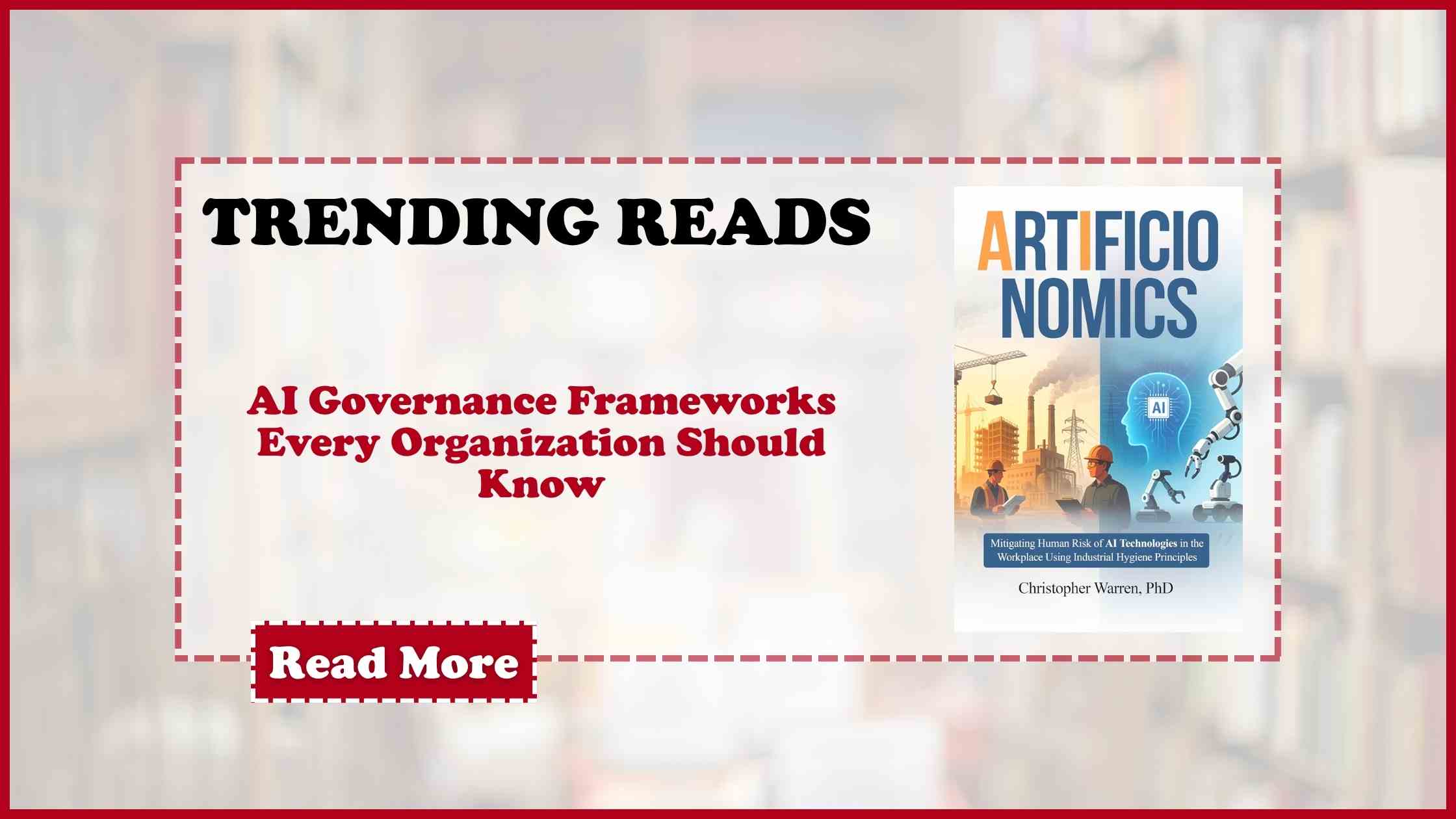
In Artificionomics: Mitigating Human Risk of AI Technologies in the Workplace Using Industrial Hygiene Principles, Christopher Warren, PhD, introduces a groundbreaking perspective on AI governance.
Rather than viewing governance solely through a technical or compliance lens, Artificionomics expands the conversation to include human health, workplace safety, psychological well-being and organizational resilience.
Drawing upon industrial hygiene principles, Warren presents a framework for identifying, evaluating and controlling the human risks associated with AI and robotics. The result is a practical roadmap that helps organizations balance innovation with responsibility.
As AI continues to reshape the future of work, governance can no longer focus exclusively on algorithms and regulations. It must also focus on the people who live and work alongside these technologies every day.
Organizations that embrace this broader approach will be best positioned to build trust, protect their workforce and lead responsibly in the age of artificial intelligence.