Balancing brutality and beauty in fiction is one of the most demanding tasks a writer can undertake. Too much brutality numbs the reader. Too much beauty risks sentimentality. When these forces are carefully calibrated, however, they create emotional depth, moral complexity, and lasting resonance.
Brutality in fiction serves a structural purpose. It raises stakes. It exposes vulnerability. It strips away illusion. Violence, loss, betrayal, and suffering confront both character and reader with reality in its most unfiltered form. Without genuine threat or consequence, narrative tension collapses. Yet brutality must never exist for spectacle alone. When violence is presented without emotional grounding, it becomes hollow. Readers disengage because they sense manipulation rather than meaning.
Beauty performs a different but equally essential function. It restores balance. It provides contrast. It reminds the reader why survival matters. Beauty can appear in landscape, in memory, in tenderness between characters, or in fleeting moments of grace amid chaos. It creates emotional oxygen. Without it, relentless darkness overwhelms the narrative field.
The craft lies in placement and proportion. Brutality should reveal character rather than simply shock. A violent act must expose internal fracture, moral conflict, or transformation. Beauty, in turn, must feel earned. It should not deny suffering, but exist alongside it. When writers allow beauty to emerge from within brutality rather than in opposition to it, the effect is far more powerful.
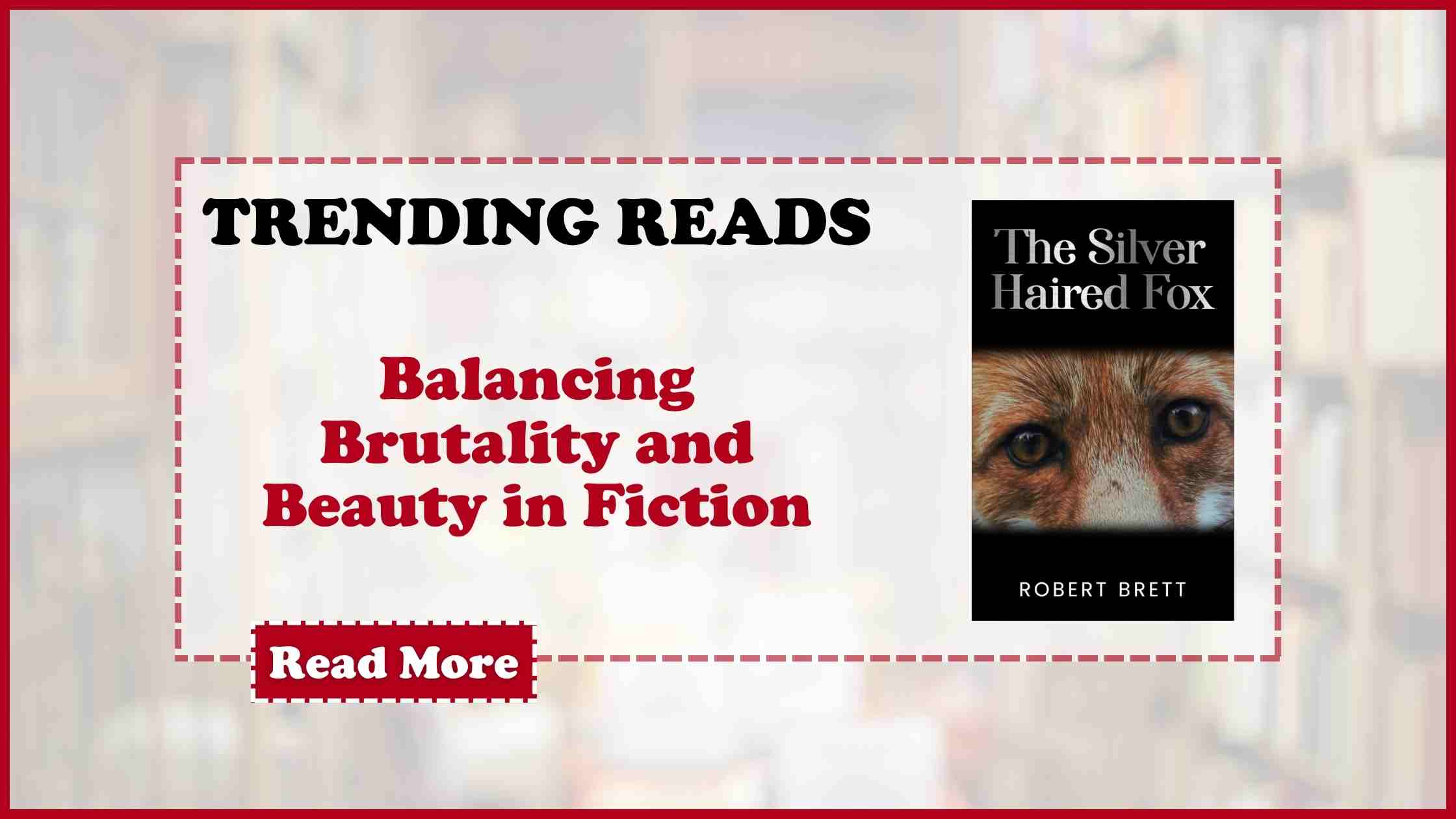
In The Silver Haired Fox by Robert Brett, brutality is immediate and unapologetic. The killing of Yashi is not softened. The hunt is relentless. The train collision is catastrophic. Pain is physical, emotional, and sustained. Yet within this harsh landscape, beauty persists. The forest at dawn carries light filtered through leaves. The sea glimmers under the moon. Love, even when remembered in grief, remains vivid and tender. These moments do not erase violence. They intensify it by contrast.
Contrast is the key structural principle. When brutality and beauty coexist, each sharpens the other. A peaceful scene becomes more precious when preceded by danger. A violent act feels more tragic when readers have witnessed what could have been preserved. The oscillation between the two states creates emotional rhythm. Without rhythm, narrative flattens.
There is also a psychological dimension. Readers can tolerate significant darkness when they sense that meaning exists beyond it. Beauty signals that suffering is not the whole story. It allows readers to remain engaged without emotional shutdown. This does not require optimistic endings. It requires authenticity. Even in tragedy, moments of connection, loyalty, or reflection provide grounding.
Another important factor is restraint. Brutality does not need exhaustive detail to be effective. Suggestion often carries greater weight than explicit description. When readers are invited to imagine rather than forced to witness every element, emotional participation increases. Likewise, beauty benefits from precision rather than excess. Overwritten lyricism dilutes impact. Specific, concrete imagery holds more power than abstract praise.
Balancing these forces also requires moral clarity without moral simplification. Brutality should not glamorize harm. Beauty should not romanticize suffering. When a narrative acknowledges consequence and complexity, readers are able to confront uncomfortable truths without feeling coerced.
Ultimately, fiction that successfully balances brutality and beauty mirrors lived experience. Life contains loss and wonder, cruelty and tenderness, despair and renewal. When a story reflects this duality honestly, it resonates. The reader recognizes something authentic within the tension.
The most enduring works of modern fiction understand that beauty is not the absence of brutality. It is the presence of meaning within it. And brutality, when thoughtfully rendered, exposes the fragility that makes beauty worth protecting.
Read this book, available on Amazon: https://www.amazon.co.uk/dp/1970440759/.