Today, staying connected takes only seconds. A quick text, a social media message or a photo sent from a phone can instantly reach someone across the city or across the world. But more than a century ago, long before smartphones and instant messaging, people still had the same need to share news, make plans, offer reassurance and stay close to those they loved.
For Chicagoans 100 years ago, one of the most popular ways to do that was through the postcard.
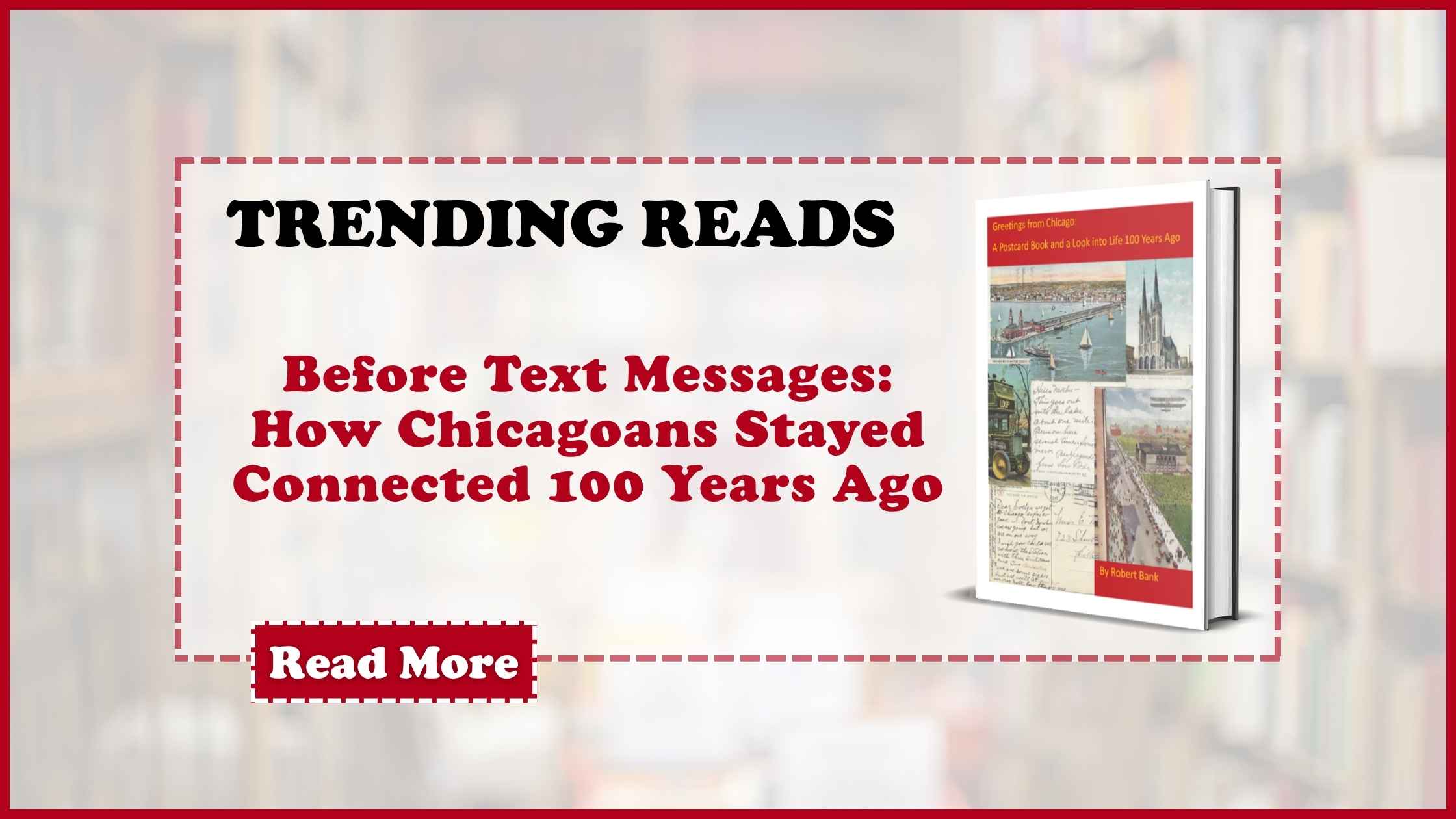
In Greetings from Chicago: A Postcard Book and a Look into Life 100 Years Ago, author Robert Bank takes readers into this fascinating world of handwritten communication. Through a rich collection of vintage Chicago postcards, the book reveals how ordinary people used these small pieces of paper to document their lives, travels, relationships and daily routines.
A postcard could be brief, practical, emotional or playful. Someone might write, “Arrived safely,” “We are having a fine time,” or “Will be home in one week.” Others used postcards to arrange visits, describe the weather, mention a theater outing or simply let family know they were well. In many ways, these short messages served the same purpose as modern text messages. They were quick, affordable and personal.
But unlike today’s digital messages, these postcards survived as physical records. They carried not only words, but also handwriting, postmarks, stamps, addresses, images and traces of the hands that once held them. Each one became a tiny time capsule.
Robert Bank’s book captures both sides of these historic postcards. The front of each card offers a visual journey through old Chicago, showing landmarks, bridges, rail stations, parks, churches, steamships, street scenes, amusement areas and public institutions. The back reveals something even more intimate: the private thoughts and everyday updates of people living through a changing era.
This combination makes Greetings from Chicago more than a picture book. It is a social history told through ordinary voices. Readers see a city filled with movement and energy, people arriving by train, traveling by steamship, attending church, visiting amusement parks, working in offices and writing home from hotels, depots and neighborhoods.
What makes these messages so powerful is how familiar they feel. The technology has changed, but the human emotions have not. People worried about loved ones, shared travel plans, celebrated good times, complained about the weather and looked forward to being reunited. Their words remind us that connection has always been central to daily life.
The book also highlights how postcards served as both communication and keepsake. A single card could show a grand Chicago landmark while carrying a personal note that had nothing to do with the image. This contrast between public scenery and private message gives readers a rare and charming glimpse into the past.
For readers who love Chicago history, vintage photography, genealogy, collecting or stories of everyday people, Greetings from Chicago offers an engaging look at how life was lived and remembered. It brings forward the voices of people who never imagined their simple notes would still be read more than 100 years later.
Before text messages, there were postcards. And in Robert Bank’s Greetings from Chicago, those postcards still speak.