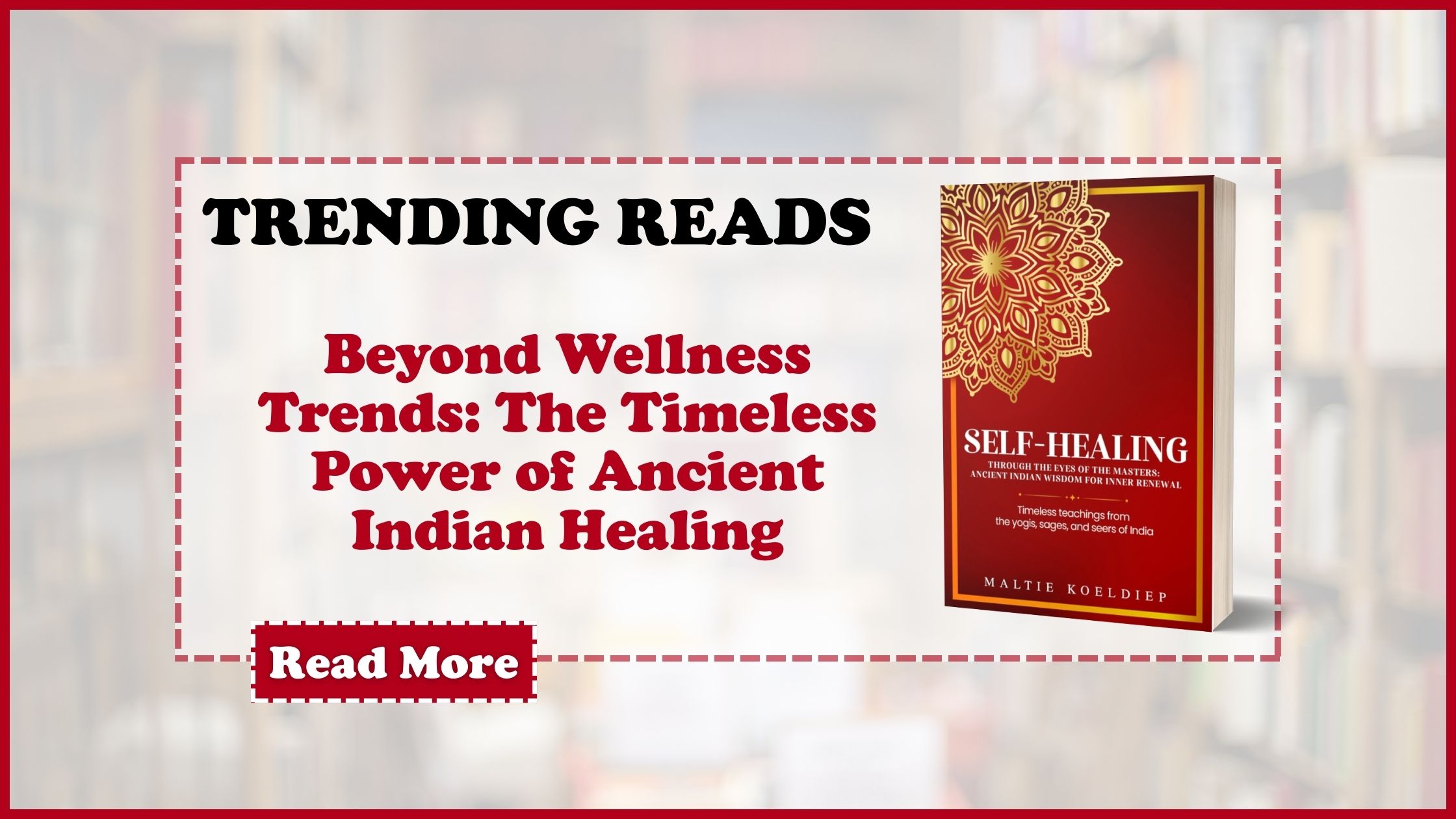
In today’s fast paced culture, wellness has become both a lifestyle and an industry. New diets emerge each year. Breathwork techniques trend across social media. Supplements promise sharper focus and better sleep. While many of these tools offer benefits, they often address symptoms rather than root causes. Ancient Indian healing systems, as explored in Self-Healing Through the Eyes of the Masters: Ancient Indian Wisdom for Inner Renewal by Maltie Koeldiep, approach health from a fundamentally different perspective. Their aim is not temporary enhancement but enduring balance.
At the heart of ancient Indian wisdom lies a simple yet profound principle: healing begins with understanding the Self. The rishis did not separate physical health from mental clarity or spiritual awareness. They recognized that human beings function as integrated systems. When the body is neglected, the mind becomes disturbed. When the mind is agitated, the body reflects that tension. When awareness is disconnected from deeper identity, a sense of emptiness often follows.
Ayurveda, the traditional science of life, emphasizes individualized balance. Each person is governed by a unique combination of energies known as vata, pitta, and kapha. These forces regulate movement, metabolism, and structure. Disease arises when these elements become excessive or depleted due to lifestyle, stress, or environmental factors. Rather than prescribing universal solutions, Ayurveda teaches self-observation. Healing involves adjusting food, sleep, activity, and routine in accordance with one’s constitution and the natural seasons.
Yoga philosophy expands the concept of healing beyond posture and flexibility. In its classical form, yoga is a disciplined path designed to steady the mind. Ethical conduct, breath regulation, concentration, and meditation are integral components. The goal is not merely physical fitness but mental stillness. When internal fluctuations calm, clarity emerges. Peace is recognized as an inherent quality rather than a fleeting achievement.
Ancient Indian teachings also emphasize responsibility for one’s inner state. The law of cause and effect, often described through karma, explains that actions and thoughts shape future experience. Repeated stress, negative thinking, or harmful habits gradually create imbalance. Conversely, mindful choices cultivate stability. Healing becomes an ongoing practice rather than an emergency intervention.
Modern wellness often emphasizes stimulation. Productivity is valued. Energy is optimized. However, overstimulation can intensify restlessness. Ancient systems prioritize sattva, the quality of clarity and harmony. Sattva is cultivated through moderation, wholesome food, time in nature, disciplined routine, and contemplative practice. When sattva increases, decision making improves and emotional reactions soften.
Mindfulness and non-attachment further distinguish ancient approaches from contemporary trends. Emotional suffering frequently arises from excessive attachment to outcomes. When identity depends on success, approval, or control, anxiety grows. Buddhist teachings encourage awareness of thoughts without identification. This creates psychological space. Non attachment does not reduce care. It reduces compulsion.
A critical difference between ancient and modern approaches lies in time horizon. Wellness trends shift rapidly, adapting to market demand. Ancient Indian healing has endured for centuries because it addresses universal human patterns. It was refined through sustained observation of nature, mind, and behavior. Its longevity reflects depth rather than novelty.
This comparison does not dismiss modern innovation. Scientific research increasingly supports meditation, breath regulation, and lifestyle medicine. The integration of traditional insight with contemporary understanding can be powerful. Yet without the foundational principle of self-knowledge, wellness risks becoming another pursuit driven by dissatisfaction.
Ancient Indian healing invites a quieter question. Instead of asking how to maximize output, it asks how to restore harmony. Instead of chasing constant improvement, it encourages conscious alignment. Health is not simply the absence of illness. It is the steady integration of body, mind, and awareness.
When this integration is present, resilience strengthens. Emotional turbulence lessens. Physical vitality stabilizes. The individual no longer chases wellness as an external goal but experiences it as a natural state of balance.
Read this book, available on Amazon: https://www.amazon.com/dp/1971228133/.