It’s a question most of us don’t ask out loud but we have definitely felt it.
Can we ever really escape the past?
We move forward, build new routines, form new relationships and tell ourselves that what’s behind us is exactly that behind us. But every now and then, something small brings it all rushing back. A memory. A place. A conversation we didn’t expect to have.
And suddenly, it doesn’t feel so far away.
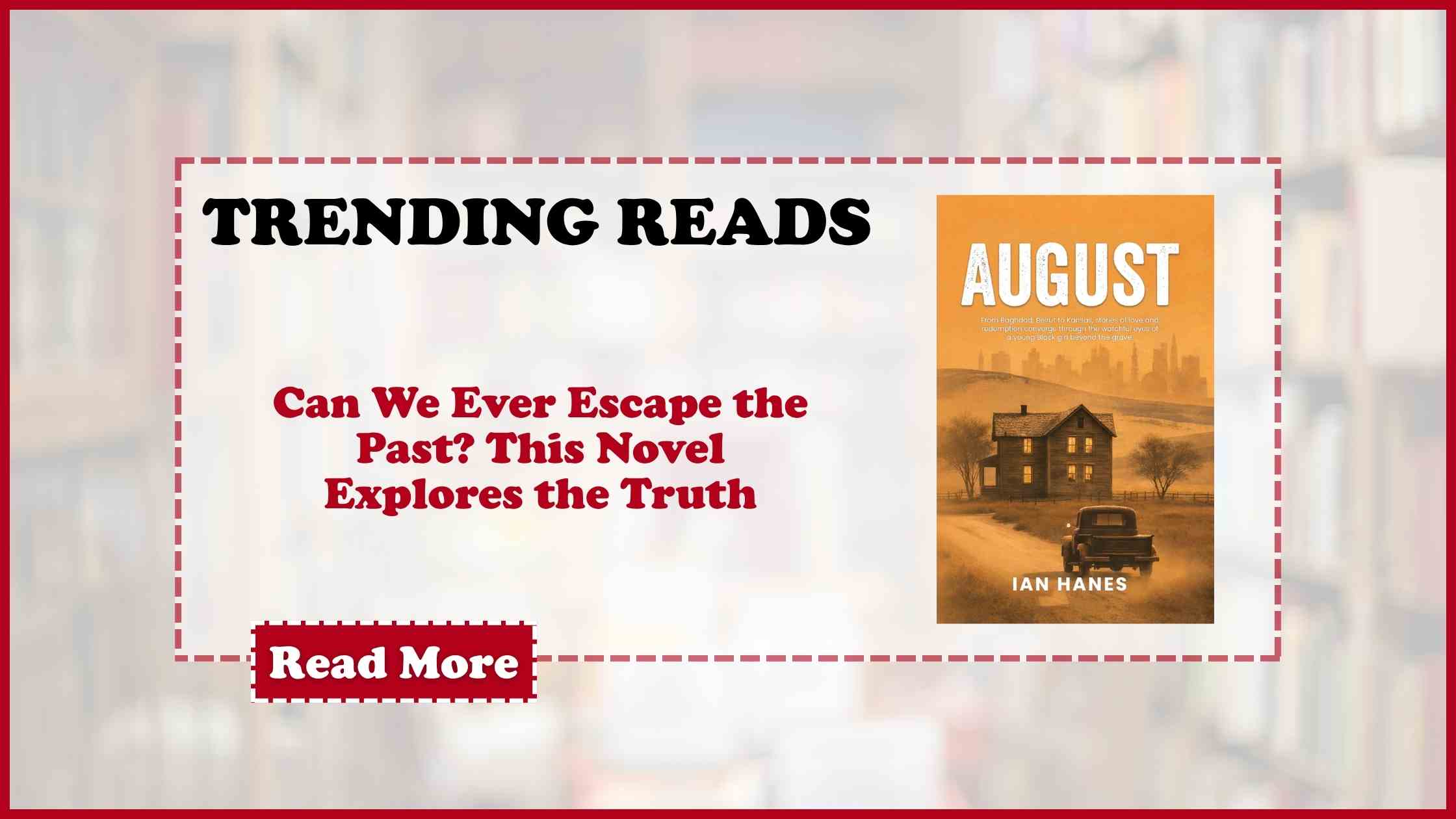
That’s the emotional space August: We Carry What We Bury by Ian Hanes steps into and explores with striking honesty.
This isn’t a novel built on big, dramatic revelations or fast-paced twists. Instead, it unfolds quietly, thoughtfully, almost like real life does. It takes its time, allowing readers to sit with the characters as they navigate the complicated relationship between past and present.
Because the truth is, the past doesn’t just disappear.
It lingers. It shapes how we see ourselves, how we connect with others and how we respond to the world around us. And in this novel, those buried pieces don’t stay hidden forever. They surface slow through moments of reflection, tension and unexpected connection.
What makes this story so compelling is how real it feels.
The characters aren’t trying to outrun their past in obvious ways. They are simply living, making choices, forming relationships and trying to move forward. But underneath it all, there’s a quiet weight. The kind that doesn’t always show itself, but is always there.
And as a reader, you feel it.
You start to recognize that this isn’t just their story, it is something much more universal. We all carry things we haven’t fully faced. Things we have tucked away because they are uncomfortable, complicated or painful.
The novel doesn’t judge that. It understands it.
Ian Hanes writes with a kind of restraint that makes the story even more powerful. He doesn’t spell everything out or push emotions too hard. Instead, he lets moments speak for themselves. A pause in conversation. A memory that resurfaces at the wrong time. A choice that feels small but carries deeper meaning.
It’s in those moments that the novel really shines.
Because it’s not asking whether we have a past, we all do. It’s asking what we do with it.
Do we ignore it? Do we let it define us? Or do we eventually find a way to confront it, understand it and maybe even, if it’s not perfect, make peace with it?
August: We Carry What We Bury doesn’t offer easy answers. And that’s part of what makes it so effective. It reflects real life, where healing isn’t simple and closure isn’t always neat.
But it does offer something important: perspective.
It shows that while we may not be able to fully escape the past, we are not completely trapped by it either. There’s space for growth. For change. For understanding ourselves a little more clearly.
And that’s where the emotional impact really lands.
This is the kind of novel that doesn’t just entertain, it stays with you. It lingers in your thoughts, quietly asking you to reflect on your own experiences, your own memories, your own unanswered questions.
So if you are looking for a story that feels honest, thoughtful and deeply human, this is one worth picking up.
Because the past may always be part of us.
But what we do with it is where the real story begins.